
Durango
Mexico · Americas
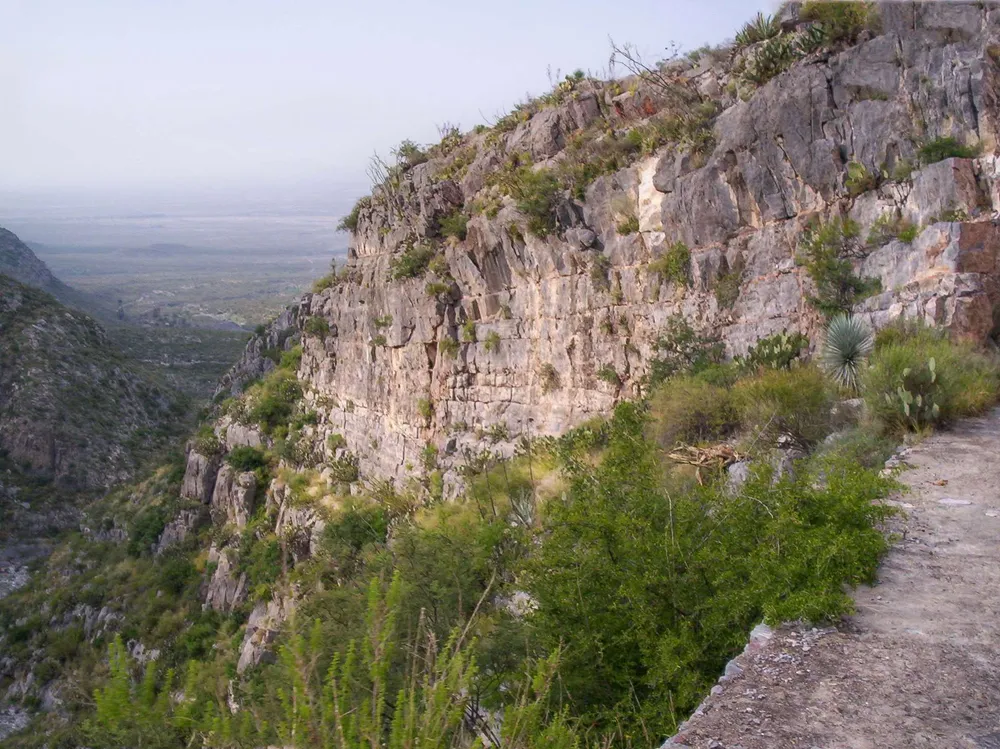
About Durango
Durango is a state in Northern Mexico. Most of the state is mountainous and heavily forested, with the Sierra Madre Occidental covering around two-thirds of the state.
Durango travel guide
Understand
Durango state has tremendous eco-tourism potential. In many ways the north of the state is very similar to the Copper Canyon area. There are canyons, Mennonites, and Tarahumara. The biggest difference is there are almost no foreign tourists or backpackers here - less infrastructure and less camaraderie but better opportunity for exploration and interaction with locals. As a rural state, traditional agriculture is still the main economic activity for most of the population, despite only ten percent of the land being suitable for crops, and only fifteen percent being suitable for pasture. The main crops include corn, beans, chilli peppers, apples, alfalfa, and sorghum. Fruits such as apples and pears are grown in Canatlán, Nuevo Ideal and Guatimapé; nuts in Nazas and San Juan del Rio; and membrillo, apricots and peaches in Nombre de Dios. Most agriculture is concentrated in the Valleys region, in particular, the municipalities of Guadalupe Victoria and Poanas.
Getting there
Mexican Route 40D runs through the State of Durango. Bus travel is common everywhere in Mexico and the largest bus terminal in the state is in the capital (also called Durango). See Bus travel in Mexico for further information.
Getting around
The Mexican Route 23 goes north from Durango (city) to Nuevo Ideal and Pinos Altos, as well as going south.
See
Tourism is a small industry here, despite the state's natural resources and history. The government has worked to promote the state for tourism, but this is concentrated mostly on the capital (including the movie sets around the city), two other towns in the state and to some extent, ecotourism.
There are many historic and tourist sites in the Valleys region, in particular in the city of Durango. The San Juan del Rio municipality has the house in which Francisco Villa was born. There are several important architectural sites in the city, including the Ganot-Peschard Museum of Archeology, which is recognized by the National Institute of Anthropology and History as a site of historical significance. In Súchil, the former hacienda of El Mortero was the home of the Count of the Valley of Súchil and is one of the state's major examples of colonial architecture. The town of Mapimí has conserved its traditional urban layout which has permitted it to become a Pueblo Mágico. The most important mine is Ojuela, now famous for its hanging bridge which connects the town with the mine, separated by an extremely deep ravine. It is one of the largest of its kind in the Americas. Nazas has a house that Benito Juárez slept in while he was here. Parque Ecológico El Tecuán is in the pine-covered hills west of the City of Durango. It is a protected wildlife refuge that is home to a large herd of elk (venado wapitis). Mexiquillo Natural Park, west of El Salto next to town of La Ciudad, is another mountainous park in the Sierra Occidental featuring a waterfall, natural rock garden, lakes, and railway tunnels with lodging on site and in the town of La Ciudad immediately adjacent. You might think you're in Colorado.
Do
Mexico Highway 40. The section of the highway from Durango towards Mazatlan is perhaps the most scenic drive in all of Mexico. This section of the highway is narrow with many curves and has been replaced with the new Fed. 40D. The old Fed. 40 can take up to 8 hours to travel, while Fed. 40D should only take 3 hours. During the winter months there is the added danger of ice. When going eastbound, Mazatlán to Durango, after reaching the top of the Sierra Madre Occidental, Fed. 40 becomes more linear, and it goes through the towns of La Ciudad, El Salto, and El Soldado. It continues in a line up to a point around 30 km from Durango, and it again goes downhill with many curves. In all the downhill sections, the use of engine brake is advised. (updated Mar 2018) The most important secular celebration of the state is the State Fair (Feria de Durango). The most important annual events in the Semi-desert region are the municipal fairs of Gómez Palacio, Mapimí and Santa Ana in Nazas. In the Valleys region the most important annual events are the Apple Festival in Canatlán and the Nut Festival in San Juan del Rio. Important religious observances include those in La Sauceda in Canatlán, El Nayar, La Sierra de Gampon in Guadalupe Victoria and El Tizonazo in Indé. In the Sierra region, most towns observe the feast days of their patron saint with plays based on Biblical stories. Celebrations related to Christmas and the New Year are also important. In Quebradas, patron saint days are important and often feature indigenous music. The Tepehuans continue the tradition of the mitote, a kind of ceremonial dance, three times per year: in February to ask for health, in May to call the rains, and in October to celebrate the first harvests of corn. Those of Mexica, Huicholes and Tarahumara also conserve many aspects of their traditional dance and music.
Buy
Probably the best-known tourist product of the state relates to scorpions. In the 1980s, a number of entrepreneurs turned the animal into an unofficial symbol of state pride. Most are sold encased in acrylic and mounted on knickknacks such as ashtrays, napkin holders, keychains, earrings, wood boxes and wall mountings. These objects dominate tourist markets such as the Gomez market in Durango City. The craft items of the state are very similar to those of Zacatecas and Chihuahua. Most of the items made are utilitarian and ceremonial. They are less known compared to those of the middle and south of the country. Many craft items are still important to local cultures and identities. The most widespread and developed handcraft in the state is pottery, found in just about all of the territory. Common products include flower pots, jars, pots and cazuelas (large cooking vessels). The most decorative pottery is found in and around the city of Durango, with techniques such as pastillaje (laying small rolls or balls of clay over a pot before firing to make a raised design) and sgraffito, especially in the newer generations of pottery. The next most-widely done work is basketry and other items made with stiff fibers. These include baskets, carrying nets or bags, petites, sombreros, furniture and decorative items made from ixtle, wicker, mesquite roots, reeds, pine needles, pine strips and cactus ribs. Textile work is produced all over the state, using cotton, ixtle, lechugilla and wool usually to make clothing. Cloth made with both backstrap and pedal looms are found frequently, but the most-commonly made items are knitted. Embroidery is also widespread. Indigenous crafts include embroidered clothing, household utensils, farm tools and ceremonial objects.
Eat
Much of the state's cuisine is based on corn, although wheat products such as flour tortillas and various breads are readily found. Beef is important but pork dishes are also common. As much of Durango has a colder climate, especially in the higher elevations, soups are popular as a main as well as a first course. One of the best kno
Overview adapted from Wikipedia, travel guide fromWikivoyage (CC BY-SA). Photography via Wikimedia Commons.