
Douro Litoral
Portugal · Europe
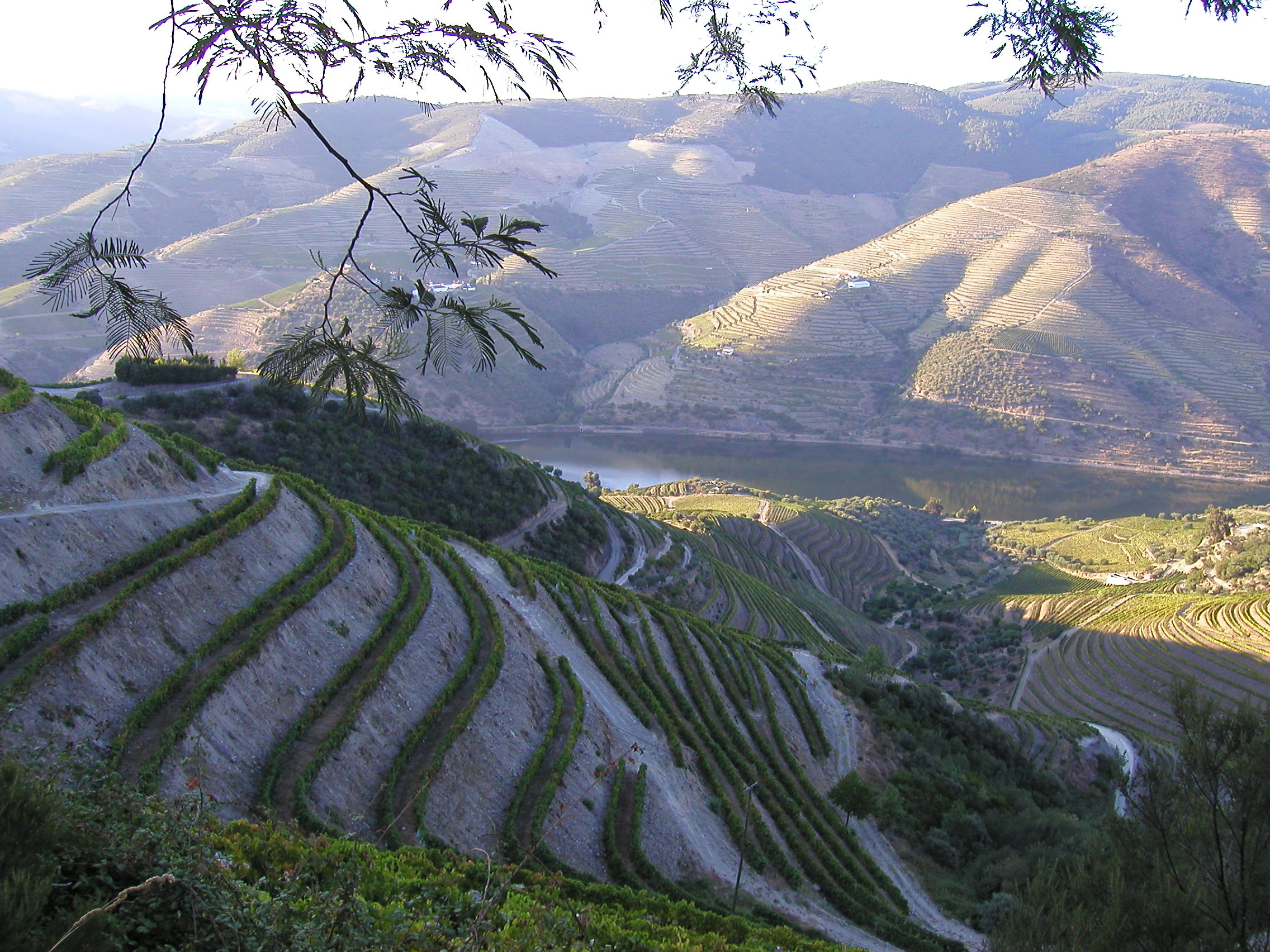
About Douro Litoral
Douro Litoral is a subregion in Northern Portugal. The Douro Litoral is one of the largest and most dynamic Portuguese economic centres, mainly known for wine and the "capital of the North". It is also one of the most cosmopolitan and developed in Portugal.
Douro Litoral travel guide
Understand
Douro Litoral's (DOH-roo lee-too-RAHL; /ˈdo.ɾu ɫi.tu.ˈɾaɫ/) largest population centre is the Porto Metropolitan Area, centred in the city of Porto, an important economic and tourist destination in the country. It includes other important cities such as Matosinhos, Vila Nova de Gaia or Santa Maria da Feira. More inland, the province is sown with small towns and charming villages like Amarante or Arouca and villages forgotten by time, such as Albergaria da Serra, famous for the Frecha da Mizarela Waterfall. The terrain, as in most of northern Portugal, is generally rugged, including in large cities like Porto, although it is (relatively) flat in some places, such as in the cities of Espinho, Póvoa de Varzim and Vila do Condo.
Getting there
Porto is the main hub. Most visitors arrive by plane at Francisco Sá Carneiro International Airport (OPO IATA), on the outskirts of Porto in Pedras Rubras. The airport receives frequent flights from the main European cities, as well as from Lisbon and Funchal. The Express Network is one of the leading companies of short and long distances in Portugal. It serves the entire country, including several cities in the Douro Litoral. You can see schedules on the website. Another useful company is Rodonorte, with connections between several cities in the north and central Portugal.
By car Several routes lead to the Douro Litoral:
Via A1 you can come from Lisbon (Estremadura) to Porto. Via A3 you can come from the Spanish border, in Valença (Minho), to Porto. Via the A4, in a short time, you can come from Bragança (Trás-os-Montes and Alto Douro) and Vila Real (Trás-os-Montes and Alto Douro) to Matosinhos. Via the A7 you can come from Guimarães (Minho) to Vila do Conde. Via the A11 you can come from Barcelos (Minho), Braga (Minho) and Guimarães (Minho) to Lousada and Vizela. Via the A28 you can come from Viana do Castelo (Minho) to Porto. Via the A29 you can come from Estarreja (Beira Litoral) to Espinho and Vila Nova de Gaia.
Getting around
By metro The Metro do Porto is a modern and efficient subway system. It has five lines, which cover the centre of Porto and some neighboring cities, including Vila Nova de Gaia, served by the yellow line, Matosinhos, served by the line blue, Maia, served by the green line, and Vila do Conde/Póvoa de Varzim, served by the orange line.
By train The Alfa-pendular, coming from Braga, enters the Douro Litoral and stops in the cities of Porto, Vila Nova de Gaia and Espinho. Intercidades, coming from Vizela, stops in Santo Tirso, Trofa, Ermesinde, Porto, Vila Nova de Gaia and Espinho. The Regional has many stops in the Douro Litoral, the most important of which are: Santo Tirso, Penafiel, Paredes, Amarante, Marco de Canaveses, Porto, Vila Nova de Gaia, Espinho, Santa Maria da Feira and São João da Madeira.
By car Most of the region's roads depart from Porto. All or almost all roads are in good condition. There is only significant traffic in Porto and in some of the larger cities, such as Póvoa de Varzim and Vila do Conde. The rest of the roads and motorways have few cars, and it is easy to get around within the province.
By bus The STCP (Sociedade de Transportes Colectivos do Porto) has several lines in the city of Oporto and lines for Matosinhos, Leca da Palmeira, Maia, Gondomar and Vila Nova de Gaia.
See
Historical monuments Throughout the country, with the possible exception of the Algarve, the main attraction is the historical heritage. The Douro Litoral is no exception to the rule, with beautiful historic villages and imposing monuments, most of which are concentrated in the historic center of Porto. The historic centre of Porto is the most popular historical attraction in this region, declared a UNESCO World Heritage Site in 1996. Every year, thousands of visitors come to its numerous attractions such as the Torre and Igreja dos Clérigos, a symbol of the city, famous for its extravagant Baroque style, from the top of which there is an unrivaled view of the city. Other attractions are the Sé do Porto, an imposing Roman-Gothic cathedral with a baroque portal, rising in the heart of the old city of Porto, the Palácio da Bolsa, the city's old stock exchange, with a spectacular mix of styles and famous for its extravagance, and its Arab Hall. The São Francisco Church, the only completely Gothic church in the city, is famous for the 600 kg of gold that decorate its interior. Of the 6 bridges over the Douro River, the most famous are the Ponte D. Luís I and Ponte D. Maria Pia, both built by Théophile Seyrig, Gustave Eiffel's partner, Livraria Lello. It is considered the 3rd most beautiful in the world by the British newspaper The Guardian. Avenida dos Aliados, in downtown Porto, has magnificent neoclassical buildings and is dominated by the Porto City Council. São Bento Station, with its wonderful tiles, has been restored. Also on the outskirts of Porto you can find some historical attractions, such as the Monastery of Leça do Balio, a beautiful building in Roman-Gothic style, an example of fortified religious architecture. It has one of the most beautiful Roman-Gothic churches in the country. Other important monuments of the region can be found in the city of Amarante, famous for the Monastery of São Gonçalo, point of pilgrimage, where the tomb of São Gonçalo de Am
Do
Events Feasts of St. John: The most popular event in the region is probably São João do Porto, which takes place on 23-24 June. It is one of the great popular festivals in the country, together with Santo António de Lisboa, and attracts thousands of people to the streets of the historic center of Porto. It is a very traditional party, highlighting the famous plastic hammers, used to hit the heads of people passing by and the pots of basil with popular verses, as well as the traditional firework at midnight, next to the Dom Luís bridge I. In addition, there are several popular festivals, in more traditional neighbourhoods such as Miragaia, making the night even more lively. The party lasts until four or five in the morning, when most people return home. One of the most realistic Medieval Fairs in the country takes place in Santa Maria da Feira, in late July and early August. During some days the city goes back in time, and episodes of Portuguese and regional history are often recreated, such as the expulsion of the Templars and the taking of the castle of Santa Maria da Feira. If you want, you can even buy clothes at a "medieval" store. In Amarante, the main festival is the Pilgrimage of São Gonçalo, which takes place on the first weekend of June. The city's visiting card, it is celebrated in honor of São Gonçalo, a matchmaker saint whose cult is associated with fertility and who lived in Amarante. It is customary for single women to embrace the saint and ask him for a husband. At the same time, there is an annual fair, a fest. An annual fair, a folklore festival, a competition for drums, bullfights, livestock competitions, a festival and fireworks are held simultaneousl
Overview adapted from Wikipedia, travel guide fromWikivoyage (CC BY-SA). Photography via Wikimedia Commons.