
Cuyo Archipelago
Philippines · Asia
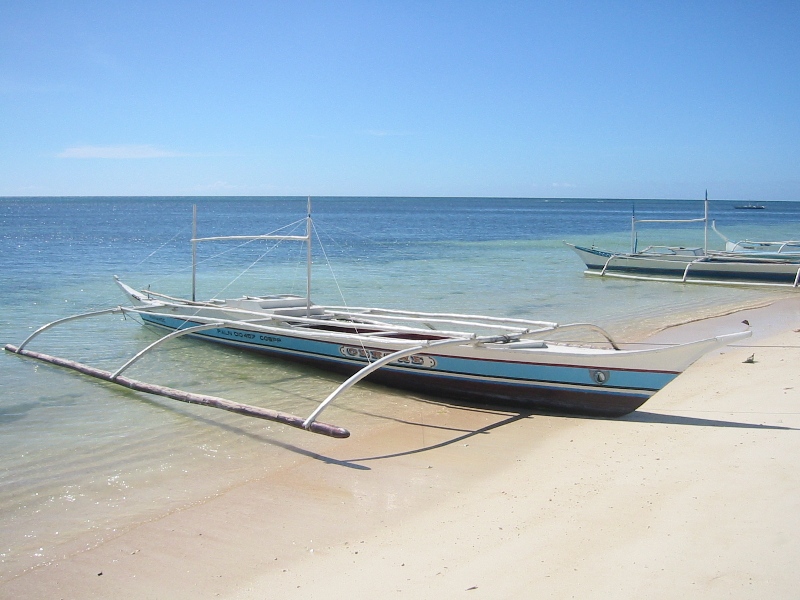
About Cuyo Archipelago
The Cuyo Islands are a group of islands in Palawan Province, Philippines. The archipelago is in the Sulu Sea, to the northeast of the main island of Palawan, south of Mindoro and west of Panay. There are 45 islands, many of which are uninhabited. Their total land area is 130 km² (50 square miles); population in 2010 was about 46,000.
Cuyo Archipelago travel guide
Understand
Cuyo Island, in the south of the archipelago, is the largest island and has most of the population. Cuyo is divided into two island groups: the Quiniluban group in the north and the Cuyo group in the south. The largest island in the Cuyo group is Cuyo Island which has an area of 22 square miles and a population of approximately 20,000 people; it is one of the least exploited inhabited islands in the country. It is divided into three municipalities: Cuyo, Agutaya, and Magsaysay.
Cuyo Town Cuyo Town is the oldest in Palawan Province, with a historic fort which shelters a church and a convent within its high stone walls. Constructed during the Spanish colonial era to protect the population from Moro pirates, it is one of the oldest forts in the Philippines. All the streets in town have been cemented but the town has preserved the hispanic plaza and church structures. Dominating the town centre is Cuyo's church, convent, and fort built by the Spanish and finished in 1680. Nearby stands a schoolhouse, and a park with a monument to national hero Jose Rizal.
Flora and fauna Cuyo is covered with mango, cashew and coconut trees that gracefully sway in the wind. Thick clumps of bamboo abound.
People The Cuyonon are very resourceful and have found ways to make the best of what they have like making tuba, a fermented toddy from coconut, and cashew brittle, both local specialties. Life is slow and the epitome of “rural living” in its simplicity, the kind that grows on people who visit the island. Its several beaches, gracious townsfolk, and simple life are its gems.
History Chinese traders where the first to discover Cuyo island and introduced the trade and barter system in the locality. Later Chief Matunod of Malay origin arrived in big bangkas called “sakayan” and formed settlements on the island. A Malay Muslim by the name Datu Magbanua later also settled in Cuyo. His leadership was so great and powerful that even chieftains from other islands recognized his rule
Getting there
By plane 1 Cuyo Airport (CYU IATA) (located in Magsaysay some 20 minutes away from Cuyo town). (updated Jul 2019) Cuyo Island is not connected by any airline.
By boat Ferry services connecting several times a week with Puerto Princesa and Iloilo. Weekly from Manila via Coron Puerto Princesa to Cuyo
Montenegro Shipping: Dep Monday 18:00 - Arr Tuesday 10:00 Milagrosa Shipping: Dep Thursday and Sunday 15:00 - Arr Monday 8:00 Cuyo to Puerto Princesa
Montenegro Shipping: Dep Saturday 22:00 - Arr Sunday 10:00 Milagrosa Shipping: Dep Monday and Friday 15:00 - Arr Tuesday and Saturday 8:00 Iloilo to Cuyo
Montenegro Shipping Lines: Dep Saturday 8:00 - Arr Saturday 20:00 Milagrosa Shipping Lines: Dep Monday and Thursday 19:00 - Arr Tuesday and Friday 8:00 Cuyo to Iloilo
Montenegro Shipping Lines: Dep Tuesday 14:00 - Arr Wednesday 4:00 Milagrosa Shipping Lines: Dep Friday 17:00 and Monday 17:00 - Arr Tuesday and Saturday 6:00 Manila – Coron – Cuyo
Serrano Shipping Co. - M/V D’Asean Journey (Manila South Port Area Gate 1 near Delfan Port) Manila – Coron Dep Sunday 16:00 - Arr Monday 11:00 Coron – Cuyo Dep Monday 17:00 - Arr Tuesday 03:00 Cuyo – Coron – Manila Serrano Shipping Co. - M/V D’Asean Journey
Cuyo – Coron Dep Thursday 22:00 - Arr Friday 8:00 Coron – Manila Dep Thursday 17:00 - Arr Friday 11:00 These schedules are meant as a guide only and often not precise due to weather, tides, cargo delays and mechanical problems. Make inquiries near your planned departure date with these companies.
Getting around
There are lots of tricycles around Cuyo Town. Best to agree on a price before setting out as most units are territorial. Small motorcycles are available for rent in the public market and at a couple of locations just back one street from the pier. Bicycles can also be rented. Inquire locally. Local bangka boats are available for island hopping and snorkeling. Visitors are reminded to dispose of their trash properly. If you bring it in, pack it out.
See
1 Cuyo Fort and St. Augustine Parish Church (from Cuyo Port, walk up Sandoval St and turn left at Rizal St, walk past the Municipal Hall and Palawan State University). During the early Spanish period Fort Cuyo was constructed to protect the Cuyonon from sporadic Moro attacks and finished in 1680. The original complex of stone and mortar was a square with four bastions. The present complex, which occupies 1 ha, is a solid rectangular edifice with walls 10 m high and 2 m thick. It has a tall belfry and watchtowers; its cannons, which face the sea, are now fired only during town celebrations. It is one of the oldest forts in the Philippines. It is unique because the church, the convent and the Perpetual Adoration chapel are all within the fort. In 1762 one of the British ships that invaded Manila fired at the Cuyo fort but it was not damaged. In 1873, the capital of Paragua (present day Palawan) was transferred to Cuyo from Taytay. Cuyo Fort and Church is only a few minutes walk from Cuyo Port. A tour of the place can be made without a guide since there are ample signs explaining the different areas of the fort. ₱200. (updated Mar 2017)
Do
Kiteboarding and windsurfing. The Philippines is considered by some people to be one of the best places for windsurfing and kiteboarding in Asia and Cuyo Island has become a good choice for many. It has two spots for these sports. One is in Cuyo Town at Capusan Beach. The other is at Quejano/Victoria Beach some 20 minutes away. Kiteboarding instruction at Capusan is provided exclusively by the Cuyo Watersports Association and the Buradol Kite Central, a part of the local Nikki's syndicate. The Anino Kite Resort also provides kiteboarding instruction, storage, and rental of kite equipment. The Philippines has two principal seasons known by its seasonal wind direction called amihan and habagat. For the kiters it's the amihan season which brings them back in small clusters every year. This season lasts from December to March and is characterized by moderate humidity, seldom any significant rainfall and an almost daily, consistent wind from the northeast. (updated Sep 2017) 1 Capusan Beach and Quejano/Victoria Beach. Capusan Beach in Cuyo Town is the most popular spot for kiteboarding due to its long sand bar, ample space, combination of shallow and deep water and free public access. Quejano/Victoria Beach on the east side of the island also offers very good conditions. Those who consider themselves mediocre kiters find ideal conditions to practice the water start in chest deep crystal clear water in a pristine landscape of green hills with several distant islands in view. Both locations have excellent conditions for beginners and experienced riders. 2 Aguado pilgrimage. Mt. Aguado features life-size stations of the Way of the Cross constructed from the foot to the peak of the mountain. Cuyonon devotees, visitors and tourists make the annual pilgrimage to Mt. Aguado as part of the penitential rites done in Cuyo during the Holy Week particularl
Overview adapted from Wikipedia, travel guide fromWikivoyage (CC BY-SA)。Photography via Wikimedia Commons.