
Coyoacán
Mexico · Americas
About Coyoacán
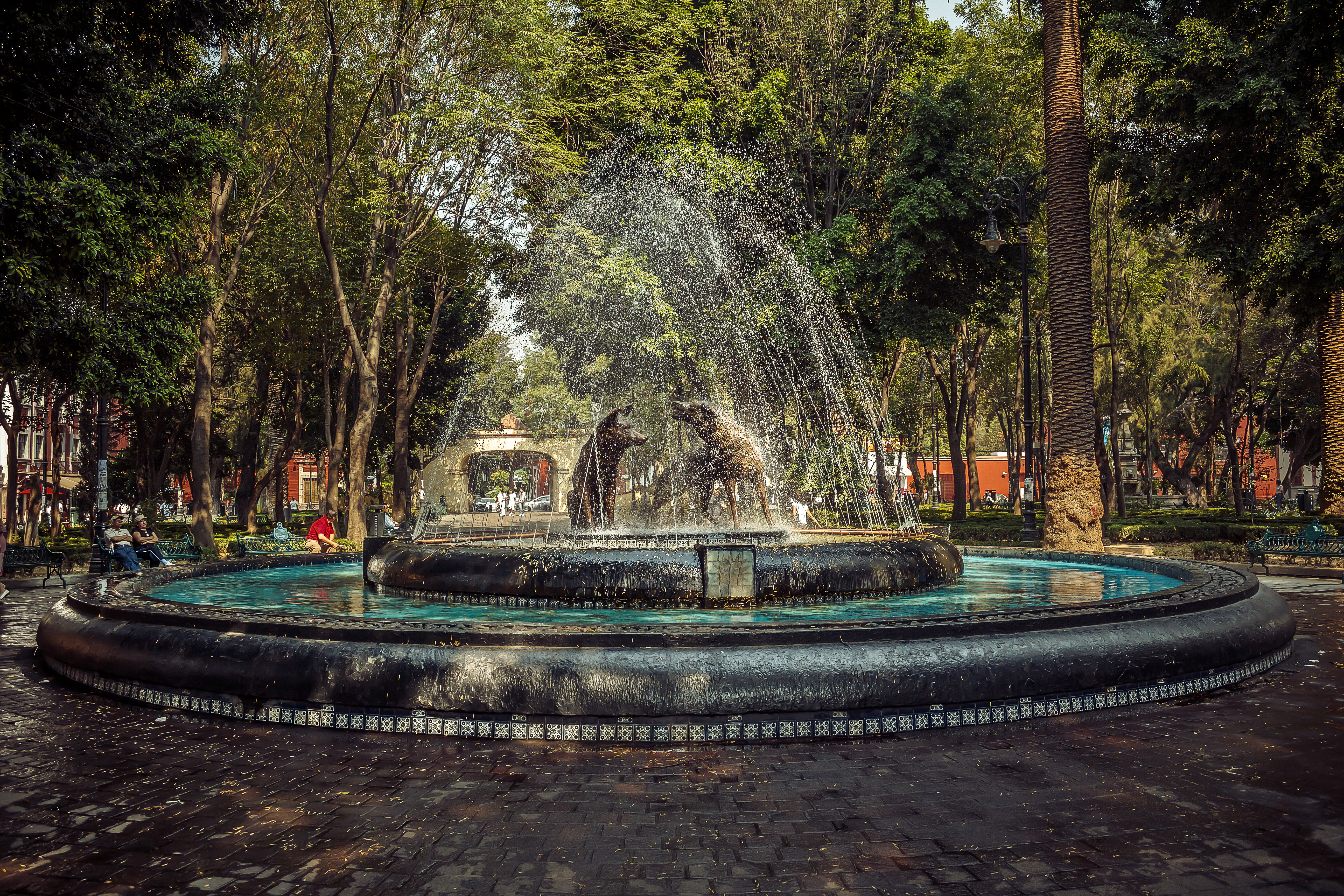
This relatively large area in the southwest of Mexico City has always been a counterculture hotbed. This is where Frida Kahlo and Diego Rivera lived, a few blocks away from Leon Trotsky (their houses are now the Frida Kahlo Museum and the Leon Trotsky Museum, respectively), and the tranquil residential area, with parks, squares, and cobblestone streets, is now a favourite spot for the bohemia set.
Coyoacán travel guide
Understand
Coyoacán (from Nahuatl: place of coyotes) has been populated since pre-Hispanic times, when it was a settlement on the southern shore of Lake Texcoco. During and after the conquest it was Spain's headquarters for several years; some of the oldest Spanish buildings still standing in Mexico are located here. The city was independent until well into the mid-20th century, when it was subsumed into Mexico City. Even today the district has retained its colonial charm, and when strolling in the old town center it is easy to forget that one is immersed in the megalopolis of greater Mexico City. Coyoacán is also the seat of UNAM (National Autonomous University of Mexico), the oldest university in North America and the largest in Latin America, which has itself been declared a UNESCO World Heritage Site. The active student body contributes to the bohemian and liberal atmosphere of the district.
Getting there
By metro Metro stations are not conveniently located to Plaza Hidalgo and the Coyoacán center – don't let the existence of a Coyoacán station (Line 3) fool you. Be prepared for at least a twenty-minute walk from any of the nearest stations, all on Line 3. The neighborhood is safe, so you shouldn't have a problem if you decide to walk from the metro.
1 Coyoacán Station 2 Viveros Station 3 Miguel Ángel de Quevedo Station 4 Copilco Station You may also approach from these stations on the edge of the area:
5 General Anaya Station (Line 2); take the Calle 20 de Agosto exit for a picturesque twenty minute walk to the Frida Kahlo and Leon Trotsky museums. 6 Universidad Station serves the University City area and has connections to Pumabus. There is also a bike rental station called Bicipuma that could be useful because the area is bike friendly.
By microbus If you don't fancy a 20-minute walk from Metro Coyoacan to the main square Plaza Hidalgo, you can take a microbus also known as a pesero. These are the small green and grey buses that can be seen breaking road rules all over the city. As you leave either exit of Metro Coyoacan, cross the to the other side of the large road directly outside the metro (Avenida Universidad). Peseros will stop outside all metro stations, and all display their destinations in the front windscreen. Look for a sign saying Plaza Hidalgo, or ask the driver.
By bus If you are coming to Coyoacan from outside the Mexico City metro area, the best bus station to arrive/depart is Taxqueña (also known as Central de Sur). The bus station is about 10-15 minutes by taxi from most locations in Coyoacan.
Getting around
Coyoacan is one of the most walkable neighborhoods in Mexico City. Rideshare and taxi are good for longer distances. Metro is okay for getting to or from Coyoacan, but it only serves the northwest corner of the neighborhood and is of no value for getting around within Coyoacan. There's a 7 taxi sitio (taxi stand) on the corner of Caballocalco and Higuera, near the Plaza Hidalgo. Another taxi sitio is outside the Coyoacan Metro station and Centro Comercial Coyoacan. The Universidad Nacional Autonoma de Mexico (UNAM) operates a free bus service, called Pumabus, in and around the University City campus. 12 routes with 93 stops are covered by a large fleet of modern, environmentally friendly buses. The free service is available to all visitors as well as university students and staff. Buses pickup at the Universidad Metro station. See the official website for current schedules and route maps.
By bike Coyoacán is one of the easiest parts of Mexico City to get around by bike. Traffic moves slower and there are wide secondary streets that get relatively little traffic. Recreational cyclists will find safe areas to ride on UNAM's University City campus and in the Viveros de Coyoacan National Park. There are also scenic bike routes that travel past museums, markets, the main plaza and other points of interest. See Cycling in Mexico City for more info.
See
University City
The Universidad Nacional Autonoma de Mexico (UNAM) is Mexico's largest university. The sprawling campus, called Ciudad Universitaria, is a city unto itself and contains a number of significant landmarks, museums, and cultural attractions. The entire campus is a UNESCO World Heritage Site, recognizing its breakthroughs in urban planning and architecture as well as its several murals by some of Mexico's most famous artists. The campus was also a host facility for the 1968 Olympic games.
1 Rectoría de la UNAM (Rectory building of UNAM). For David Alfaro Siqueiros fans, the rectory building is of interest because of its large three-dimensional mosaic mural El pueblo a la Universidad, la Universidad al pueblo (The People to the University; the University to the People), created by the Mexican master from 1952-1956.
2 Biblioteca Central (Central Library) (From Metro Universidad, take a free campus bus (Pumabus): Ruta 1 to Rectoria, or Ruta 5 to Filosofia.). The building's four sides are covered by the mural Historical Representation of Culture, created by the Mexican artist Juan O'Gorman. His masterpiece has become the most iconic building of UNAM and of Mexican culture. O'Gorman's mural is recognized as the largest mural in the world. (updated Jan 2018)
3 Museo Universitario de Arte Contemporáneo (University Museum of Contemporary Art), Insurgentes 3000 (on the UNAM campus), ☏ +52 55 5622 6972, [email protected]. W F Su 10:00-18:00, Th Sa 10:00-20:00. This museum hosts temporary exhibits of contemporary Mexican and international artists, as well as rotating displays from its permanent art collection. M$40 (general admission Th-Sa), M$20 (general admission W and Su), 50% discount for students, free (children under 12). (updated Jan 2017) 4 Jardín Botánico de UNAM (UNAM Botanical Garden), C.U. (Cd. Universitaria) (Metro to Universitaria), ☏ +52 55 5622 9047. M-F 09:00 - 17:00, Sa 09:00 - 15:00 (closed Su). Large botanical garden showcasing thous
Do
1 Cineteca Nacional, Avda México Coyoacán 389, ☏ +52 55 4155 1200. Daily 11:00-21:00 (ticket office). Designed by Mexican architect Manuel Rocha Díaz and completed in 1984, the Cineteca is dedicated to the preservation and showing of films in Mexico. This is a venue for current releases as well as classic films, and hosts a number of film festivals throughout the year. $40 MXN (general admission), $25 MXN (students/teachers/INAPAM members).
Viveros de Coyoacán National Park
A 39-hectare greenspace in the heart of Coyoacan, is one of Mexico's most interesting ecological projects. Conceived by Miguel Angel de Quevedo in the early 20th century, this park is Mexico's oldest and largest tree nursery. Angel was alarmed at the deforestation he saw occurring in Mexico, particularly in the once verdant forests of Central Mexico, in the late 19th and early 20th century so he became an advocate for re-forestation. Key to his efforts was growing young trees that could be planted in damaged forest lands. In 1913, he grew 140,000 trees in this park. It was incorporated into th
Overview adapted from Wikipedia, travel guide fromWikivoyage (CC BY-SA). Photography via Wikimedia Commons.