
Campofilone
Italy · Europe
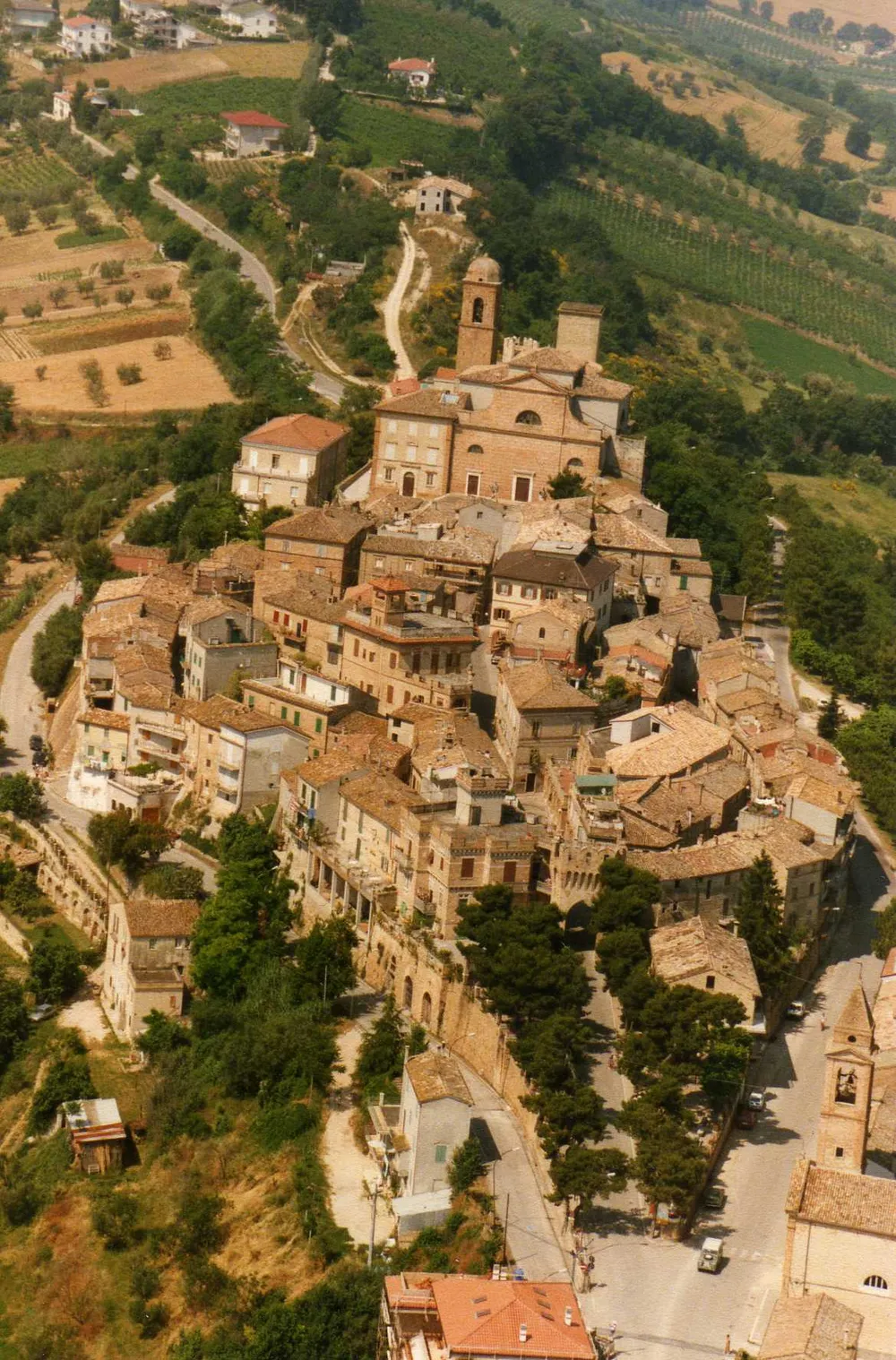
About Campofilone
Campofilone is a town in the Marche region, situated on the coast of the province of Fermo. Campofilone is a tourist destination that can be enjoyed all year round thanks to its mild climate, due to its proximity to the coast. During the summer, this town in the Val d'Aso is also a high-quality seaside resort, as demonstrated by the Blue Flag it has held since 2025.
Campofilone travel guide
Understand
Situated on a hill close to the coastline, Campofilone is a municipality in the Val d'Aso. It borders the municipalities of Pedaso, Altidona, Lapedona, Massignano (AP) and Montefiore dell'Aso (AP).
History The history of Campofilone has its roots in antiquity, as evidenced by the Picene and Roman artefacts preserved in the local parish archaeological museum. The present-day historic centre of Campofilone dates back to the 11th century, having developed around the Benedictine Abbey of San Bartolomeo, built in 1066 on the ruins of a Roman villa. In the 13th century, the castle of Campofilone was declared a free commune and remained so until the 14th century, when the city of Fermo brought it under its jurisdiction. During the period of Fermo’s rule, the imposing walls surrounding the present-day historic centre were constructed.
Maccheroncini di Campofilone One of the region’s main attractions is the Maccheroncini di Campofilone PGI, a product that symbolises the local identity. Its significance is not merely gastronomic, but forms part of a broader effort to promote the food culture of the Piceno area, linked to the principles of the Mediterranean diet. In the Fermo area, the Piceno Laboratory of the Mediterranean Diet Association is also active, committed to promoting a dietary style inspired by local tradition. In this context, Maccheroncini di Campofilone represent a significant example of how traditional products are an expression of the cultural identity of the region.
Maccheroncini di Campofilone is an egg pasta produced in the municipality of the same name, characterised by a very thin sheet of dough and a high proportion of fresh eggs in the mixture, higher than in other types of pasta. The same dough is also used to make other shapes of egg pasta, both long (fettuccine) and short (penne), as well as filled varieties such as tortellini. According to local tradition, maccheroncini have been known since the 15th century and were referred to as “maccheron
Getting there
By car To reach Campofilone by car, take the A14 motorway and exit at Pedaso. From there, take the Val d'Aso state road 433 (SS 433) towards Campofilone.
By train To reach Campofilone by train, we recommend taking a regional train to Porto San Giorgio. From there, head to the bus stops on the SS16 and take the Fermo–Val d’Aso–Montalto bus towards Montalto. Get off after seven stops at Campofilone (towards Montefiore).
By bus You can reach Campofilone by public transport from Fermo. From the terminal at the large car park, take the Fermo–Val D’Aso–Montalto bus towards Montalto and get off at the Campofilone (towards Montefiore) stop (20 stops). Journey time: approximately 30 minutes.
By plane There is no airport. The most convenient airport is (AOI), formerly Ancona Falconara Airport.
Getting around
The best way to explore the Campofilone is by car, as the itinerary extends throughout the Aso Valley and includes several villages, pasta producers, and rural attractions. However, it can also be enjoyed by bicycle, particularly by those wishing to discover the countryside at a slower pace.
By foot Walking is practical within the historic centres of Campofilone and the other villages along the route, where most attractions are located within a short distance of one another. However, the full itinerary is too extensive to be completed entirely on foot.
By bike The itinerary can be completed by bicycle and is well suited to cyclists interested in exploring the landscapes of the Aso Valley. Quiet local roads connect Campofilone with neighbouring villages, farms, vineyards, and fruit-growing areas. While much of the route follows gentle terrain along the valley floor, some sections include rolling hills typical of the Marche countryside. Railway stations along the Adriatic coast, such as Pedaso, provide convenient access for cyclists arriving by train.
By car A car is the most practical means of transport for completing the itinerary, allowing visitors to easily reach the various pasta producers, shops, villages, and points of interest scattered throughout the valley. Roads are generally quiet and well maintained, making travel between destinations straightforward.
See
Despite its small size, Campofilone offers a number of points of interest, including historic churches, small museums and traditional buildings that reflect the town’s cultural and rural heritage.
1 St Bartholomew’s Abbey, Piazza Roma, ☏ +39 0734 917057. The Abbey Church of St Bartholomew was founded in the 11th century on the site of a Roman villa. The original church was a Romanesque building with a rectangular plan, which was subsequently demolished in the first half of the 19th century to make way for a larger abbey. The new church, in the Neoclassical style, was designed by the engineer Roncalli and houses paintings by Luigi Fontana and Niccolò Achilli. In the churchyard stand the statues of Saint Bartholomew and Saint Patrick, the patron saints of the village of Campofilone. (updated Jun 2026) 2 Parish museums, Via abbaziale 14, ☏ +39 0734 932914. Open to visitors by appointment. The sacristy of the Abbey of San Bartolomeo houses two parish museums. The first is the Liturgical Museum, which holds sacred objects and vestments belonging to the abbots of Campofilone; the second is the Archaeological Museum, which houses artefacts dating from the Picentes to the Roman era. In the sacristy, visitors can also admire the frescoed rooms on the first floor: the Hall of Coats of Arms and the Reading Room. (updated Jun 2026)
3 Abbey vegetable garden. The abbey garden is a large garden situated behind the Abbey of San Bartolomeo. This area used to be a vegetable garden tended by the Benedictine monks who lived in the abbey. Here, you can see a section of the walls built in the 14th century by the town of Fermo to defend Campofilone Castle. During the summer, the main summer events take place in the garden.There is also an information panel inside detailing the village’s tourist attractions, featuring Braille text, images and a map. (updated Jun 2026) 4 Oratory of the Pietà, Piazza Roma (To the right of the Basilica of St Bartholomew). The oratory of the Archconfraterni
Do
1 Campofilone Beach. Located between the hamlets of Tre Camini and Ponte Nina, Campofilone's coastline stretches for more than 1.5 km (0.9 mi) and consists of fine sand that gently slopes into shallow, safe waters. The seafront offers a range of services for visitors choosing Campofilone as a holiday destination. Although much of the beach is dedicated to free public access, several beach clubs and bathing establishments are also available. Since 2025, Campofilone Beach has been awarded the Blue Flag for its environmental quality and services (updated Jun 2026) 2 Aso Valley Ecomuseum, Largo Garibaldi 11/22, [email protected]. Campofilone is part of the Aso Valley Ecomuseum, a project established in 2011 to promote the socio-economic development of the valley through a network of cul
Overview adapted from Wikipedia, travel guide fromWikivoyage (CC BY-SA). Photography via Wikimedia Commons.