
Burggrafenamt
Italy · Europe
About Burggrafenamt
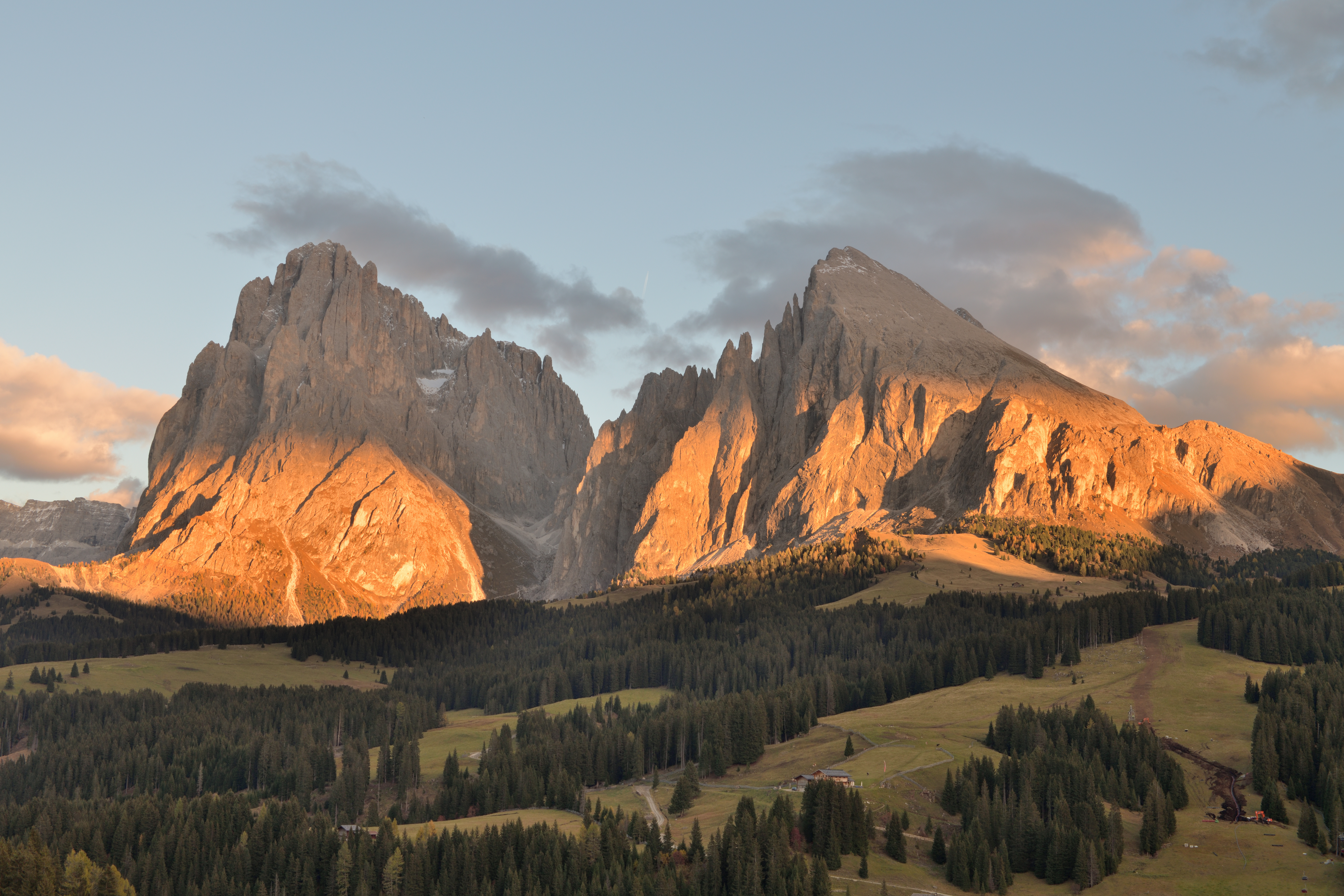
South Tyrol is the northernmost province in Italy. This Alpine region can offer a lot of cultural highlights, both large cities and small picturesque storybook villages, and huge areas of wild nature, including the most important Italian national park, and many more regional parks, lakes, valleys and mountains. Here one finds the famous Dolomites (inscribed in the UNESCO World Heritage List) and large important ski resorts near the Austrian border.
Once a place of ethnic conflict, South Tyrol has emerged as an international model for inter-ethnic cooperation. German-speaking, Italian or Ladin, South Tyrolians are very proud of this grand accomplishment of inter-ethnic cooperation and compromise and serve as a model for the world. They are truly "European" in every sense.
Burggrafenamt travel guide
Understand
South Tyrol borders Austria to the north and northeast, Switzerland to the northwest, and the rest of Italy to the south. Together with Trentino, it composes the northernmost Italian autonomous administrative region of Trentino-Alto Adige. This is also the only region in Italy where the majority of the population speaks German as their mother tongue (with the exception of the areas surrounding Bolzano/Bozen and Merano/Meran). Therefore, South Tyrol is officially bilingual, including all road signs, menus and media, and moreover even trilingual in the scenic eastern Ladin-speaking valleys.
History It is known that people have lived here since the Stone Age — like Ötzi the Iceman — and the region was part of the Roman Empire from 59 BC until the Migration Period. From the 6th to the 9th century, the region was settled by the Bavarii together with the Langobards and the Romanised natives. As part of France and later the Holy Roman Empire, the region had a strategic importance as a bridgehead to Italy. Large parts of the province were donated to the Bishops of Trent and Brixen. After their caretakers, the earls of Tyrol (like Meinhard II of Gorizia-Tyrol) had gathered the province under their command, the region together with the valleys to the north was known as Tyrol. In 1342, the earldom went over to the Bavarian dukes again when Emperor Louis IV voided the first marriage of Countess Margarete Maultasch. But already in 1363, the Wittelsbach released the country to the Habsburgs. The Habsburgs ruled the region almost continuously until 1918, except from 1805–1814. In 1805, Austria was defeated by Napoleon and lost Tyrol to Bavaria in the Peace of Pressburg (Bavaria allied itself with Napoleon in the war). Tyroleans, led by Andreas Hofer, rose in rebellion against Bavarian rule. In 1814, Tyrol was transferred again from Bavaria to Austria at the Congress of Vienna. In 1919, after the World War I, South Tyrol was annexed by Italy as a war prize. Italian-speaking gov
Getting there
Italian foreign ministry has a page available also in English for entry documents required by foreign nationals. Because Italy is a signatory to the Schengen treaty there are no problems if you come with an Austrian or Swiss visa, as they are two member states of Schengen also - although Switzerland is not a member of the European Union. There are no border controls between Schengen Agreement nations - so also the last controls at the border to Switzerland have dissolved.
By plane The only airport in South Tyrol is the Airport Bolzano Dolomites in the capital city Bolzano. Nearest major hubs are Munich airport in Germany and Milano Malpensa Airport while other airports near South Tyrol are in Innsbruck, Austria and Verona. Low cost flights only to/from Verona, Treviso or Bergamo. Airport transfers are available. Normally Inghams offers direct flights from England in winter.
By train South Tyrol is well connected, you'll most likely be coming from the rest of Italy via Verona or from the North via Innsbruck (Austria) and through the Brenner Pass. Free WiFi is available in the SAD and Trenitalia electric railcars, for which a one-time registration is required. These trains tend to be wheelchair friendly. The push-pull style Trenitalia trains that also operate in the region can be a challenge for the disabled, who need wheelchairs. The main connection from the North is over the Brenner Pass from Innsbruck (Austria). There are good connections via Innsbruck from Vienna, Salzburg, Munich, Zurich and the rest of North/Central Europe through these cities. Passengers coming from Graz, or South-Central Europe (Zagreb; Maribor) may find the connection via Lienz in East Tyrol and into the Puster Valley (Bruneck; Franzenfeste) useful. It's also possible to get in from Vienna this way, but connections are much less frequent. It is often cheaper or necessary to buy two separate train tickets if coming from abroad (Austria; Germany; etc.) and then changing to a local train.
Getting around
Almost all places are very well connected by train or by bus (SII) and roads are considered to be the best well-kept in Italy and road signs are not an exception or ambiguous.
Value Card If you want to travel inside South Tyrol and up to Innsbruck or Trento by bus or by train you can buy the "Value Card" ("Wertkarte" or "Carta valore") for €5, €10 or €25 and you will pay less with this card which has validity only in South Tyrol. In other parts of Italy you have to buy a ticket at the train station every time. In major cities and their metropolitan areas this tickets can be bought also in general shops like bakeries, bars, restaurants, supermarkets, other retail stores and in the tourist offices. All dealers have identification stickers. In smaller places you can find them at bus stations. For more information check see the regional transport system website.
MobilCard The MobilCard is a convenient and cheap way to get around the region. These cards can be bought in all sales outlets of the South Tyrolean transport association and in the various tourist associations in the region. The Mobilcard is available as a 3-day or 7-day ticket and is valid on all public transport in the South Tyrolean transport association. The Bikemobil Card is available as a day card, 3-day card and 7-day card. It enables a combined use of public transport from the South Tyrolean transport association and rental bicycles. The Museumobil Card is available as a 3-day card and a 7-day card and, in addition to using all public transport of the South Tyrolean transport association, enables free entry to around 80 museums throughout South Tyrol. The South Tyrol Guest Pass is made available to tourists staying in participating establishments and provides free travel on most public transport provided by the South Tyrolean transport association for tourists for the duration of their stay.
By train All main valleys are crossed by trains and the two regional main hubs are Bolzano and Franzensf
See
Picturesque villages and mountainside churches. Dolomites are full of magnificent lakes and mountains, such as:
1 Lago di Braies (Pragser Wildsee). 2 Seceda. 3 Val di Funes. 4 Tre Cime di Lavaredo. 5 Sella group. 6 Lago di Carezza (Karersee). 7 Catinaccio (Rosengarten group).
Buy
Currency As South Tyrol is a part of Italy and consequently of the Eurozone, the official currency is the Euro. The best rates for changing money are offered by banks. Nobody will accept foreign money anymore, though at the time of national currencies, German Marks and Austrian Schillings were quite accepted.
Costs The prices are a bit higher than the Italian average but it depends on the area - and for example they are in any case cheaper than in the United Kingdom. Most touristy developed areas are more expensive than the regional average. For example, accommodations in the Bolzano metropolitan area town of Laives are cheaper. There is big differences also in prices between hotels of the same category
Overview adapted from Wikipedia, travel guide fromWikivoyage (CC BY-SA). Photography via Wikimedia Commons.