
Brandenburg
Germany · Europe
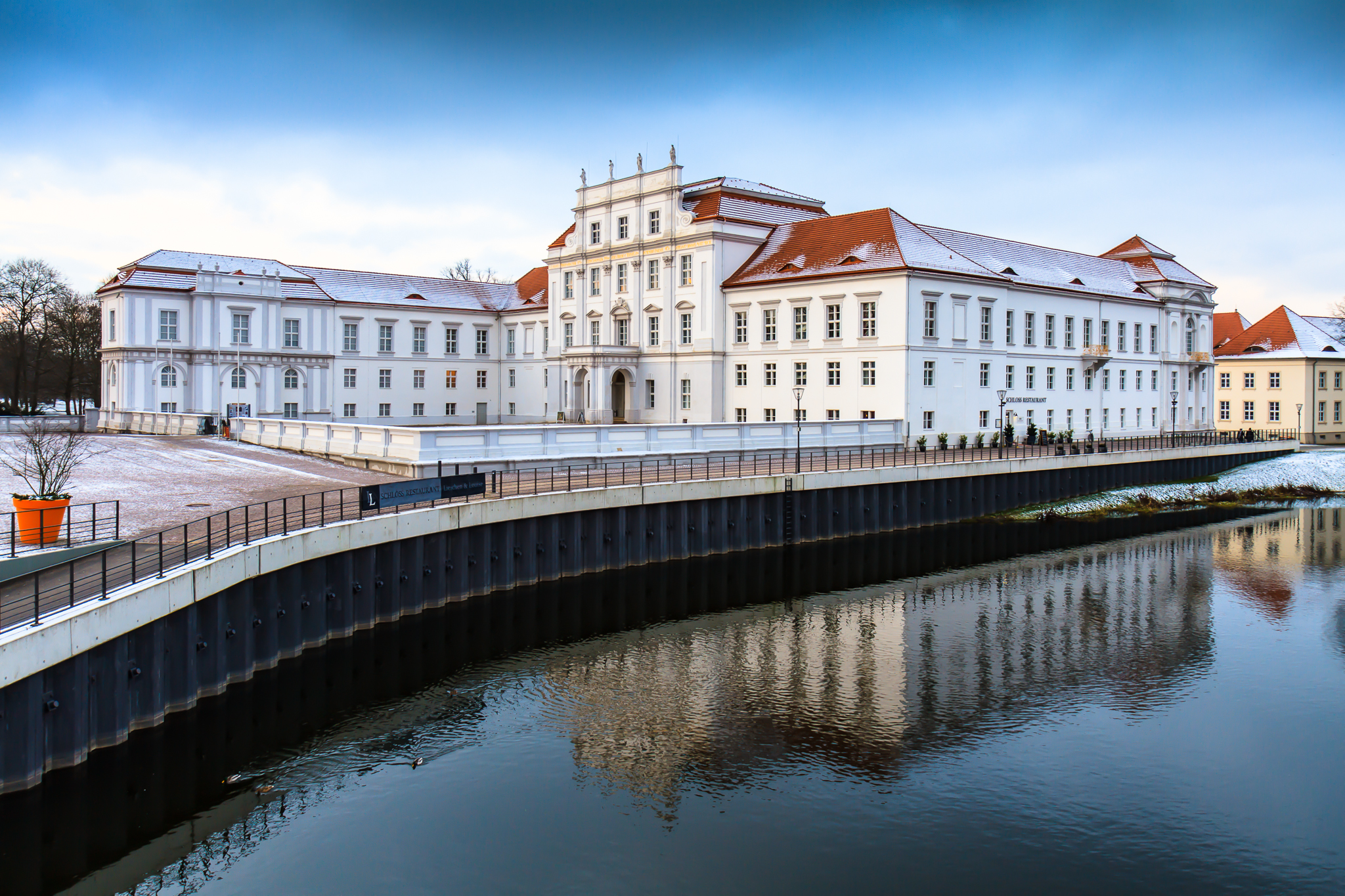
About Brandenburg
Brandenburg is both a historical region and a modern federal state in Germany. Brandenburg was historically composed of a larger amount of territory now located across the Oder River in western Poland. It is the heart of historic Prussia and surrounds the federal capital Berlin, a separate state. It also borders the states of Saxony, Saxony-Anhalt, Lower Saxony, and Mecklenburg-Western Pomerania, as well as Poland.
Brandenburg travel guide
Understand
Brandenburg is characterized by the contrast between the thriving metropolitan fringe surrounding Berlin and the vast, tranquil rural landscapes beyond. The area immediately surrounding the capital, dominated by the state capital Potsdam, has experienced significant growth. Potsdam, a UNESCO World Heritage city is a major cultural and scientific hub in its own right. This area locally known as the "Speckgürtel" (commuter belt) has expanded into the state, driven by major industrial investments like the Tesla Gigafactory and a booming tech sector.In contrast, the more distant regions offer a slower pace of life. Regional centers like Cottbus, Frankfurt (Oder), and Brandenburg an der Havel have revitalized their historic centers and serve as gateways to the state's wilderness. While some rural areas still face demographic challenges, they have successfully pivoted towards high-quality nature tourism and renewable energy. Beyond the palaces of Potsdam, visitors will find a land of over 3,000 lakes, pristine national parks, and beautifully restored medieval towns, offering a quiet escape from the bustle of Berlin. Historically, Brandenburg was once nicknamed the Reichsstreusandbüchse (imperial sandbox) due to its sandy soil and sparse population. Today, this, by German standards, low density is seen as an asset, as it helped preserve vast stretches of untouched nature and wildlife. In the southeast, along the border with Saxony, the Lusatia (Lausitz) region is undergoing a historic transformation. Once one of Germany's most important open-pit lignite mining areas, the coal era is rapidly coming to an end. This industrial heritage is being replaced by the Lusatian Lake District (Lausitzer Seenland), an ambitious project where former mines are being flooded to create Europe's largest man-made water landscape. What was once a scarred industrial zone has become a major destination for water sports and cycle tourism, blending modern engineering with nature's recovery.
Hist
Getting there
By plane
Berlin Brandenburg Airport (BER IATA) is the main gateway to the region and the only airport inside the state. If you are headed for southern Brandenburg the airports of Leipzig/Halle (near Schkeuditz, Saxony (LEJ IATA) and Dresden (DRS IATA) in the neighborhood of Klotzsche, some 15 km or 25 minutes by S-Bahn from the city-center) might be alternatives for you. However, there is generally a wider section of flights to/from Berlin than these airports.
By car Since Berlin is located in the middle of Brandenburg, there are highways (Autobahn) to all major directions crossing through Brandenburg. Many places in Brandenburg can be reached by car within one or two hours from the center of Berlin. The following Autobahns run through Brandenburg: A2, A9, A10, A11, A12, A13, A15. A24 originates in Hamburg and passes through Mecklenburg Vorpommern and goes via Rostock before heading to Berlin.
By public transport The railway system is oriented towards Berlin. There are frequent regional trains connecting Berlin with all major cities in Brandenburg. However, it is often difficult to get to smaller places via public transport. There are buses, but travelers should check timetables. The Berlin-Brandenburg-Public-Traffic-Network (VBB) co-ordinates public transport in the region. There is also a consistent tariff system, so travelers can buy a ticket for the entire journey even if they change from the train to buses. The website of the Traffic Network VBB offers information on timetables and tariffs.
By bus
Getting around
The easiest way to get around is by car. There are several highways (Autobahn), that connect Berlin with different German regions - all leading through Brandenburg. In addition, there are well maintained roads. Public transport to many rural destinations is poor. There are a few railroad connections within Brandenburg and there are public buses, but travelers should check timetables for connections. Verkehrsverbund Berlin-Brandenburg (VBB) organizes local public transport in Berlin and Brandenburg. The Berlin-Brandenburg region has a dense network of regional express and regional rail lines, which is often supplemented by excursion buses at tourist destinations. Most of Brandenburg's tourist destinations can thus be easily reached on an hourly or two-hourly basis. In Brandenburg and Berlin, you can travel comfortably and inexpensively with the Brandenburg-Berlin ticket for €29 with up to 5 people. If you want it even more comfortable, the Brandenburg-Berlin-Ticket is also available for 1st class at €49. The ticket is valid Monday through Friday from 09:00 and on weekends all day until 3 a.m. the following day on all local transportation. Night owls pay only €22 between 18:00 and 06:00 the following day (€42 in 1st class). Single travellers can use the day ticket for the entire VBB network for €21. Those who enjoy cycling during their vacations can choose between numerous cycling routes in Brandenburg. The flagship is the over 1000-km-long "Tour Brandenburg".
See
Potsdam with its spectacular royal palaces and parks, the Dutch Quarter is a lovely city and a UNESCO World Heritage Site. The Spreewald, a unique landscape with hundreds of small irrigation canals, a UNESCO biosphere reserve. The wide ranging architecture of Cottbus. The medieval windows of the Marienkirche Frankfurt an der Oder. Castles and Palaces: There are many smaller and larger rural palaces and castles, some of them are hotels, others museums or private homes; in the Fläming region, there are four medieval castles. Historic city centers: many towns in Brandenburg have pretty well kept historic city centers.
Do
Hiking Cycling Saddle up and explore the Brandenburg-Barnim countryside - you'll get fit too! Traveling around on two wheels you'll see loads more of the county, and with nine cycle routes to choose from there is no excuse for not getting your bicycle out.
Inline skating 1 Tropical Islands, Wasserburg, Brandenburg. World's largest indoor water park with pools, tubes, slides and a heated spa area. Additional outdoor pools used in summer months. Can get very crowded and expensive.
Eat
Spreewald-Gurken (pickled cucumbers from the Spreewald-region) were a specialty during GDR times and are again growing in popularity.
Drink & nightlife
Club-Cola is one of two big former East German cola brands.
Go next
The Baltic Sea Coast (Germany) in Mecklenburg-Western Pomerania Poland is right across the Oder/Odra Berlin The Lausitz in the south is shared with Saxony
Overview adapted from Wikipedia, travel guide fromWikivoyage (CC BY-SA). Photography via Wikimedia Commons.