
Basel
Switzerland · Europe
About Basel
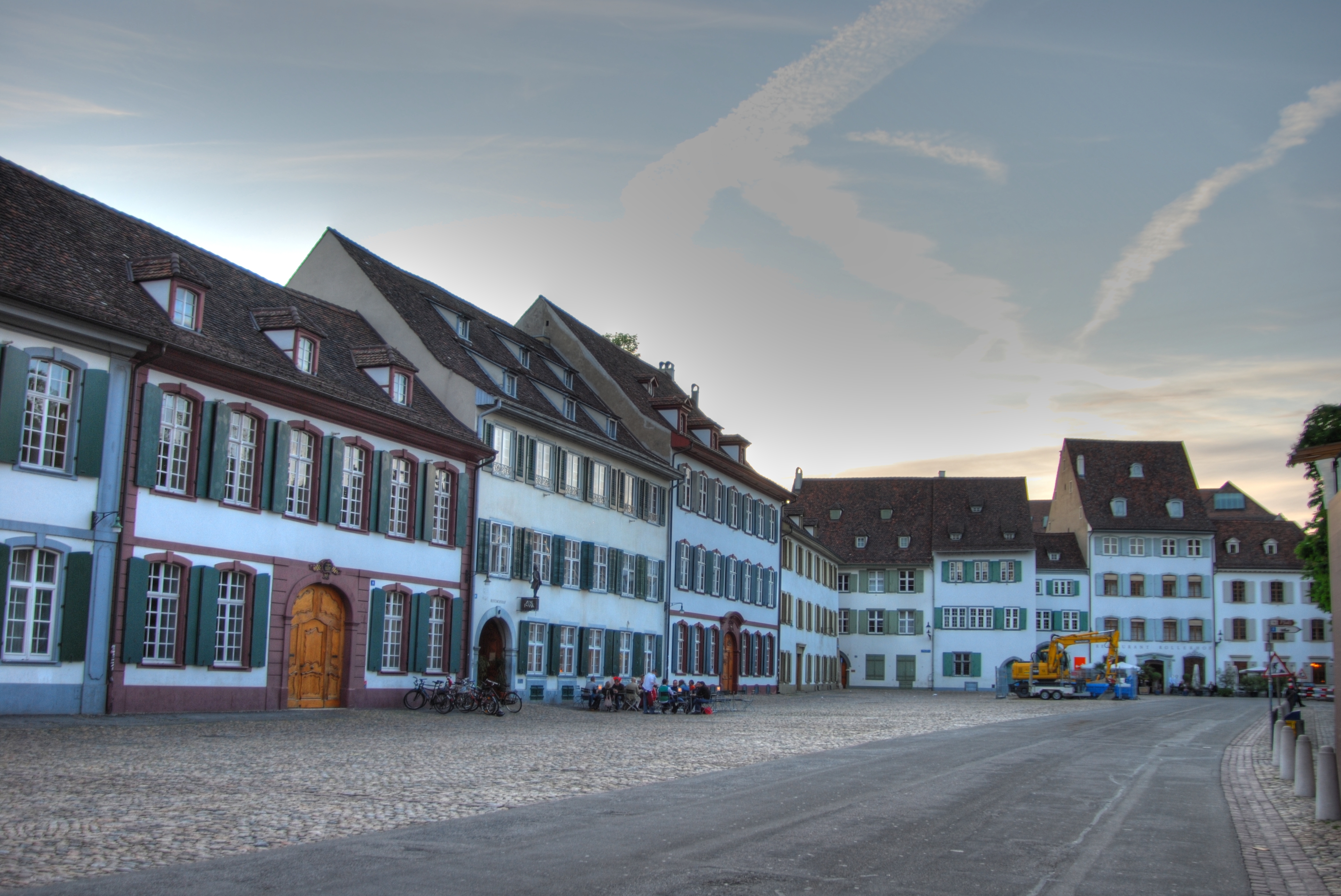
One of Switzerland's underrated tourist destinations, Basel has a beautiful medieval old town centre, a fascinating carnival, and several world class art museums built by architects like Renzo Piano, Mario Botta and Herzog & De Meuron. Basel is also rich in architecture old and new, with a Romanesque Münster (cathedral), a Renaissance Rathaus (town hall), and various examples of high quality contemporary architecture, including more buildings by Herzog & De Meuron, Richard Meier, Diener & Diener, and various others.
Located in the Dreiländereck (three countries' corner), Basel is a gateway to the Swiss Jura mountains and nearby cities of Zürich and Lucerne, as well as the neighbouring French region of Alsace and the German Black Forest. There are a number of things to see and do if you have a few days to spend.
Basel travel guide
Understand
This town of almost 180,000 people (2021) lies in the north-western corner of Switzerland. The town shares borders with France and Germany and is the heart of this tri-national region - the Dreiländereck (three countries' corner). Besides its own attractions it can serve as a good entry point to the Alsace, Black Forest regions or the canton of Basel-Land. The Rhine curves through the city and divides the town into two parts. Situated on the south and west bank is Grossbasel (Great Basel) with the medieval old town at its centre. Kleinbasel (Little Basel), featuring much of the night-life, is on the north bank. Visiting Basel can be a holiday for your vocal cords if you plan to absorb the beautiful art in silence exhibited in the many first-rate museums. Once a year it also hosts Art | Basel (see Do) which is the world's premier fair for modern classics and contemporary art. Basel has one of the most amazing carnivals you're likely to see, called Fasnacht. If you're there during the "three loveliest days" of the year, prepare to be amazed, and don't expect to be able to sleep. (See Do; Festivals).
Tourist information BaselTourismus, +41 61 268 68 68, the local tourist information service, has several offices, including at the main station, Bahnhof SBB, and in the city centre, in the Stadtcasino building at Barfüsserplatz, directly across the street from McDonald's. To organize guided tours, you can also visit the office at Aeschenvorstadt 36, +41 61 268 68 32.
Getting there
If you enter Basel from France, remember the name is spelled "Bâle" in French. You may not find "Basel" on maps.
By plane The best airports for Basel are the city's own EuroAirport, 4 km away, or Zurich airport 90 min away by train. Other options are Geneva, with excellent flight connections but 3 hours away by change of train, and Bern (1 hr) and Strasbourg (90 min) which have fewer flights. 1 EuroAirport Basel Mulhouse Freiburg (BSL IATA; MLH; EAP) has flights to many cities in Europe, plus Istanbul, Tel Aviv and Morocco. English-speaking destinations are Bristol, Dublin, Edinburgh, Manchester, and several London airports. There are no flights within Switzerland as land travel times are short. Transat has summer flights to Canada, but there are otherwise no direct flights to North America; nor to the Gulf - so Zurich is better for Asia. As the airport sits near the convergence of three countries it has three IATA codes: BSL Basel, MLH Mulhouse, and (less often) EAP EuroAirport, so it may help flight search to try all three. The airport lies in France, 4 km northwest of Basel - it's connected to the city and to Switzerland by a customs-free road. On arrival you either go through Swiss or French passport control and customs, into a small hall where you rejoin the people who went the other way. To reach the city:
Take bus 50 from the Swiss arrivals exit to Basel SBB main railway station (runs daily; takes 15 min). You'll need a two-zone ticket - buy it at the bus stop for Fr. 6.60 or equivalent in euros. This ticket is valid to anywhere in Basel, including transfer to trams. If you have a hotel booked in Basel, try showing your reservation to the driver, you might be allowed a free ride. Most hotels offer a free transport pass, which includes the airport bus, so the return to the airport will be taken care of. Take bus 11 from the French arrivals exit to St Louis railway station and change to the commuter train to Basel main station. If you already have a triore
Getting around
On foot This is the standard mode of travel for many within the city. Old Basel isn't very large and there are many narrow and winding side streets with incredible slopes.
The shopping streets in the old city are closed to car traffic. Tourists will walk a lot - and be pleased and impressed at every turn. But the walking can be a bit strenuous after a while, particularly when walking on cobblestone alleys in the old town, which can also get quite steep. Walking around Basel can be a real cardiovascular workout for some if you wander off the main streets - but it's the best way to experience the city. Trams have the right of way over just about everyone - all the time. Keep an eye out for them as you cross a street, including on pedestrian crossings.
By tram and bus
Basel has an extensive tram (light rail) and bus network. The bright green trams and buses are the greatest amenity you can imagine: absolutely prompt, relatively inexpensive, clean and very convenient. Each stop has maps of the public transport system and a listing of arrival times. The 8 and 10 trams and the 38 and 55 buses cross international borders - bear this in mind for carrying goods and identification! Tickets
Ticket Machines: Buy single tickets here, there is no vending inside the trams and buses. Every stop has one - bright green as the trams. They take both Swiss Francs and Euros. Some train station vending machines also sell tickets for trams and buses. Inside the city limits, all destinations farther than 4 stops away are 1 Zone and cost Fr. 3.80. As long as you are travelling away from the stop where you got on, you can ride on the same ticket for as long as the ticket is valid. The fare for buses and trams is the same and transfers (changing) is free. There are also special buses that connect to nearby towns in France and Germany. Mobility Pass: All hotels in Basel, including the youth hostel, offer each registered guest a free "Mobility Pass" upon check in. This gives free u
See
Old Town
Basel Old Town is a compact, walkable area bounded to the north by the Rhine and to the south by the Zoo and SBB main railway station. There are many museums, some with a free opening hour at the end of the day.
1 Basler Münster (Basel Minster), Münsterplatz. Nov-Mar: M-Sa 11:00-16:00, Su 11:30-16:00; Apr-Oct: 10:00-17:00, Sa 10:00-16:00, Su 11:30-17:00. Now a Reformed Protestant cathedral, it was built from 1019, badly damaged in an earthquake of 1356, and completed in 1500 in Romanesque & Gothic style. The Galluspforte (Gallus portal) on the western façade is a magnificent sculptural work. Figures carved on the main (south) façade include St. George slaying the Dragon. Inside, there's a sandstone lectern, and a crypt with tombs of early bishops of Basel; also buried here is Jacob Bernoulli, who discovered the mathematical constant e. You can climb either or both towers: St. Martin's is 62 m and St. George's is 65 m. Free; Fr. 6 to climb towers. (updated May 2025) 2 Elisabethenkirche, Elisabethenstrasse 14 (T-jcn with Henric Petri Strasse). M-Sa 09:00-19:00, Su 12:00-19:00. Protestant church completed in 1864 in neo-Gothic Revival style. Note the stone pulpit with wooden canopy. (updated May 2018)
A good start to a walking tour of the Old Town is Marktplatz, the market square. Lots of flowers, fresh fruit & veg, breads and pastries; Saturday mornings are the busiest. The Rathaus or Town Hall here is a beautifully renovated Renaissance palace. It's still in official use, b
Overview adapted from Wikipedia, travel guide fromWikivoyage (CC BY-SA). Photography via Wikimedia Commons.