
Agrigento
Italy · Europe
About Agrigento
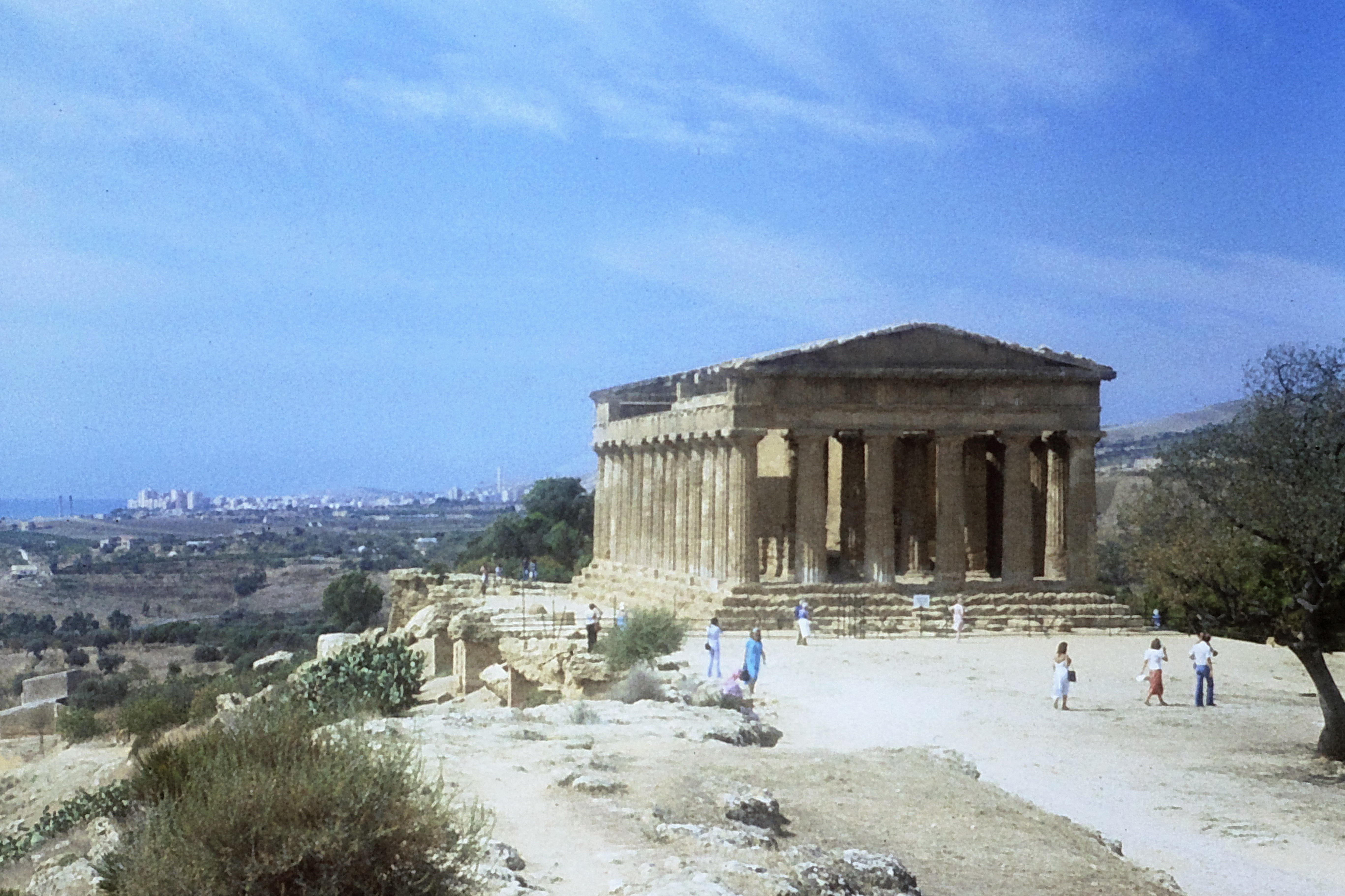
Agrigento (Sicilian: Girgenti or Giurgenti) rises on a ridge above the sea, its honey-hued buildings unfolding across the hills like a sunlit amphitheatre. Behind it, vineyards and almond groves stretch inland; below it, the ancient Valley of the Temples spills toward the coast in a sweep of Doric grandeur.
Once one of the great cities of Magna Graecia, Agrigento (ancient Akragas) still bears the layered marks of its history — Greek, Roman, Arab, Norman — all wrapped within a town that manages to feel both timeless and lived-in. Narrow alleyways wind through the historic centre of Girgenti, revealing Baroque churches, tucked-away trattorias, and glimpses of blue horizon between rooftops.
Today, Agrigento balances the weight of its past with a quietly modern rhythm. It draws visitors with world-class archaeology, but rewards them with sunset piazzas, literary echoes of Pirandello, and an authentic Sicilian pulse that lingers well beyond the ruins. This is not just a gateway to the ancient world — it’s a city with a soul of its own.
Agrigento travel guide
Understand
History Founded around 582 BC by Greek settlers from Gela, Agrigento — then called Akragas — quickly rose to prominence as one of the most powerful cities in Magna Graecia. Under the tyrant Theron in the 5th century BC, the city flourished both culturally and architecturally, commissioning grand temples that still dominate the landscape of the Valley of the Temples today.
Akragas reached a golden age of wealth and influence, known for opulence and ambition. The philosopher Empedocles was born here, and the city minted its own coins and expanded deep into the Sicilian interior. However, it suffered from internal strife and was sacked by the Carthaginians in 406 BC, never fully regaining its former power. Under Roman rule, renamed Agrigentum, the city became prosperous once more, with agriculture, sulfur mining, and a thriving port sustaining its economy. Cicero noted its importance in his writings, and it retained a mostly Greek character for centuries. Following the fall of Rome, Agrigento passed through Vandal, Ostrogothic, Byzantine, Arab, and Norman hands. The Arabs relocated the town to the higher ridge for defensive reasons and left lasting cultural influences. The Normans renamed it Girgenti, a name it retained until 1927, when the Fascist regime restored the Latinised Agrigento. In 1934, the city gained further recognition as the birthplace of Nobel Prize-winning playwright Luigi Pirandello. In 1997, Agrigento’s ancient remains were designated a UNESCO World Heritage Site, and in 2025 it will serve as Italy’s Capital of Culture.
Climate
Agrigento has a semi-arid Mediterranean climate, with long, hot, and dry summers and mild, relatively wet winters. Summer temperatures regularly reach into the high 20s °C (80s °F), and rainfall is rare between June and September. Winters are sunny and pleasant, with average daytime highs around 16–18 °C. Spring and autumn offer ideal weather for sightseeing, though brief thunderstorms are possible.4.
Tourist informat
Getting there
Agrigento is well connected by train and bus, though access from the east of Sicily can be time-consuming. The Valley of the Temples and Porto Empedocle are both within easy reach.
By plane The nearest major airports are:
Palermo Falcone–Borsellino Airport (PMO) – 160 km north, about 2 hr 15 min by car. Catania Fontanarossa Airport (CTA) – 165 km east, roughly 2 hr 30 min by car. Trapani–Birgi Airport (TPS) – 150 km northwest, around 2 hr by car. There are no airports in Agrigento. Palermo and Catania airports offer car rental, trains (via connections), and buses to Agrigento.
By train Frequent regional trains connect Agrigento Centrale, near the centre of town, with Palermo and Caltanissetta. There are also less frequent services to Enna, but the train station in Enna lies about 5 km downhill from the town centre, making it a less practical option. The journey between Agrigento and Palermo takes around 2 hours and costs €10.90 (as of March 2023). Reaching the eastern side of Sicily (e.g. Syracuse; Taormina) by rail is possible but slow and requires multiple changes.
1 Agrigento Centrale railway station (Stazione di Agrigento Centrale), Piazza Marconi. The main station in Agrigento, located near the southeast edge of the historic centre. 2 Agrigento Bassa railway station (Stazione di Agrigento Bassa). Secondary station closer to Porto Empedocle, occasionally used for tourist trains and local services.
By bus Frequent long-distance buses run to Agrigento from Palermo, Caltanissetta, Catania, Sciacca, and other Sicilian cities. Buses also go to nearby towns such as Eraclea Minoa, and a few run to Gela, Mazara del Vallo, Marsala, and Trapani (2 hr 20 min). The main bus terminal is:
3 Autostazione (Bus station), Piazzale Fratelli Rosselli. Main terminal for regional buses including AST, SAIS, and Salvatore Lumia. Located a short walk from the train station. Check bus schedules on:
Autolinee Lumia (for Trapani; Marsala; etc.) SAIS Autolinee (for Palermo,
Getting around
On foot Agrigento’s historic centre and medieval streets are compact and walkable, easily reached on foot from the train station at Piazza Marconi.
By shuttle The Agrigento Culture Pass includes access to the city’s main cultural attractions as well as a shuttle service connecting key stops: Stazione Centrale, Giunone, Ercole, Marag, and the cathedral, all for a single price. Details, tickets, and timetables are available from Coopculture.it.
By bus City buses operated by TUA run frequently from the main train station. Routes 1, 2, and 3 serve the Archaeological Museum and continue downhill to the main entrance of the Valley of the Temples. For the Temple of Juno (Tempio di Giunone) entrance, take bus 2/. Timetables are available online, but the maps may not always reflect actual route changes. TUA (Trasporti Urbani Agrigento). Buy tickets in advance from bars or tabacchi and validate them on board. You can also pay on board with coins, contactless card, or mobile payment (Visa; Mastercard; Apple Pay; Google Pay). Single: €1.20 in advance; €1.70 onboard; €1.50 with contactless or mobile payment. Day pass: €3.40. (updated Jun 2025)
See
Agrigento is rich in history, from its days as the powerful Greek city of Akragas to its later Roman, medieval, and Baroque incarnations. While the Valley of the Temples is its most iconic attraction, the city itself holds a wealth of lesser-known treasures, including archaeological remains, historic churches, and libraries nestled in the old town. Here’s where to begin exploring.
Museums Agrigento’s main museum and archaeological collection is housed halfway between the city centre and the Valley of the Temples. It's an essential stop to understand the cultural and historical context of ancient Akragas — and a cool refuge on hot days.
1 Museo Archeologico Regionale "Pietro Griffo" (Regional Archaeological Museum), Contrada San Nicola 12 (Buses 1; 2; 2/; or 3 from Piazzale Rosselli), ☏ +39 0922 401565. Tu–Sa 09:00–19:00; Su M 09:00–13:00. This modern museum sits halfway between the city and the Valley of the Temples. Its exhibits showcase artifacts from ancient Akragas, including an impressive reconstructed telamon from the Temple of Olympian Zeus. €8. (updated Jul 2025) 2 Museo Diocesano di Agrigento (Diocesan Museum), Via Duomo, 96 (next to the cathedral), ☏ +39 0922 595304. M–S 10:00–13:00, 16:00–19:00; Su 10:00–13:00. Located beside the cathedral, this museum showcases sacred art, liturgical vestments, silverware, and documents spanning centuries of ecclesiastical history. Housed in the 17th-century Episcopal Palace, its highlight is a richly decorated hall with coffered ceilings and Renaissance paintings. €5 (reduced €3; under 10 free). (updated Jul 2025) 3 Casa Natale di Luigi Pirandello (Luigi Pirandello’s Birthplace and Museum), Contrada Caos, Via Pirandello (about 4 km west of the city centre; reachable by car or local bus), ☏ +39 0922 511218. Tu–Su 09:00–13:00, 15:30–19:00. The childhood home of Lu
Overview adapted from Wikipedia, travel guide fromWikivoyage (CC BY-SA). Photography via Wikimedia Commons.