

Palau
Capital: Ngerulmud · Oceania
Palau is one of the Republic of China (Taiwan)'s formal diplomatic allies, maintaining full ambassador-level relations.
Palau in world rankings
- 215th largest by population in the world (of 219)
- 195th largest by area in the world (of 219)
- 175th largest economy (GDP) in the world (of 178)
- 53rd highest GDP per capita in the world (of 178)
- Capital
- Ngerulmud
- Population
- 21,729
- Area
- 466 km²
- Currency
- United States dollar
- GDP
- $345M
- GDP per capita
- $19,532
- Life expectancy
- 69.4 yrs
- Urban population
- 79%
- Calling code
- +680
- Internet users
- 84%
- Forest cover
- 91%
- Languages
- Palauan, Japanese, English
Palau compared with Taiwan
How Palau measures up against Taiwan — home to 23.3 million people across 36,193 km².
Latest news — Palau
More news →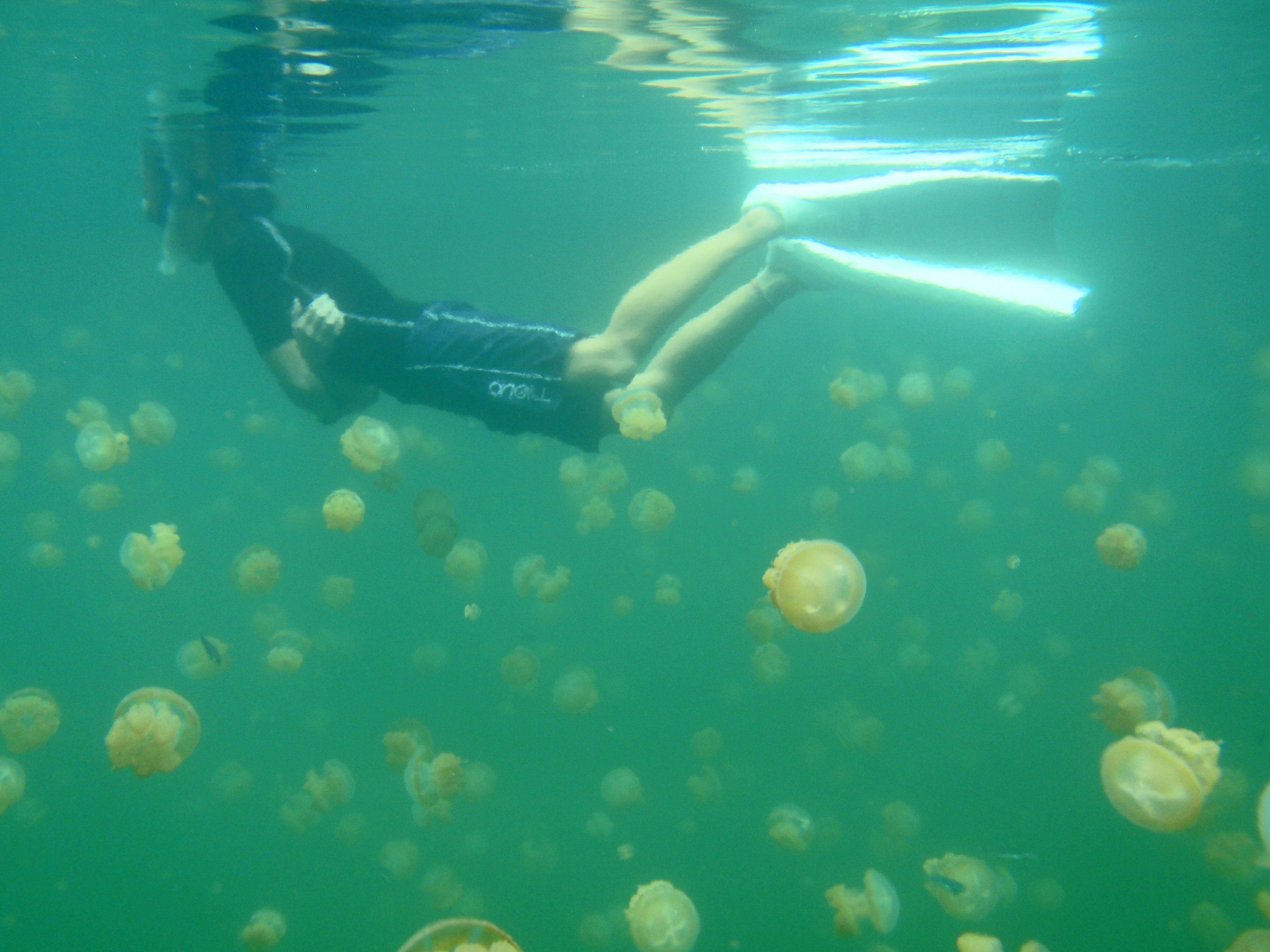
Hidden in the Pacific, the Enchanting Island Nation of Palau Holds Ancient Secrets and Tra
In the heart of the Pacific Ocean, where the sun dips into the horizon and paints the sky with hues of crimson and gold, lies the enchanting island nation
Country profile
Background
Humans arrived in the Palauan archipelago from Southeast Asia around 1000 B.C. and developed a complex, highly organized matrilineal society where high-ranking women picked the chiefs. The islands were the westernmost part of the widely scattered Pacific islands north of New Guinea that Spanish explorers named the Caroline Islands in the 17th century. The 18th and 19th centuries saw occasional visits of whalers and traders as Spain gained some influence in the islands and administered it from the Philippines. Spain sold Palau to Germany in 1899 after losing the Philippines in the Spanish-American War.Japan seized Palau in 1914, was granted a League of Nations mandate to administer…
Location
Oceania, group of islands in the North Pacific Ocean, southeast of the Philippines
Climate
tropical; hot and humid; wet season May to November
Terrain
varying topography from the high, mountainous main island of Babelthuap to low, coral islands usually fringed by large barrier reefs
Natural resources
forests, minerals (especially gold), marine products, deep-seabed minerals
Ethnic groups
Palauan (Micronesian with Malayan and Melanesian admixtures) 70.6%, Carolinian 1.2%, Asian 26.5%, other 1.7% (2020 est.)
Religions
Roman Catholic 46.9%, Protestant 30.9% (Evangelical 24.6%, Seventh Day Adventist 5%, other Protestant 1.4%), Modekngei 5.1% (indigenous to Palau), Muslim 4.9%, other 12.3% (2020 est.)
Languages
Palauan (official on most islands) 65.2%, other Micronesian 1.9%, English (official) 19.1%, Filipino 9.9%, Chinese 1.2%, other 2.8% (2015 est.)
Government
presidential republic in free association with the US
Economy
high-income Pacific island economy; environmentally fragile; subsistence agriculture and fishing industries; US aid reliance; rebounding post-pandemic tourism industry and services sector; very high living standard and low unemployment
Palau · Travel guide
Understand
After three decades as part of the UN Trust Territory of the Pacific under US administration, this westernmost cluster of the Caroline Islands chose independence in 1978, instead of joining the Federated States of Micronesia. A Compact of Free Association with the US was approved in 1986, but not ratified until 1993. Palau became independent on October 1, 1994. It is illegal to sell/buy or use sunscreen or skin care products that contain chemicals that damage the reef. Details can be found on the ICRI web page.
History Early Palauans may have come from Polynesia and Asia. Depending on the origin of a family, Palauans may represent many parts of Melanesia, Micronesia and Polynesia. However, they are not traditionally considered to be Micronesian. For thousands of years, Palauans have had a well established matrilineal society, believed to have descended from Javanese precedents. Palau had limited relations before the 18th century, mainly with Yap and Java. Had it not been for shipwrecked islanders who took refuge in the Philippines, Europeans likely would not have found Palau until much later. Englishman Captain Henry Wilson was shipwrecked off the island of Ulong in 1783 and it was Wilson who gave the archipelago the name "Pelew Islands". In the late 19th century, possession of the islands was claimed by Britain, Spain, and Germany. In 1885, the matter was brought to Pope Leo XIII for a decision. The Pope recognized the Spanish claim, but granted economic concessions to Britain and Germany. Palau then became part of the Spanish East Indies, along with the Northern Mariana Islands, the Caroline Islands and the Marshall Islands. They were all administered from the Philippines. Spain sold the Palau archipelago to Germany in 1899 after which it was administered from Ge
See
Most visitor attractions are found on and around The Rock Islands or Chelbachebover. These 250 rock islands — many tiny, uninhabited places — offer some enchanting views and are a World Heritage site. Popular dives include Blue Corner, Blue hole and the German Channel. Take a guided tour along ancient stone monoliths and terraces while your guide tells you about the legends that surround them. With just over 21,000 inhabitants, even the capital might feel like a village, but there's a handful of interesting sights and a few museums showcasing traditional Palau culture and the country's turbulent war time history. Again though, it's the sheer beauty both above and under water that makes visitors rave about this small island nation. Palau is the site of the world's first shark sanctuary across 629,000 kilometers in exclusive economic zone and breeds a variety with 135 species of endangered sharks.
Do
Palau is most famous for scuba diving. The Blue Corner, with constant sharks and a high current, is less than 1 hour's boat ride from most resorts. There are many local dive shops and live-aboards that offer tours, including tours to World War II battle fields. The Blue Corner, German Channel, Ulong Channel and Blue Holes are all amazing dive sites. Snorkelling in jellyfish lake has become less popular lately. This lake contains jellyfish which have evolved away their stingers in the absence of predators. There are many tours you can join (US$100; 2023) which will go to the jellyfish lake to snorkel. Scuba diving is not permitted, nor is necessary, in the jellyfish lake. However, the warming of the lake, caused by climate change, forces the jellyfish to leave it and go elsewhere. As a result, jellyfish are present in the lake only sporadically, and not in the numbers seen only a few decades ago. Seeing them is not guaranteed.
Eat
Palau has large communities from Taiwan, the Philippines, Korea, Japan and the United States and the local stores have evolved to supply their needs. So Koror offers an amazing range of foodstuffs in its stores, at a price of course. Japanese-inspired Bento lunch boxes are very popular. Koror also has the largest concentration of restaurants.
Drink
Many licensed establishments in Palau — from quiet little bars to Japanese-style karaoke bars comple
Buy
Money
Palau uses the U.S. dollar as its currency ("$"; ISO currency code: USD). It is divided into 100 cents.
Costs As you might expect from a remote island where tourism is the main industry, prices are comparatively high, and even a low-end daily budget would be around $100/day. An increase in visitor numbers in 2015-16 (including many Chinese package tours) has caused overcrowding; in 2017, President Tommy Remengesau proposed policy intended to reposition Palau as a destination of primarily "five-star hotels" (so fewer visitors; at a higher cost) to limit the negative environmental and social impact.
Handicrafts Palauan storyboards are traditional wood carvings depicting Palauan myths and legends.
Getting there
Visa requirements Visas are not required by citizens of any Schengen country (90 days), Taiwan (90 days), the United States (a year), Israel (90 days), the Marshall Islands (1 year) and the Federated States of Micronesia (1 year). Nearly all other visitors can obtain a 30 day visa on arrival, except for citizens of Bangladesh and Myanmar who must obtain a visa in advance. Upon entry, visitors must sign the Palau Pledge, a promise to protect the environment. Single-use plastics and non-reef-safe sunscreens are prohibited.
By plane The only realistic choice. There is only one airport, Airai (ROR IATA), or officially Roman Tmetuchl International Airport, on Babeldaob. This airport is served by scheduled direct flights from Brisbane, Guam, Manila, Nauru, and Tokyo, and charter flights from Hong Kong. As of 2023 there were no taxis waiting for incoming passengers at the airport, so you will need to organise your transfer to your hotel in advance (approx US$30).
By boat Possible but only recommended for experienced mariners. Cruise ships occasionally visit Palau.
Getting around
By taxi There are many local taxis.
By car If you rent a car, be prepared to drive slowly on some bumpy roads. Palau features both left- and right-hand drive cars, which can cause some confusion. If you drive south to Ice Box Park, the facility behind it is a sewage treatment plant. The road further north is paved and is very nice... once you get past the airport. Renting a motorcycle is also a good idea. Palau is small enough to ride around on one, and rentals are relatively cheap.
By boat Any other diving will be from a boat, after an hour or more ride which will cost around US$150 for a two-tank dive. There are no dive spots or beaches on Koror, the main island.
Cities & destinations in Palau 3
Museums in Palau 2
Airports in Palau 2
Nature reserves in Palau 1
Hotels in Palau 2
Churches in Palau 1
Power stations in Palau 2
Archaeological sites in Palau 2
Explore Palau by category
Country fields from Wikidata (CC0); flag via Wikimedia Commons; profile from the CIA World Factbook (public domain); travel guide from Wikivoyage (CC BY-SA); GDP, GDP per capita and life expectancy from World Bank Open Data (CC BY 4.0).