

Kuwait
Capital: Kuwait City · Asia
Kuwait in world rankings
- 128th largest by population in the world (of 219)
- 157th largest by area in the world (of 219)
- 55th largest economy (GDP) in the world (of 178)
- 34th highest GDP per capita in the world (of 178)
- Capital
- Kuwait City
- Population
- 4,464,000
- Area
- 17,818 km²
- Currency
- Kuwaiti dinar
- GDP
- $157.2B
- GDP per capita
- $32,312
- Life expectancy
- 84.6 yrs
- Urban population
- 100%
- Calling code
- +965
- Internet users
- 100%
- Forest cover
- 0%
- Languages
- Arabic
Kuwait compared with Taiwan
How Kuwait measures up against Taiwan — home to 23.3 million people across 36,193 km².
Countries bordering Kuwait


Latest news — Kuwait
More news →Kuwait Confirms Electrical Grid Stability Following Recent Iranian Infrastructure Attacks
Kuwait’s Ministry of Electricity, Water and Renewable Energy announced that the nation’s electrical grid has successfully maintained stability and continue
GCC Halts Iran Diplomatic Talks After Houthi Missile Strikes Hit Saudi
Saudi Arabia and its fellow Gulf Cooperation Council (GCC) members announced on Monday that they are suspending a series of diplomatic talks with Iran that
Iran launches drone missile strikes on US bases in Kuwait, UAE in retaliation
Iranian military forces on Tuesday, September 3, launched drones and cruise missiles at Ahmed al‑Jaber Air Base in Kuwait and Al‑Minhad Air Base in the Uni

Step off the tourist map and discover the desert kingdom of Kuwait
Nestled in the Middle East along the shimmering coastline of the Persian Gulf, Kuwait is a fascinating nation where rich historical traditions meet a moder
Iraq's Oil Exports Reach Historic High of Over 300 Million Barrels
Iraq Exports Over 300 Million Barrels of Oil in Four Days News that Iraq exported over 30 billion barrels of oil through the Persian Gulf from July 4 to Au
Kuwait and Pakistan Sign Defense Cooperation Agreement to Boost Regional Security and Cooperation
Recently, the Kuwait government approved the Kuwait-Pakistan Defense Cooperation Agreement, a five-year defense cooperation framework that covers military
Country profile
Background
Kuwait has been ruled by the AL-SABAH dynasty since the 18th century. The threat of Ottoman invasion in 1899 prompted Amir Mubarak AL-SABAH to seek protection from Britain, ceding foreign and defense responsibility to Britain until 1961, when the country attained its independence. Iraq attacked and overran Kuwait in 1990. After several weeks of aerial bombardment, a US-led UN coalition began a ground assault in 1991 that liberated Kuwait in four days. In 1992, the Amir reconstituted the parliament that he had dissolved in 1986. Amid the 2010-11 uprisings and protests across the Arab world, stateless Arabs known as Bidoon staged small protests demanding citizenship, jobs, and other…
Location
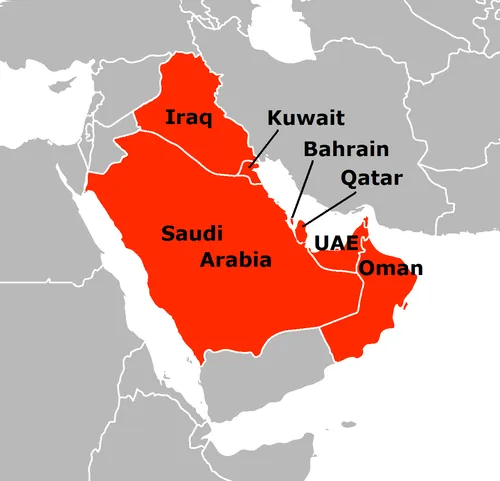
Middle East, bordering the Persian Gulf, between Iraq and Saudi Arabia
Climate
dry desert; intensely hot summers; short, cool winters
Terrain
flat to slightly undulating desert plain
Natural resources
petroleum, fish, shrimp, natural gas
Ethnic groups
Kuwaiti 30.4%, other Arab 27.4%, Asian 40.3%, African 1%, other 0.9% (includes European, North American, South American, and Australian) (2018 est.)
Religions
Muslim (official) 74.6%, Christian 18.2%, other and unspecified 7.2% (2013 est.)
Government
constitutional monarchy (emirate)
Economy
small, high-income, oil-based Middle East economy; renewable energy proponent; regional finance and investment leader; maintains oldest sovereign wealth fund; emerging space and tourism industries; mid-way through 25-year development program
Kuwait · Travel guide
Understand
Kuwait has a population of 3,806,616 (Jun 2012), including about 2 million non-Kuwaitis, with ethnic groups consisting of 45% Kuwaiti, 35% other Arabs, among whom Egyptians predominate, 9% South Asian, 4% Iranian, and 7% others. Kuwait ranks among the most liberal Gulf nations in terms of religion. While Islam is the official religion with fully 85% of the population practicing the Muslim faith (divided into 70% Sunni and 30% Shia), others including Christians, Hindus and Zoroastrians make up 15% of the population. The country is divided into governorates, which are divided into areas, which are divided into blocks. Knowing the area and block is necessary, as the street numbers may be repeated across different blocks of the same areas. Area names are not repeated across the country, so it would be unusual if you mention the governorate after the area. See the Get around section. Electrical current is 220 Volts a/c, plugs are either standard British, Europlugs (2 prong diamond-shaped) or German Schuko variety—adapters are readily available.
History
The Kuwaitis trace their roots to the Al-Anisa and Al-Utub tribes from Nejd province, which is now in Saudi Arabia. They moved to Qatar and then to Al-Qurain, now in Kuwait, by around 1710. By 1752, the long term residents of Al-Qurain decided that they needed a central authority to tamp down tribal warfare in the area. The Al-Sabah tribe was chosen to rule, and the first sheikh, Sabah ibn Jaber, reigned as Sabah I from 1752 to 1756. The Sabahs mediated religious and tribal disputes with diplomacy. They also played the Ottomans, Egyptians and European powers against each other while maintaining their autonomy. In 1899, Mubarak I signed an agreement making Kuwait a British Protectorate, with the sheikhs maintaining local co
See
See Kuwait City for listings of attractions in the city. Kuwait is not the ideal vacation spot in the region, but if on a business trip, there are some sites worth seeing:
1 Failaka Island, [email protected] (take KPTC ferry from Ras Al Salmiya (Ras al Ardh) near scientific center or private speedboat near Marina Mall), ☏ +965 66111924. A port with many old dhows, Failaka Island can be reached by regular ferry services. In addition to KPTC you can try Ikarus Boat Rides at Marina Crescent - but have backup plans as departures are not guaranteed. There are also some Bronze Age and Greek archaeological sites well worth viewing, including the island's Greek temple. Failaka Island was named Ikarus by the Greeks who, under Alexander the Great, established an outpost in the island. Failaka was heavily damaged during the Iraqi invasion. Plans are underway to develop the island into a large-scale tourist attraction. KD 3. (updated Jan 2025) Al Jahra city. Traditional-style boums and sambuks (boats) are still built in Al Jahrah, although, nowadays, vessels are destined to work as pleasure boats rather tha
Getting there
Entry requirements
Citizens of the Gulf Cooperation Council (GCC) countries (Bahrain; Oman; Qatar; Saudi Arabia and the United Arab Emirates) may enter Kuwait without a visa and stay indefinitely. The nationals of 53 countries/territories are eligible for visas on arrival at Kuwait's airport and land borders; alternatively they may apply for an eVisa. Either type of visa is valid for a single entry of up to 3 months and, as of 2026, costs KD 10. Those 53 nations/territories are: Andorra, Australia, Austria, Belgium, Bhutan, Brunei, Bulgaria, Cambodia, Canada, Croatia, Cyprus, Czechia, Denmark, Estonia, Finland, France, Georgia, Germany, Greece, Hong Kong, Hungary, Iceland, Ireland, Italy, Japan, Laos, Latvia, Liechtenstein, Lithuania, Luxembourg, Malaysia, Malta, Monaco, Netherlands, New Zealand, Norway, Poland, Portugal, Romania, San Marino, Serbia, Singapore, Slovakia, Slovenia, South Korea, Spain, Sweden, Switzerland, Turkey, Ukraine, United Kingdom, United States of America, and Vatican City. All other nationals need advance visas, which require an invitation from a sponsor in Kuwait. Kuwait Airways offices and major hotels can provide invitations, but the process can take up to a week and may require a fee. The Embassy of Kuwait in Japan has some information. Import restrictions: Alcohol and pork are not legal and may not be imported into the country. If you bring either in, it will be confiscated at the airport and you may be subjected to fines for attempting to import these banned goods. Your bags will be X-rayed and/or hand-searched on arrival.
By plane
1 Kuwait International Airport (KWI IATA) (16 km (9.9 mi) south of Kuwait City). Kuwait's only airport is served by many regional and a few international airlines, connecting it directly to the Middle Eas
Getting around
With an area of 17,820 square kilometres (6; 880 sq mi), Kuwait is among the smallest countries in the world and you can easily cover the country in less than 2-3 days. A journey from the capital city to Umm Qasr in Iraq will take you roughly 60-80 minutes depending on traffic conditions.
By road Kuwait has a good road system. All signs are in English and Arabic. The major north-south roads are effectively freeways numbered Expressway 30, 40, etc. These are traversed by increasingly widely spaced ring roads named First, Second, etc., making navigation fairly easy. Using Google Maps for navigation is a good option, as it offers traffic and roads, and all major destinations. However, if you need to find a place using its address (which you probably won't need to) Google Maps will likely give you the wrong location. This is due to how Kuwait addresses work mixed with lack of proper support of Kuwait subdivisions in Google Maps platform. Areas are labelled as neighbourhoods and blocks as sub-neighbourhoods. For example, if you are in Street 1, block 1, Jabriya, your address will appear as Street 1, Kuwait City (since it is the only city in Kuwait; and neighbourhoods aren't supposed to be included in addresses). So if you intend to go/find a place using its address, make sure you install the free and easy-to-use official Kuwait Finder GIS system on your phone from its apps market.
By public transport Kuwait's public transport is adequate with two companies (KPTC and City Bus) running dozens of routes in every major city. Waiting times for buses range from one minute for most frequent routes to 1 hour for less used routes. All buses are equipped with air-conditioners and usually one can find a seat without much trouble. Although, during peak hours (7-9AM; 2-4PM; 8-9PM)
Cities & destinations in Kuwait 2
Museums in Kuwait 6
Airports in Kuwait 2
Tallest buildings in Kuwait 4
Ports in Kuwait 2
Hospitals in Kuwait 4
Hotels in Kuwait 3
Shopping malls in Kuwait 4
Churches in Kuwait 2
City parks in Kuwait 3
Music venues in Kuwait 2
Racecourses in Kuwait 1
Cemeteries in Kuwait 1
Amusement parks in Kuwait 1
Zoos in Kuwait 1
Palaces in Kuwait 2
Libraries in Kuwait 1
Archaeological sites in Kuwait 3
Mosques in Kuwait 5
Cathedrals in Kuwait 1
Explore Kuwait by category
Country fields from Wikidata (CC0); flag via Wikimedia Commons; profile from the CIA World Factbook (public domain); travel guide from Wikivoyage (CC BY-SA); GDP, GDP per capita and life expectancy from World Bank Open Data (CC BY 4.0).