

Chile
Capital: Santiago · Americas
Chile is one of South America's most stable and prosperous nations, with a long, varied geography. Stretching over 4,000 kilometres down the Pacific coast, with about 19 million people, it spans everything from the Atacama Desert in the north to glaciers and fjords in the south. Chile is the world's largest copper exporter, with mining as its economic backbone, and is emerging in lithium and renewable energy. Known for steady democracy and a market economy, it is a model performer in Latin America. Stunning nature, fine wine and clear skies for astronomy give Chile a distinctive appeal.
Chile in world rankings
- 64th largest by population in the world (of 219)
- 39th largest by area in the world (of 219)
- 42nd largest economy (GDP) in the world (of 178)
- 57th highest GDP per capita in the world (of 178)
- Capital
- Santiago
- Population
- 19,458,000
- Area
- 756,102 km²
- Currency
- Chilean peso
- GDP
- $357.4B
- GDP per capita
- $17,995
- Life expectancy
- 81.4 yrs
- Urban population
- 89%
- Calling code
- +56
- Internet users
- 96%
- Forest cover
- 25%
- Languages
- Spanish
Chile compared with Taiwan
How Chile measures up against Taiwan — home to 23.3 million people across 36,193 km².
Countries bordering Chile


Latest news — Chile
More news →
Bus Plunges Down Steep Slope Into Valparaíso Residential Complex, Leaving One Dead
A tragic accident occurred in the historic coastal city of Valparaíso, Chile, on Tuesday, when a passenger bus plunged down a steep slope and crashed direc
Severe Rainfall Triggers Deadly Flooding and Infrastructure Damage Across Central Chile
Severe rainfall lashed central Chile this week, inundating the capital city of Santiago and surrounding regions with torrential downpours that triggered wi
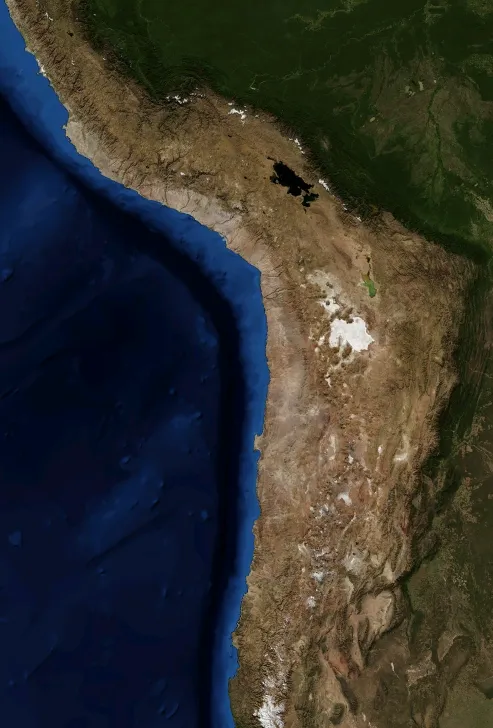
El Niño Triggers Rare Unseasonal Floral Bloom Across Chile's Atacama Desert
Unseasonal floral blooms have emerged across parts of the Atacama Desert in northern Chile, transforming sections of the world’s driest non-polar landscape
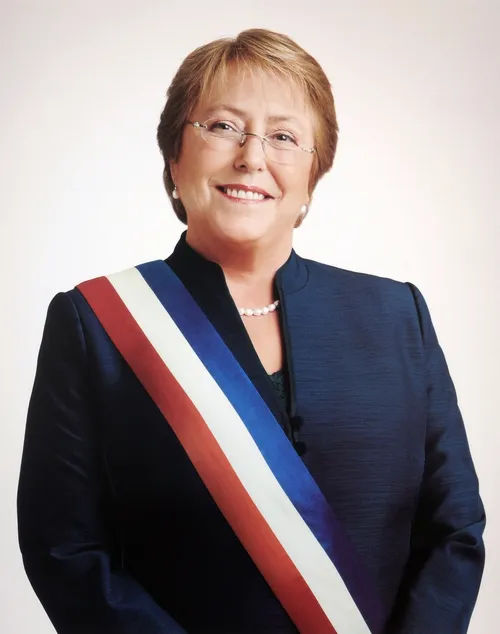
Former Chilean President Bachelet withdraws from UN chief race as Greenspan leads
Former Chilean President Michelle Bachelet formally announced recently that she is withdrawing from the race for the next United Nations Secretary-General
Chile First South American Nation to Eliminate Dog‑Transmitted Rabies, WHO Confirms
Chile has become the first country in South America to eliminate dog‑transmitted rabies, a milestone confirmed by the World Health Organization (WHO) on Mo
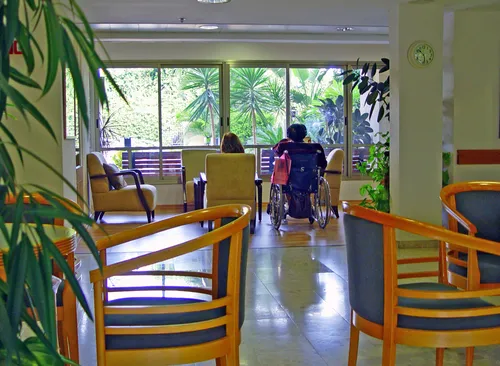
Chile Retirement Home Fire Claims 16 Lives in Pitrufquén, Investigation Underway
At least 16 people died when a blaze engulfed a retirement home near the town of Pitrufquén in Chile’s southern Cautín Province on Tuesday, with ten reside
Country profile
Background
Indigenous groups inhabited central and southern Chile for several thousand years, living in mixed pastoralist and settled communities. The Inca then ruled the north of the country for nearly a century prior to the arrival of the Spanish in the 16th century. In 1541, the Spanish established the Captaincy General of Chile, which lasted until Chile declared its independence in 1810. The subsequent struggle with the Spanish became tied to other South American independence conflicts, with a decisive victory not being achieved until 1818. In the War of the Pacific (1879-83), Chile defeated Peru and Bolivia to win its current northernmost regions. By the 1880s, the Chilean central government…
Location
Southern South America, bordering the South Pacific Ocean, between Argentina and Peru
Climate
temperate; desert in north; Mediterranean in central region; cool and damp in south
Terrain
low coastal mountains, fertile central valley, rugged Andes in east
Natural resources
copper, timber, iron ore, nitrates, precious metals, molybdenum, hydropower
Ethnic groups
White and non-Indigenous 88.9%, Mapuche 9.1%, Aymara 0.7%, other Indigenous groups 1% (includes Rapa Nui, Likan Antai, Quechua, Colla, Diaguita, Kawesqar, Yagan or Yamana), unspecified 0.3% (2012 est.)
Religions
Catholic 57%, none 25.7%, Evangelical or Protestant 16.2%, other Christians and traditions related to Christ 1.3%; less than 1%: Buddhist, Catholic Orthodox, Church of Jesus Christ of Latter-Day Saints, Islam, Judaism,…
Government
presidential republic
Economy
export-driven economy; leading copper producer; though hit by COVID-19, fairly quick rebound from increased liquidity and rapid vaccine rollouts; decreasing poverty but still lingering inequality; public debt rising but still manageable; recent political violence has had negative economic consequences
Chile · Travel guide
Understand
Chile borders Peru to the north and Argentina and Bolivia to the east. Chile has over 5,000 km (3; 100 miles) of coast on the South Pacific Ocean.
History Before the Spanish arrived in the 16th century, northern Chile was under Inca rule while the indigenous Araucanians (Mapuche) inhabited central and southern Chile. The Mapuche were also one of the last independent American indigenous groups, that were not fully absorbed into Spanish-speaking rule until after Chile's independence. Although Chile declared independence in 1810 (amid the Napoleonic wars that left Spain without a functioning central government for a couple of years), decisive victory over the Spanish was not achieved until 1818. In the War of the Pacific (1879–1883), Chile invaded parts of Peru and Bolivia and kept its present northern regions. It was not until the 1880s that the Mapuche were completely subjugated.
Although relatively free of the coups and arbitrary governments that blighted South America until the 1970s, things took a turn for the worse in that decade. When popular communist/democratic socialist Salvador Allende won a bare plurality in the free and fair 1970 elections, he ran on a platform of social justice and bridging the (already then) huge divide between a wealthy few and the rest of the population. However, although some centre-right (most notably the Chilean Christian Democrats) parties supported or at least didn't outright attack his government, he had to deal not only with domestic opposition from some sectors of society and the military, but also a difficult international situation with the U.S. not tolerating any kind of "communist" in their "backyard". In a coup that was led by the head of the army (that Allende had picked himself, believing him to be loyal if not to himself
See
Stretching from 17°S in the north to 55°S in the south, Chile is latitude-wise among the longest countries in the world, with several climate zones and types of nature. High mountains are present everywhere in the country. On the Chilean mainland you can visit five UNESCO World Heritage Sites: Old Valparaíso, the Sewell mining town in Rancagua and the Humberstone, Santa Laura Saltpeter Works outside Iquique, the Qhapaq Ñan track network in the three northern regions, and the Chinchorro mummies in Arica y Parinacota. Just off the coast are the churches of Chiloé Island, and five and a half hours by plane across the Pacific Ocean will get you to maybe the most famous "Off the Beate
Getting there
Entry requirements
Visas Passport holders of the following countries do not need a visa to enter Chile when the purpose of the visit is tourism for up to 90 days (unless otherwise noted): Albania, Andorra, Antigua and Barbuda, Australia, Austria, Bahamas, Barbados, Belgium, Belize, Bolivia, Bosnia and Herzegovina, Brazil, Bulgaria, Canada, Colombia, Costa Rica, Croatia, Cyprus, Czech Republic, Denmark, Ecuador, El Salvador, Estonia, Fiji, Finland, France, Georgia, Germany, Greece, Grenada, Guatemala, Guyana, Honduras, Hong Kong, Hungary, Iceland, Indonesia, Ireland, Israel, Italy, Jamaica, Japan, Republic of Korea, Latvia, Liechtenstein, Lithuania, Luxembourg, Macao (30 days), Malaysia (30 days), Malta, Mauritius, Mexico, Moldova, Monaco, Montenegro, Netherlands, New Zealand, Nicaragua, North Macedonia, Norway, Panama, Paraguay, Peru, Poland, Portugal, Romania, Russia, Saint Kitts and Nevis, Saint Lucia, Saint Vincent and the Grenadines, San Marino, Serbia, Singapore (30 days), Slovakia, Slovenia, South Africa, Spain, Sweden, Switzerland, Taiwan, Thailand, Tonga, Trinidad and Tobago, Turkey, Ukraine, United Arab Emirates, United Kingdom, United States, Uruguay, Vatican City and Vietnam. Citizens and residents (if their nationality is mentioned under visa exemptions applicable to normal passport holders) of the following countries can enter with their National ID card: Argentina, Bolivia, Brazil, Colombia, Ecuador, Paraguay, Peru and Uruguay Citizens of other nationalities, including several African and Asian nationalities, will not be able to enter Chile, without applying for a special visa from a Chile consulate before entry. Further information about tourist visas can be found on the Ministry of Interior and Public Safety website.
Entry and exit procedures Whe
Getting around
By plane Chile has a rather good airport infrastructure. The main hub for flights in Chile is the Arturo Merino Benitez International Airport (SCL IATA) in Santiago, from where several airlines serve even the remotest corners of the country. These airlines are the three Chilean airlines: LATAM Airlines, Sky Airline and JetSmart. Although LATAM is by far the largest company, Sky and JetSmart offer good services to the main cities. Use the Chilean page of the airlines because they charge in pesos, which is a lot cheaper than the English version with U.S. dollars. Subscribing to the airlines' notifications is also recommended as many of the promotions come in the form of a code. You can find cheap prices four months before the flight and especially if you fly between Tuesday and Thursday or on Saturday. Low-cost airlines do not allow free carry-ons except a small bag. Almost all flights start or finish in Santiago, so many routes between other cities are subject to time-consuming layovers in Santiago Airport. An exception is the so-called "Rutas Smart" by JetSmart which avoid Santiago; most of them are from Antofagasta, Calama, La Serena or Concepción. The only airline flying to Easter Island is LATAM Airlines from Santiago. Other remote locations are served by regional airlines. In the Extreme South, Aerovías DAP offers daily routes (in summer) from Punta Arenas to Porvenir in Tierra del Fuego and Puerto Williams. Between November and March, DAP offers very limited and expensive flights to Villa Las Estrellas in Antarctica; this flight can be taken only as part of a tour and requires a 5-day stay in Punta Arenas. To Robinson Crusoe Island, there are weekly flights from Santiago and Valparaíso.
By bus The bus system is sophisticated and provides a cheap and comforta
Cities & destinations in Chile 45
World Heritage in Chile 6
Museums in Chile 6
National parks in Chile 6
Airports in Chile 60
Tallest buildings in Chile 3
Caves in Chile 4
Nature reserves in Chile 12
Ports in Chile 5
Railway stations in Chile 12
Hospitals in Chile 6
Hotels in Chile 7
Shopping malls in Chile 1
Aquariums in Chile 12
Stately homes & country houses in Chile 1
Churches in Chile 12
Gardens in Chile 6
City parks in Chile 12
Notable schools in Chile 5
Music venues in Chile 6
Arenas in Chile 1
Casinos in Chile 2
Racecourses in Chile 5
Cemeteries in Chile 7
Observatories in Chile 12
Ski resorts in Chile 7
Prisons in Chile 12
Mines in Chile 12
Amusement parks in Chile 1
Reservoirs in Chile 9
Zoos in Chile 1
Canals in Chile 4
Palaces in Chile 1
Botanical gardens in Chile 2
Squares & plazas in Chile 11
Monuments & memorials in Chile 12
Libraries in Chile 9
Forts & fortresses in Chile 7
Tunnels in Chile 1
Power stations in Chile 12
Glaciers in Chile 12
Archaeological sites in Chile 12
Synagogues in Chile 2
Mosques in Chile 2
Cathedrals in Chile 12
Tallest towers in Chile 2
Tallest dams in Chile 3
Explore Chile by category
Country fields from Wikidata (CC0); flag via Wikimedia Commons; profile from the CIA World Factbook (public domain); travel guide from Wikivoyage (CC BY-SA); GDP, GDP per capita and life expectancy from World Bank Open Data (CC BY 4.0).