
Tibetan phrasebook
旅遊會話手冊
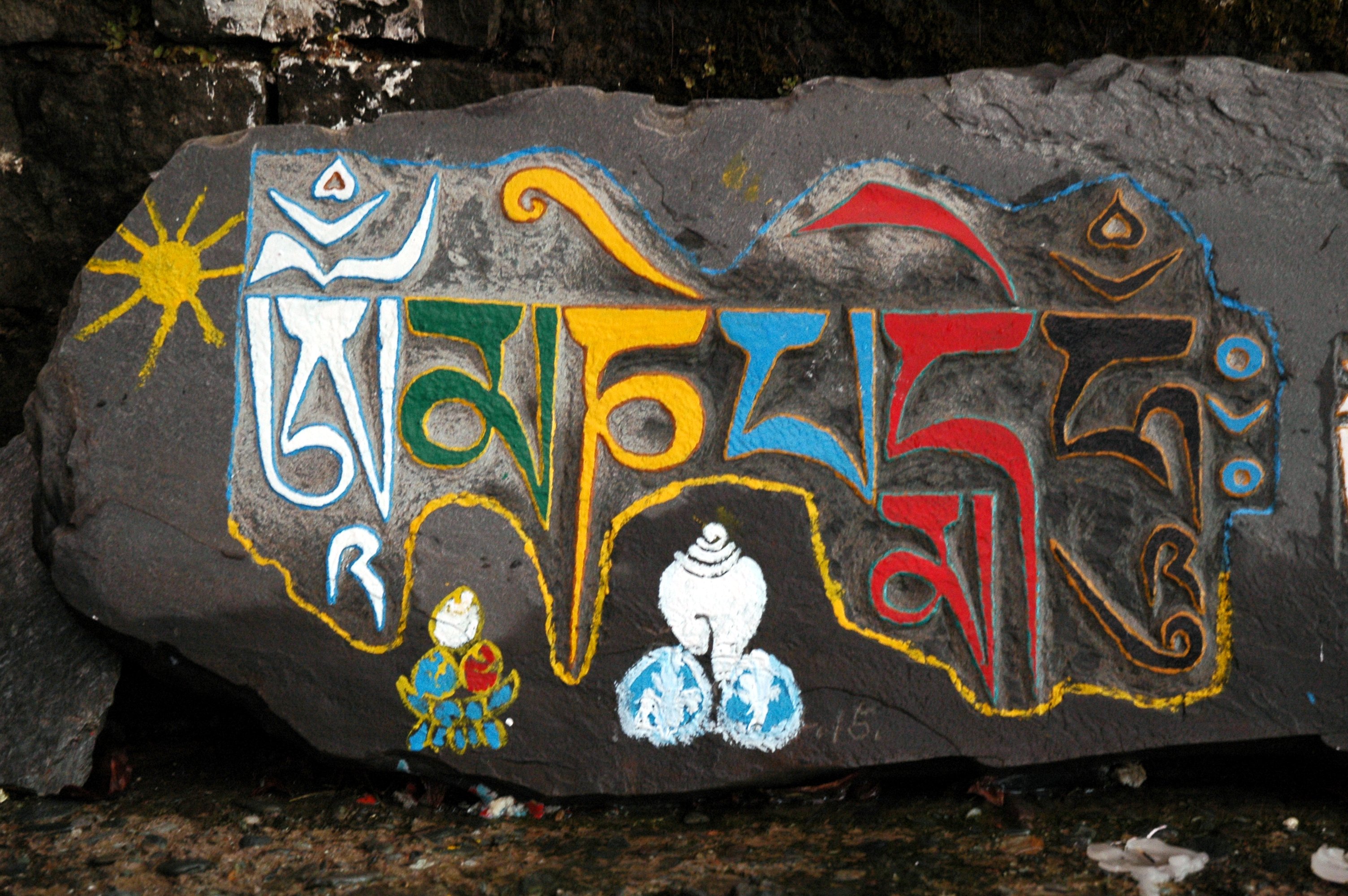
Tibetan (བོད་སྐད་ / ལྷ་སའི་སྐད་) is the main language of Tibet, and its accompanying regions and among overseas Tibetan communities around the world. Tibetan is spoken by several million people in the Tibetan Autonomous Region (TAR) of the Chinese People’s Republic, the Chinese provinces of Gansu, Qinghai, Sichuan and Yunnan, as well as the neighboring countries Bhutan (around 4,000 speakers), India (over 124,000 speakers), and Nepal (around 60,000 speakers). Written Tibetan is used as the religious language in the countries where Tibetan Lamaistic Buddhism is practiced (e.g. in Mongolia and parts of China proper). Tibetan communities also exist in Taiwan, Norway, Switzerland and the United States of America. It is an official language in Tibet, as well as in the Tibetan autonomous prefectures of Qinghai, Sichuan, Gansu and Yunnan, and all road signs in this region are bilingual in Chinese and Tibetan.
Pronunciation guide
The Tibetan script is an Indic script related to those of many South and Southeast Asian languages. Like other Indic scripts, it is an abugida, meaning that each letter represents a consonant, and vowels are indicated by modifications to the consonant letter. While Tibetan spelling in the written language is fairly standard throughout the ages and regions, spoken pronunciation is very diverse and there are many, often mutually incomprehensible, dialects. In recent times "Lhasa dialect" has been taught to foreigners as a standard. However, there is neither an easy nor a widely agreed standard on how to indicate the phonetics of speaking Tibetan using the Latin alphabet. So be prepared for confusion and fun as you try to pronounce these phrases and hear many different pronunciations from the locals.
Vowels ཨ Like "a" in "alone"; like "a" in "cat" (a). ཷ Like "aw" in "paw" (å). ེ Like "e" in "bet" (e). ི Like "i" in "in" (i). ཱི Like "ee" in "seen" (í). ོ Like "o" in "so" (ó). ྲྀ Like "e" in "father" (ö). ཱུ Like "ue" in "glue" (ú). ུ Like "oo" in "soon" (ū). ུ Like "ee" in "seen" but with rounded lips (ü). ེ Like "ay" in "day" (ą).
Consonants ཀ Like "k" in "skill" (k). ག Like "g" in "garden" (g). ང Like "ng" in "sing" (ng). ཅ Like "ch" in "charge" (ç). ཇ Like "j" in "jar" (xh). ཉ Like "ny" in "canyon" (nj). ཏ Like "t" in "stop" (t). ད Like "d" in "drop" (d). ན Like "n" in "never" (n). པ Like "p" in "spot" (p). བ Like "b" in "beat" (b). མ Like "m" in "mighty" (m). ཙ Like "ts" in "weights" (c). ཛ Like "ds" in "adds" (x). ཡ Like "y" in "you" (j). ཟ Like "z" in "zoo" (z). ཞ Like "s" in "treasure" (zh). ར Must be trilled - just like Italian "r" (r). ས Like "sa" in "sand" (s). ཤ Like "sh" in "shut" (sh). ལ Like "l" in "lonely" (l).
Common diphthongs ཁ Like "k" in "kill" (kh). ཆ Like "ch h" in "punch hard" (çh). ཐ Like "t" in "time" (th). ཕ Like "p" in "pit" (ph). ཚ Like "ts h" in "fights hard" (ţh).
Phrase list
Some phrases in this phrasebook still need to be translated. If you know anything about this language, you can help by plunging forward and translating a phrase.
Basics
Hello. (བཀྲ་ཤིས་བདེ་ལེགས།) Tashi delek. Hello. (informal) De-po () How are you? Khye-rang ku-zug de-po yin-pe () Fine, thank you. De-po yin. Thug je che. What is your name? Khye-rang gi tshen-la ga-re zhu-gi yod? (polite) Khye rang gi ming ga re yin (informal) My name is ______ . Ngai ming ___ yin. Nice to meet you. Khye-rang jel-ney ga-po joong () Please. Thuk-je zig () Thank you. Thuk-je-che (ཐུགས་རྗེ་ཆེ།) You're welcome. ()Yin dang yin Yes. Re (རེད།) No. Ma re (མ་རེད།) (Note: Yes and no are usually expressed using an affirmed or negated version of the question ending.) Excuse me gong-pa-ma-tsom / gong-ta I'm sorry. Gong dag Goodbye Chagpo nang, as in take care. Kha lay shug (said to other person if they are staying). kha lay pheb (said to other person if they are going) I can't speak Tibetan [well] nga pö-kay [yag-po] kyab gi mey Do you speak English? khye-rang in-ji-kay she gi yö pey? Is there someone here who speaks English? dhir inji-kay shenyan yö pey. Help! Rog pa je Look out! Phar toe Good morning. ngadro deleg Good evening. gondro deleg Good night. Sim shag nang I don't understand. Ngai she gyi med. Ha kho gi mey. Where is the toilet? Sang chod gawa yö rey.
Problems
Numbers ༡ chig ༢ nyi ༣ sum ༤ zhi ༥ nga ༦ drug ༧ dun ༨ gyey ༩ gu ༡༠ chu ༡༡ chu chig ༡༢ chu nyi ༡༣ chu sum ༡༤ chu zhi ༡༥ chob nga ༡༦ chu drug ༡༧ chu dun ༡༨ chu gyey ༡༩ chu gu ༢༠ nyi shu ༢༡ nyi shu tsa chig ༢༢ nyi shu tsa nyi ༢༣ nyi shu tsa sum ༣༠ sum chu ༤༠ zhib chu ༥༠ ngab chu ༦༠ drug chu ༧༠ dun chu ༨༠ gyey chu ༩༠ gub chu ༡༠༠ gya 1000 chig tong
Time Now da ta After Jē la Before göng ma Morning shok-pa Moon nyin-gung Evening gong-dag Night tsen mo Midnight tshen gung
Clock time 1AM tshen la tchhu tshö chig pa 2AM tshen la tchhu tshö nyi pa 1PM tchhu tshö chig pa 2PM tchhu tshö nyi pa
Duration du ring
Minute(s) kar ma Hour(s) tchhu tshö Day(s) nyi ma Week(s) za khor Month(s) da wa Year(s) lo
Days today དེ་རིང་ (de ring) yesterday ཁ་སང་ (kha sang) tomorrow སང་ཉིན་ (sang nyin) last week གཟའ་འཁོར་སྔོན་མ་ (
本指南改寫自 Wikivoyage (CC BY-SA)