
Stockholm Quay Palace tour
旅遊行程
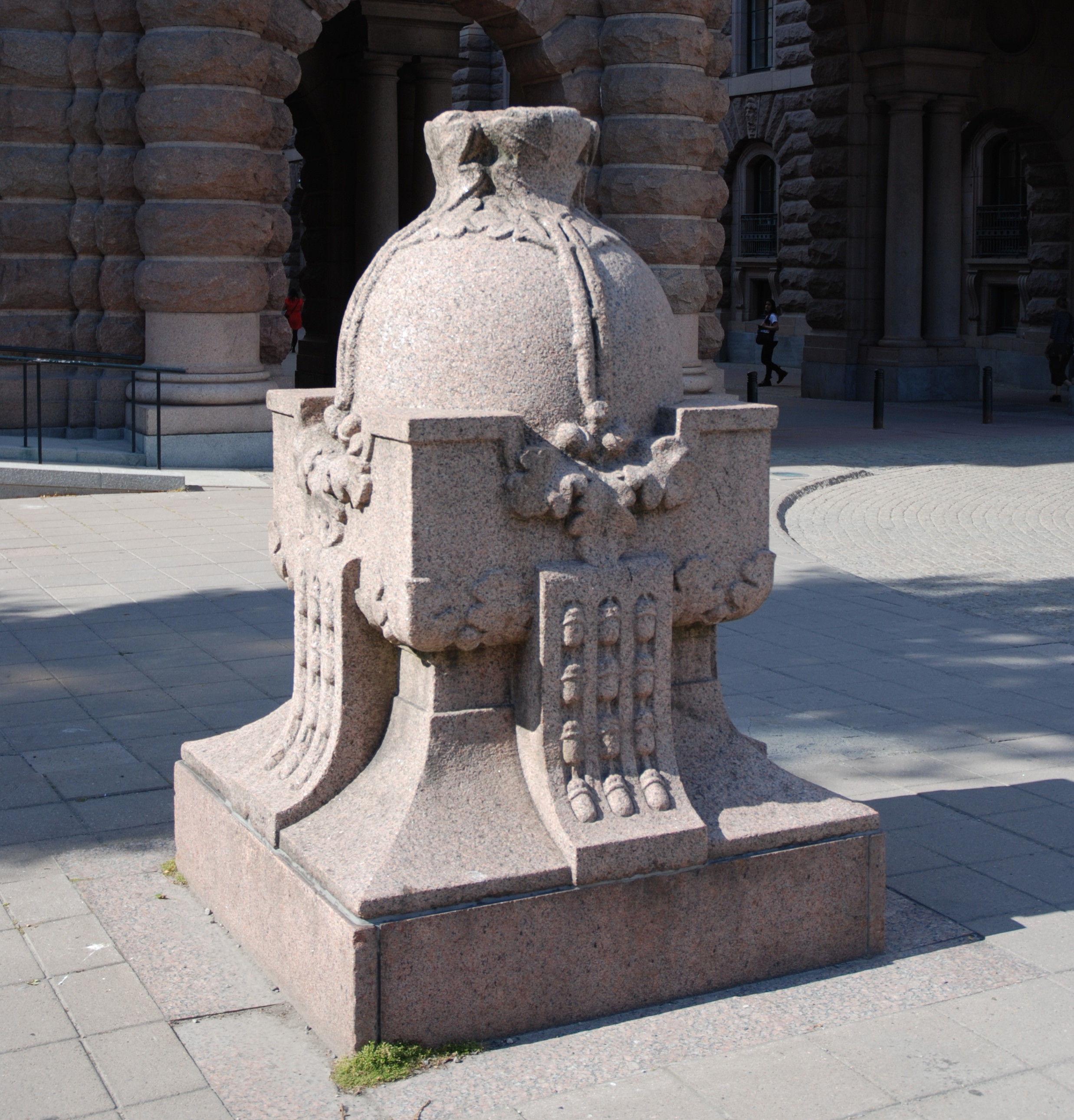
The Stockholm Quay Palace tour is a roughly chronological showcase of architecture and public art; in particular the palaces, grand houses and other decorated buildings along the quays of Gamla stan (the Old Town) and Norrmalm (the business district), as well as monuments, statues, and other works of art. These buildings have been commissioned by the Swedish monarchy, as well as government agencies, nobles, and business leaders. Today they are used for various purposes: museums, conference sites, offices, or private residences. All palaces can be seen up close. Some have interiors open to the public.
Understand
In Swedish, the words slott (from German Schloss) is used for a rural (sometimes fortified) building for a king or a local ruler. Palats (from French palais) is used for city palaces. Neither word has a fixed definition. The intercity Uppland history tour displays the cradle of Sweden in the Iron and Middle Ages. The pedestrian Stockholm history tour is a 1,000 year chronology of Stockholm. Stockholm became a city in the 13th century. With Swedish independence in 1523, Stockholm became Sweden's undisputed capital, and its largest city.
Architecture of Stockholm In Swedish history, the Middle Ages began around year 1000 as Sweden became Christian and unified, lasting to the Protestant Reformation in the 16th century. Few intact medieval buildings remain in Stockholm: wooden buildings tend to burn down or rot, and while monasteries were built from brick and stones, most of them were dismantled as the country became Protestant. Some medieval stone basements remain in Gamla stan, with 16-18th century façades, from the height of the Swedish Empire. Renaissance, Baroque and Classicist styles are prevalent in the Old Town. The 19th century saw the rise of Romantic architecture, which in Sweden references the Viking Age, the Middle Ages, and vernacular architecture; see Nordic folk culture, and the creation of many of the city's statues. The German word jugend is used for art nouveau, which was at its height around 1900, famous for plant- and human-shaped ornaments, and extensive use of coloured glass. Nordic classicism, also known as Swedish Grace, is a style of the 1910s-30s, usually seen as the Swedish variant of Art Deco; which is presented in the Swedish Grace tour. More austere modernist architecture, in particular functionalism (funkis), has been dominant in Stockholm since the 1930s.
Get around
The tour begins at Riddarholmen, and follows the quays of Gamla stan, through Norrmalm and further along Strandvägen in Östermalm. The tour can be done on foot; strollers and wheelchairs can get around with some detours. Cycling and personal electric vehicles can also be considered.
Destinations
Riddarholmen Riddarholmen, "the Knight Isle", has been settled since the 13th century, and is today dominated by nobility palaces from the height of the Swedish Empire in the 17th and 18th centuries. Most of them are today used by courts and other government functions. Some interiors are open during weekdays.
1 Information plaques (Birger jarls torg). Historical scale models of the island. 2 Birger jarl statue. Birger was a 13th-century king who founded Stockholm (jarl is a title, compare "earl"). He wrote the first known letter that mentions Stockholm; as it is dated to 1252, this is considered to be the year that Stockholm was founded. The statue was made by Bengt Erland Fogelberg in 1854. 3 Riddarholmen Church (Riddarholmskyrkan). This is the city's oldest building - though no longer actively used for church service. Built as an abbey to a medieval monastery in the late 14th century, and the only one of those to survive in Stockholm, as many monasteries were torn down in the 16th century Protestant Reformation. Fifteen Swedish monarchs are buried here, from Gustavus Adolphus (1594–1632) to Gustav V (1858–1950). One notable absence is Queen Kristina, who abdicated in 1654, converted to Catholicism, and is buried in St Peter's Church in the Vatican. But what about Nelson Mandela, Lord Mountbatten, Chiang Kai-shek and other notables? - no, their plaques are here as "Knights of the Order of Seraphim", a Swedish heraldic society. Occasionally open to the public. The spire has a history on its own. A wooden spire from the 1570s was destroyed in an 1835 fire. In 1839, new spires were made in cast iron, in neo-Gothic style. By the 1960s, they were corroded, and had to be replaced with new spires, with some ornaments preserved. In 2026, the main spire will again be dismantled to remove asbestos and PCB, to be restored in 2028. 4 Normal vertical datum, Schering Rosenhanes gränd. In 1898, this plaque became the vertical datum for Sweden, with a defined elevation above sea level. However, the land in Stockholm rises around 5 millimeters per year; see Ice Age for context. 5 Birger Jarl's tower (Birger Jarls torn). This tower got its name from the aforementioned Bir
Go next
The Södermalm heights tour is a walk among vernacular 18th and 19th century buildings, with a panoramic view of Stockholm, and many arts and crafts galleries. Swedish Grace tour takes the timeline into the Roaring Twenties Stockholm labour tour describes organized labour from the late 19th century Functionalist architecture in Finland: Finland has a common history with Sweden, but became independent only in 1917. Most of Finland's monumental buildings are built in 20th-century style.
本指南改寫自 Wikivoyage (CC BY-SA)