
Stockholm military tour
旅遊行程
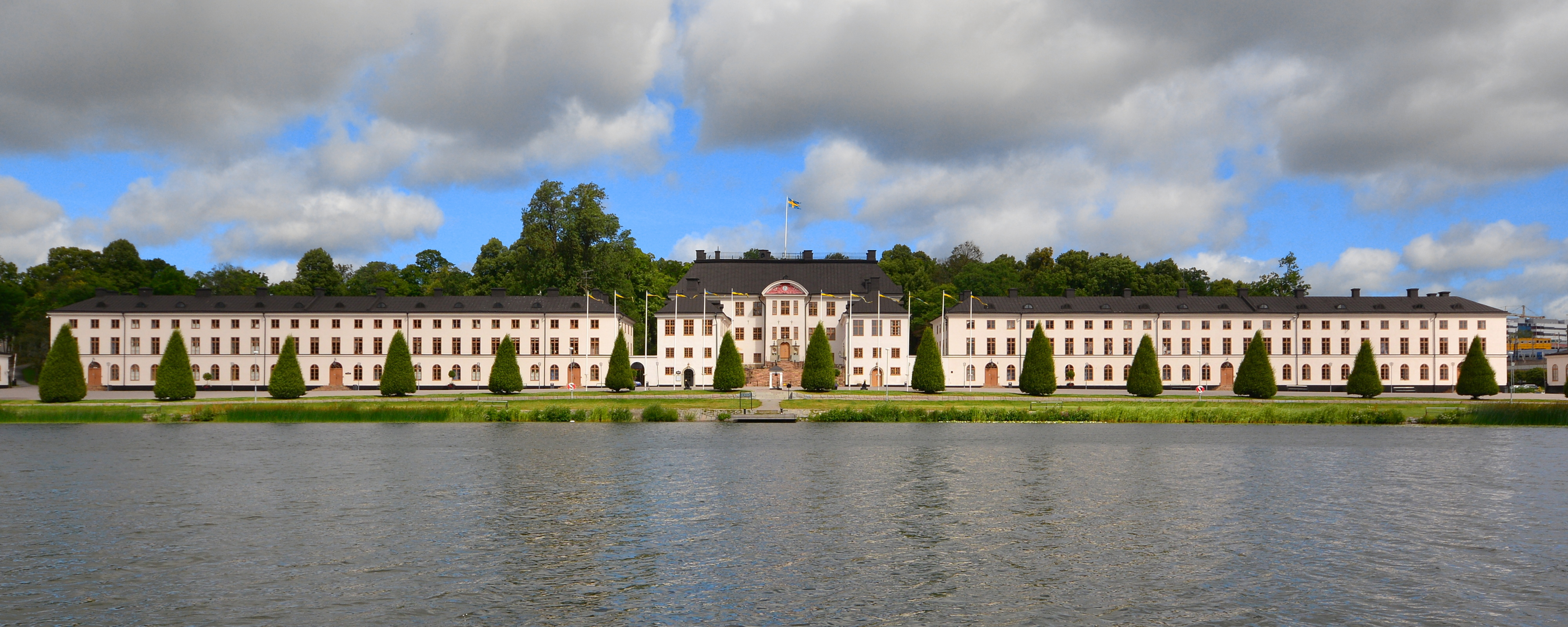
As Stockholm was founded around a coastal fort in the 13th century, and has been Sweden's undisputed capital since the 16th century, it has a rich military history, through the rise and fall of the Swedish Empire, and two centuries of peace, armed for wars that never came.
Understand
Sweden's east coast was the homeland of Vikings from the 8th to the 11th century, with Birka, Sigtuna and Uppsala among the oldest towns; see Uppland history tour. Stockholm was founded in the 13th century around the Castle Tre Kronor (Three Crowns) to prevent pirates from sacking the lands around Mälaren.
Rise and fall of the Swedish Empire Stockholm has been Sweden's capital since its 16th century war of independence from the Danish Empire, against which Sweden fought more than a dozen wars, replacing Denmark as the dominant power of northern Europe, expelling them from the Scandinavian peninsula. The Swedish Empire got some possessions in Central Europe in the 17th century Thirty Years War, but was decimated in the Great Northern War against Denmark, the Polish Commonwealth and the Russian Empire, and lost Finland to Russia in 1809.
Two centuries of peace Sweden has been at peace since the Napoleonic Wars, evading both World War I and World War II, remained non-aligned through the Cold War, highly militarized to handle the threat from the Soviet Union. All able-bodied men got military training, all new apartment blocks were built with bomb shelters, and several schools were designed for use as hospitals. In the 1990s, as the Soviet Union broke up, most of the armed forces were dismantled. Swedish soldiers have served in several United Nations campaigns in countries such as Congo-Kinshasa, Cyprus and Bosnia, as well as the ISAF contingency in Afghanistan, as an unusual case of Swedish soldiers in combat. Due to the threat from Russia, re-armament began in the 2010s, with military service restored in 2017, and application for NATO membership in 2022.
The walk
Part 1: Norrström 1 Royal Guards (Kungliga Högvakten). The outer courtyard is the place for the changing of the Royal Guards (Högvakten). Until the 19th century, they were needed for policing and firefighting. They also had artillery; Sweden has been known for cannon-making for centuries, and four memorial m/1881 cannons (the first Swedish cannon made of steel) remain on the courtyard. Today, the Royal Guards are not a permanent organization; the honour is shared between different units of the Armed Forces. While they are primarily ceremonial, they have authority to use force, and do so against antisocial behaviour around the palace. They have also rescued people who fell into the water. 2 Tre Kronor Castle scale model. In 1187, as lake Mälaren was still part of the Baltic Sea. Pirates from Karelia entered through the strait to Sweden's capital Sigtuna and sacked it. To protect Mälaren the Swedes had a castle erected where Stockholm Palace is now. The castle, known as Tre Kronor (Three Crowns) burnt down in 1697, and was replaced by the Royal Palace. 3 Old Royal Stables. The Royal Stables were on the island of Helgeandsholmen before it became the site of the Parliament. It is commemorated by some of the original marble mangers, and a mosaic floor depicting horses. 4 Gustavus Adolphus statue. Gustavus Adolphus II (reigning 1611–1632), is remembered as the Lion of the North, a formidable commander in the Thirty Years War, and the founder of the Swedish Empire. He died in the battle of Lützen on 6 November, 1632. The man depicted at the plinth is Chancellor Axel Oxenstierna, the father of Swedish bureaucracy. With constant wars and an absent monarch, Oxenstierna saw the need to found independent government agencies, including the postal service and the counties. 5 Gustav Adolfs torg. This square saw the resolution of a 1743 uprising by people of Dalarna called Stora daldansen (Great Dala Dance) due to the province's tradition of folk dance. In Dalarna, most of the land has been owned by peasants, rather than the nobility and the crown; and those peasants have rebelled against the government in Stockholm many times. While the 18th century was the Age of Libert
Respect
Many Swedish military facilities have been decommissioned since decades. However, some of these facilities are still in use as of the 2020s, with a serious security protocol, with assassinations and terrorist attacks in living memory. Trespassing is a serious crime, and in some locations, photography is restricted.
Go next
Stockholm's northern defenses are a line of forts from the mainland to the archipelago
本指南改寫自 Wikivoyage (CC BY-SA)