
Stockholm history tour
旅遊行程
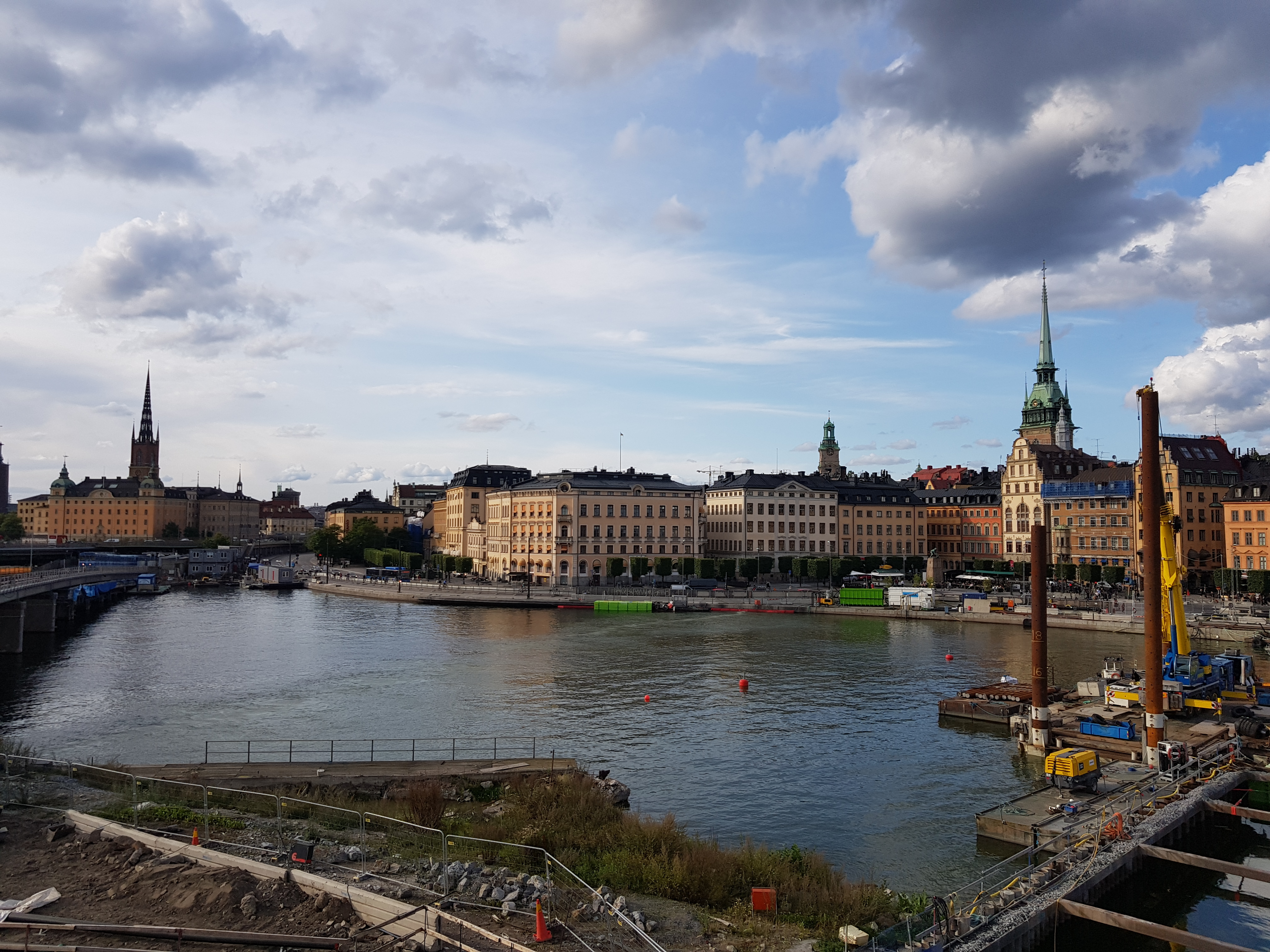
The Stockholm history tour is a walk from Gamla stan ("the Old Town"), to Norrmalm in Stockholm. The tour is roughly chronological, from the Viking Age through the Middle Ages, the Swedish Empire and the Industrial Revolution to present day, with a few skips back and forward.
Understand
Lake Mälaren used to be part of the Baltic Sea, and the Stockholm archipelago was a waterway for the first Swedish towns; Birka, Uppsala, and Sigtuna. As Sigtuna was sacked by pirates in AD 1187, the Swedes had a stockade built at an island in the strait, which has been known as Stockholm since 1252. As the land rose due to post-glacial rebound (see below) Mälaren became a lake, cargo had to reload at Stockholm. In the 15th century, Stockholm replaced Uppsala as the centre of commerce and government, becoming the capital of the 17th-century Swedish Empire. Since 1901, Stockholm has drawn the world's attention with the Nobel Prize. The city was spared by the World Wars, but around the 1960s, hundreds of old buildings in Norrmalm were torn down to build a new business district, and a metro, known for its art. 21st century Stockholm is one of Europe's fastest growing cities, known for pop music, a bustling tech industry, and sustainable development.
Prepare
May to September tend to have the most comfortable weather. In summer you can take advantage of the long daylight; a morning or evening tour can be preferred to avoid crowds. From 20 June to the end of July, most inhabitants leave the city, and some venues close for summer. From December to early March you can expect temperatures just below zero degrees Celsius, but cold weather can be managed with proper clothes. The main concern at winter is the darkness; sun sets at 15:00 in December; see Winter in the Nordic countries. While Sweden is arguably the world's most cashless country, Swedish banknotes have portraits of some historical figures mentioned in this article, and are useful as props. As Stockholm is an important stage for Nordic music and the home of world-leading streaming platform Spotify, the tour has a soundtrack.
Prologues Södermalm heights tour is a prologue walking tour, with an astounding view of Stockholm from natural hilltops with hands-on Ice Age traces, and a showcase of vernacular buildings from the 18th and 19th centuries and craft shops. The Uppland history tour along lake Mälaren takes you through the cradle of Sweden, with an opportunity to start at Stockholm-Arlanda Airport. Birka, Sigtuna and Uppsala were the most important settlements of Viking Age and Medieval Sweden until Stockholm (nicknamed "Queen of Mälaren") became the undisputed capital in the 15th century. You can arrive to Stockholm through the Stockholm archipelago; for instance on a Baltic Sea cruiseferry from Turku, Helsinki, Tallinn or Riga; cities which were once part of the Swedish Empire. The route recapitulates the literal (littoral) rise of Sweden from the sea, through post-glacial rebound (see Ice Age traces). The edge of the archipelago consists of barren rocks which barely break the surface, as Stockholm's islands did in prehistoric times. Among the skerries you see small islands with a few trees, cottages and docks, similar to settlements of the Middle Ages, and later whole towns with harbours, and sceneries similar to the mainland. You enter Stockholm with the 19th century industrial zones of Nacka on port side, and the early 20th century mansions of Lidingö
Get around
The tour is around 4 km (2.5 mi), and can be completed on quick feet within 90 minutes; more for people who move slowly. Two to three hours would allow for a calm stroll with breaks at the waypoints, excluding visits to museums and other venues. For actually visiting all the museums and buildings rather than just taking a quick glance at them, you may want to budget a full day. Smaller text is used for landmarks which can be skipped by a visitor in a hurry, as they are not part of the big picture. Stockholm centre is walking-friendly if snow is not present; following this itinerary by foot is safe and mostly hassle-free. The streets of Gamla Stan are pedestrian stone streets, some of them with a steep grade. Wear comfortable shoes. They are less suitable for bicycles and electric scooters (see cycling in Sweden) and not open for cars. Wheelchairs and strollers can get through with a few detours. Some organized walking tours follow similar waypoints.
Go
Blue for waypoints; green for landmarks visible from a distance, and orange for interesting places for eating and drinking. For a shorter tour, any of the five parts (or the epilogue) can be skipped.
Introduction: The rise of Stockholm
The tour begins at the transportation hub Slussen on Södermalm, with a view of the Old Town, and the story about the Viking Age and the foundation of Stockholm in the 13th century.
1 Slussen metro station (Rising land), Ryssgården. Ten thousand years ago, most of northern Europe was covered by a kilometre-thick ice sheet, which pushed down Earth's crust. Ever since the ice melted, post-glacial rebound raises the land; In Stockholm the average rate is around 5 millimetres a year; 0.5 m (1.6 ft) in a century, enough for old people to remember a different coastline. See Ice Age for details. The level you stand on, 12 metres above sea level, surfaced around 500 BC, as the Bronze Age was surpassed by the Iron Age. To the east is Saltsjön, a bay of the brackish (salty, but less than the oceans) Baltic Sea, which, when sea level was higher, also included lake Mälaren to the west. 2 Mälarterrassen (Viking Age). The time from the 8th to the 11th century was the Late Iron Age, more famously called the Viking Age. While most Nordic people of the time lived peacefully as farmers, some of them travelled overseas for commerce or settling. Most notorious were the Vikings; Norse warriors who made a living from piracy, slave raids, and mercenary work. Sweden's east coast north of today's Stockholm is known as Roden or Roslagen, the homeland of Swedes who sailed to eastern Europe, where they were called the Rus. They founded cities such as Novgorod and Kyiv, which preceded the Russian Empire. Some Norsemen reached Constantinople (today's Istanbul) of the Byzantine Empire, where they formed the Emperor's Varangian Guard. The sea level was around 5 m (16 ft) higher than today (level with the metro tracks), and the narrow strait between Mälaren and Saltsjön was busy with ships heading for Birka, Sigtuna and Uppsala; some of the few towns in Sweden during the Viking Age. A Viking chief named Olaf sacked the settlements around Mälaren in 1007, men
Go next
Jewish Stockholm tour for the history of one of Sweden's ethnic minorities from the 18th to the 21st century Stockholm labour tour for the unions and the Social Democratic Party from the 1880s to the 1980s LGBT Stockholm Stockholm in fiction
本指南改寫自 Wikivoyage (CC BY-SA)