
Stockholm environmentalist tour
旅遊行程
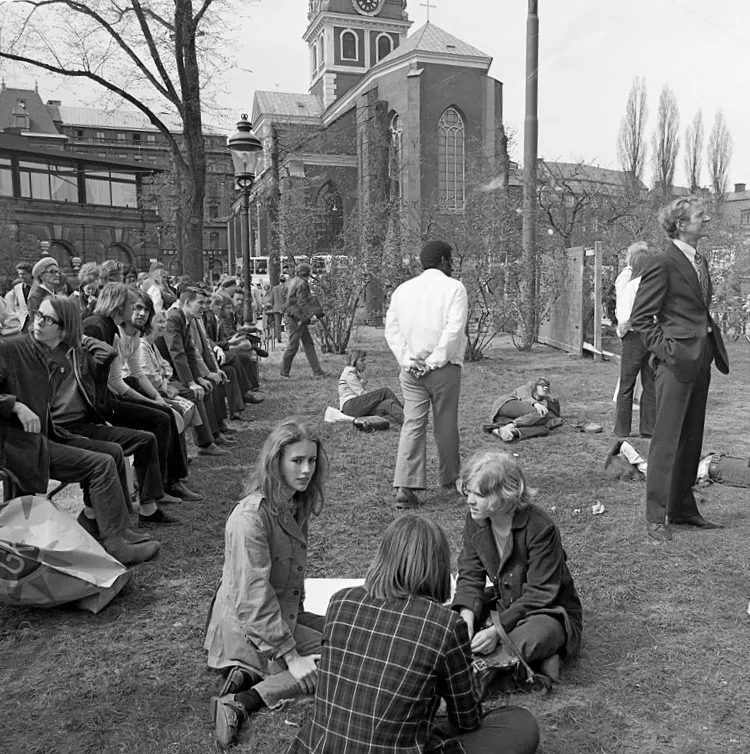
Stockholm, the capital of Sweden, has been a forerunner in the environmentalist movement and sustainable development. This tour is a showcase of polluting infrastructure and environmental protection, as well as sites of the environmentalist movement, and the dilemmas of limiting the footprint of a city of a million citizens.
Understand
Sweden has had a prominent role in the natural sciences since the 18th century, with Carl Linnaeus founding systematic biology, and Anders Celsius inventing the 100-degree temperature scale. In 1896, physicist Svante Arrhenius described the greenhouse effect. Since 1901, Stockholm hosts the Nobel Prize ceremony. The rise of Nordic nationalism in the 19th century included appreciation of nature and outdoor life as a pastime; and the sparse population allowed the right to roam. Naturvårdsverket (the Swedish Environmental Protection Agency) was founded in 1967, as the first of its kind. Stockholm, just as other large cities, used to be troubled by sewage well into the mid-20th century, and later by industrial pollution and vehicle emissions. Today, the air is famously clean, and the water in lake Mälaren is good enough to drink. With vast distances, Sweden has had a love story with the automobile (see Driving in Sweden), famous for brands such as Volvo, Saab, and Scania. While Swedish cars and trucks have traditionally been heavier and thirstier than other European brands, the makers are now pioneering fuel efficiency and electric engines. Stockholm was redeveloped during the 1960s with an extensive system of highways and sprawling suburbs, brought to a halt in the early 1970s with a rising environmentalist movement, as well as the 1973 oil crisis. Since the 2010s, car lanes and parking lots have been reduced to make room for cyclists and pedestrians, with expansion of electric charging stations. Sweden has close to zero domestic fossil fuel deposits (except peat) and has been phasing out coal and oil for strategic reasons already since the 1970s oil crisis. As the climate agenda has become important, Sweden has a realistic aim for a carbon-free economy. Still as of the 2020s, motorways are expanding around the city, many of them underground, with controversy over continued pollution, fossil dependency, and suburban sprawl.
Timeline 1950: Stockholm metro opens 1967: Swedish environmental protection agency founded 1971: Elm protests 1972: Global environmental conference in Stockholm 1973: Oil crisis. Highways are scaled back 1980: Nuclear power referendum. Green
Get in
While Stockholm has several airports nearby, a greener approach would be a train from Oslo or Copenhagen; see Rail and bus travel in Sweden; occasional trains arrive all the way from Hamburg. Trains from west and south make a glorious entry to Stockholm, across bridges with an astounding view of Lake Mälaren. Stockholm can also be reached by sailing boat through Stockholm archipelago; see Boating on the Baltic Sea.
Get around
Public transport in Stockholm County is run by SL. Since 2018, all buses are fossil-free. Urban cycling is a good method to get around Stockholm, at least when weather is decently warm; see Cycling in Sweden. Bicycle lanes are expanding during the 2020s. The city has had a bike rental system, as well as electric scooter operators; as of 2025, their outlook is uncertain. Some hotels let out bikes to their guests. Cars are subject to congestion tax. Some parts of the inner city require Euro 5 or higher emission standard (see Driving in Sweden), and a neighborhood in Norrmalm prohibits all fossil-fuel vehicles. Taxis are rather expensive, and do not follow a fixed price. Driving in Stockholm is rarely necessary, in any case.
Destinations
Leg 1: Central Stockholm 1 Mynttorget (Gamla stan). The square next to the parliament building is a main location of public protests, including environmentalist demonstrations. This square is one of several open places in Stockholm which was originally designed for pedestrians, had car lanes and parking expanded in the 20th century, but since 2024, most of the square is again pedestrianised with benches and trees. Car traffic within the Old Town has is very restricted since the 2000s with very few parking spaces, and hourly limits for delivery vans. 2 Stallkanalen. One of the streams between Lake Mälaren and the Baltic Sea. The gate opens and closes to regulate the level of the lake to avoid flooding or salt leakage. Migratory fish such as salmon and trout can swim upstream, but modern development shut down the passage for slower fish, such as pike and perch. In 2024, a fish tunnel opened at Slussen, south of the Old Town, allowing different fish species, and animals such as otters, to swim upstream. 3 Centralbron. A six-lane highway through the old town. Built since the 1950s and opened as a whole as Sweden switched to right-hand traffic in 1967. As concerns for the environment and cultural heritage were on the rise since the 1960s, the bridge has been controversial for decades, with suggestions to tear it down. As of the 2020s, Stockholm still considers viable options to redirect traffic, but the bridge is still here, as an elephant in the room for a city branding itself with environmentalism. 4 Royal Palace (Kungliga Slottet). Built between 1697 and 1754, the Royal Palace is the official residence of the king of Sweden. The reigning king Carl XVI Gustaf (who lives in Drottningholm in Ekerö) has För Sverige i tiden ("For Sweden, with the times") as his motto; as an avid environmentalist, he has had solar panels installed on the palace roof. 5 Strömkajen. The ferries to the Stockholm archipelago used to run on coal-powered steam engines, which were over time converted for diesel propulsion, and in the 2020s to biofuels and batteries. By 2030, all public transportation ferries will be fossil-free. 6 Kungsträdgården elm trees. The name "the King's Garden"
Go next
Älvkarleby has one of Sweden's oldest hydroelectric power plants, built for Stockholm's power supply. Stockholm history tour from the Viking Age to present day. Södermalm heights tour; the greatest views from the city's oldest and simplest buildings Stockholm labour tour, a showcase of the unions, the Social Democratic Party and the radical left, both cooperating and at odds with the green movement Stockholm tech and gaming tour for a business that provides both problems and solutions for sustainable development Stockholm quay palace tour; the best of Nordic architecture
本指南改寫自 Wikivoyage (CC BY-SA)