
Manaslu Trek
旅遊行程
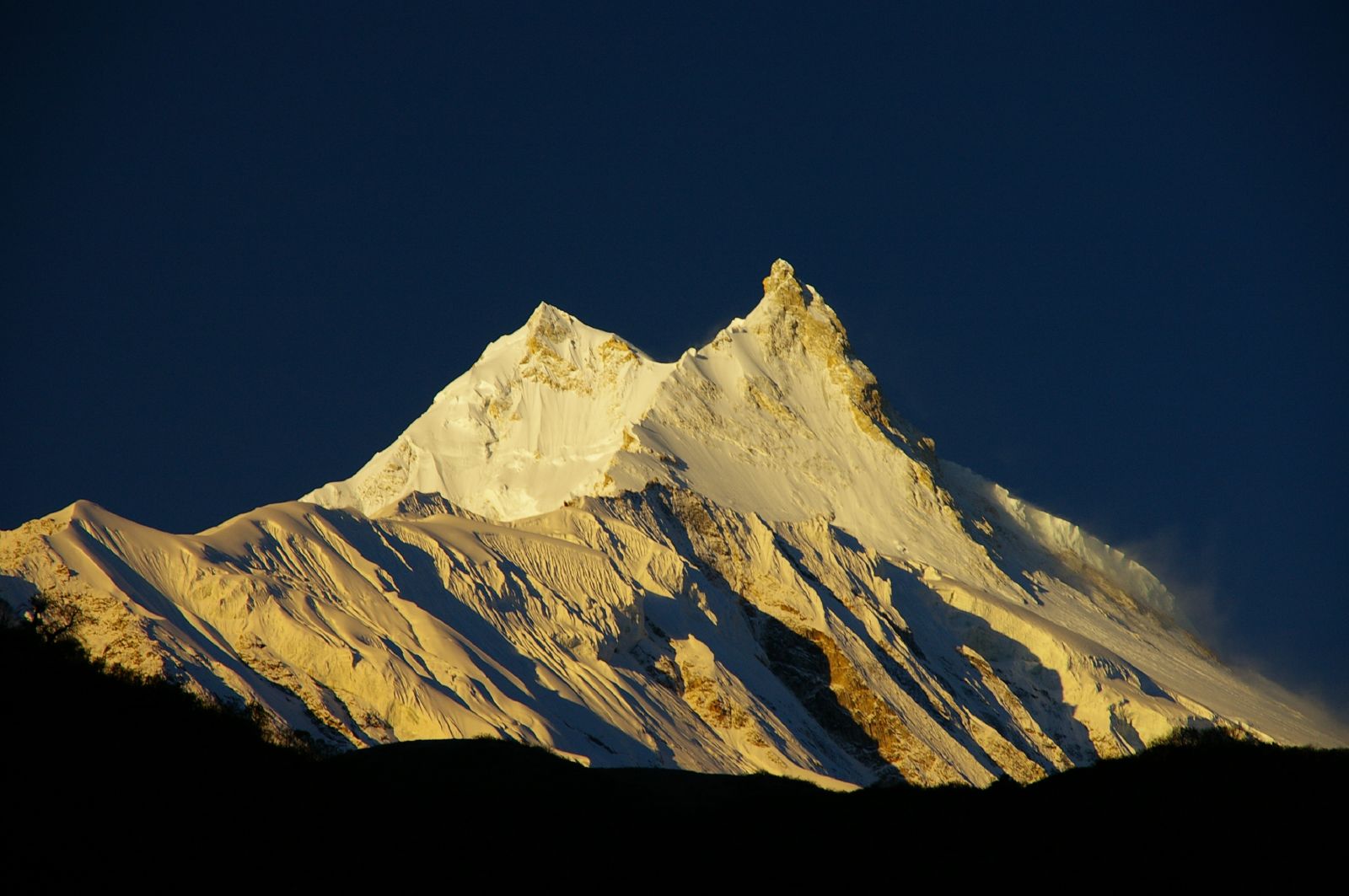
The Manaslu Trek is in the Gorkha district of Nepal.
Understand
The Manaslu Trek (or Manaslu Circuit Trek) is a 14-day tea-house trek which circumnavigates Mt. Manaslu, the 8th highest peak in the world (8,156 m). The trek has all the elements of other treks in Nepal including both Hindu and Buddhist culture, protected wildlife, rhododendrons and wild flowers, a 5000+ m pass, raging rivers, precarious bridges and stunning mountain scenery. The trek is much easier than it used to be with greatly improved trails along the Budi Gandaki river gorge. In terms of difficulty, it is comparable with the Annapurna Circuit Trek or Everest Base Camp trek. It's highlight is undoubtedly the spectacular unhindered views of Manaslu that appear midway through your ascent of the valley. Just over 2,000 people complete the trek per year with more than half visiting in October. This is substantially fewer than visiting Annapurna, Everest or Langtang. There are two main reasons for the fewer numbers. The first reason is that the trek used to require camping, as there were too few tea-houses along the trail. In particular there was no lodge below the Larkya La (a pass at 5135m) requiring an enforced night of camping. This is no longer the case. Since 2010 there has been a tea-house below the pass and others regularly spaced all the way up from the starting point at Arughat. A few of the tea-houses are still rustic compared to counterparts on the Annapurna Circuit, but most are comfortable. The second reason is that the trek has restricted area status. This means it requires a special permit (see below), that the group have two or more members and that a registered trekking guide accompanies the group. In 2011, for Nepal Tourism Year, the permit fee was reduced to USD50 per week. The fee for this permit has since been increased to USD100 plus USD15 for every day over 7 days, counting only those days needed for trekking between Jagat and Bhimtang. These two factors together have made the trek affordable for budget traveler and it is now being referred to as The New Annapurna Circuit.
Prepare
The Manaslu Circuit is a restricted area trek, requiring a group of at least two people and a licensed guide. Permits must be arranged through a registered trekking agency. While the TIMS card (Rs 2,000 for independent trekkers; Rs 1,000 for those in a guided group) is generally not required for the Manaslu restricted area itself, you will need it if you plan to extend your trek into the Annapurna Circuit (e.g., continuing past Dharapani toward Thorong La). Government regulations mandate a minimum of two trekkers and a licensed guide; solo trekking is strictly prohibited. Your agency will handle the paperwork for the mandatory Restricted Area Permit, which requires a scanned copy of your passport and a valid visa. In addition to the agency fees, you must budget for the following permits:
Restricted Area Permit (RAP): During peak season (Sept–Nov), the fee is USD 100 for the first seven days plus USD 15 for each additional day. In the off-season (Dec–Aug), it is USD 75 for the first week plus USD 10 per additional day. Manaslu Conservation Area Project (MCAP): Rs 3,000. Annapurna Conservation Area Project (ACAP): Rs 3,000 Rs. This is required as the trail exits through the Annapurna region. Chumnubri Rural Municipality Fee: A local entry fee of Rs 1,000 is often collected on-ground.
Eat Teahouses along the entire route provide standardized menus, meaning camping stoves and heavy food supplies are unnecessary. The staple is Dal Bhat, though Tibetan bread, noodle soups, and basic pasta are common. Small village shops sell snacks, but prices rise with altitude. Bringing your own energy bars or electrolyte powders is recommended to supplement the high-carbohydrate lodge diet.
Drink Tap and stream water are not potable and should never be consumed untreated. Use a UV purifier, portable filter, or purification tablets. While teahouses sell boiled water and some bottled water, the latter is discouraged to reduce plastic waste in the conservation area. Aim to drink 3–4 liters of treated water daily to aid acclimatization.
Sleep Accommodation consists of basic, family-run teahouses with twin-share rooms and shared toilets. While blankets are usually provided, a
Get in
In present days the trek generally starts at soti Khola. This is a simple 7-8 hour bus ride from Kathmandu costing around US$7. It's a completely off road driving, so a private 4/4 jeep can be another option to reach Soti Khola, if you want to have your own private vehicle. Ensure you book in advance and check with local four-wheel jeep rental companies in Kathmandu. Jeep rentals often cost around USD150 to USD220. The bus may take you further than Arughat depending on the state of the road ahead. Sleep there or continue to Arket or Soti Khola to get a head start.
Walk
From 1 Soti Khola (1000 m), the trail follows the Budhi Gandaki through forested hillsides and terraced farmland. Expect a mix of gentle climbs and descents with several suspension bridge crossings. Arriving at 2 Machhakhola (1000 m), you’ll find good lodges for the night.
The path from Machha Khola ascends gradually along the river, passing small settlements and cultivated fields. After crossing a suspension bridge over the Budhi Gandaki, you reach 3 Jagat (1400 m). The name means “tax collection point” in Nepali. There is a good lodge here with 25 rooms, accommodating up to 50 people.
From Jagat, the trail heads north through subtropical forest before narrowing into a rocky gorge. After several short climbs, you reach 4 Deng (1860 m), home to the Manaslu Trekkers Home — a good lodge with 20 rooms, sleeping up to 40 people.
The route from Deng climbs steadily through pine and rhododendron forest, crossing several streams on suspension bridges. Higher up, views of the mountains begin to open up. 5 Namrung (2600 m) offers several reasonable lodges.
From Namrung, the path ascends through alpine forest and open meadows. 6 Lho Bazar (3100 m) has reasonable lodges and a monastery with fine views of Manaslu.
Continuing another hour past Lho Bazar brings you to 7 Shyala (3500 m), where accommodation is more basic. The trail leads gently up the valley, with Manaslu and other snow peaks dominating the skyline. Samagaon (3500 m) is a large village with good lodging options. You can take a rest day here to acclimatise and explore the area. An excursion to Manaslu Base Camp is an option for those with the energy, offering dramatic glacier and peak views.
The route from Samagaon follows the Budhi Gandaki upstream through pastures and yak herding areas. 8 Samdo (3800 m) offers reasonable lodges.
A recommended excursion to the Tibetan border at Rui La Pass, with panoramic views of the surrounding peaks and valleys.
From Samdo, the trail climbs steadily through high-altitude terrain to 9 Larkya Phedi (4460 m), where there is a good lodge to prepare for the pass crossing.
A challenging day crossing Larkya La Pass, followed by a long descent into 10 Bimtang (3700 m). G
Stay safe
The principal danger is altitude, specifically going too high too quickly. Follow these instructions for altitude sickness prevention. This is a serious issue. There was one death on the high pass in October 2013 from cerebral edema. Acclimatization is not to be taken lightly. Your life depends on it.
Go next
Take a bus from Besisahar to return to Kathmandu or continue onward to Pokhara. Turn right at Dharapani and complete the northern section of the Annapurna Trek, ending at Jomsom. Another week would be needed for this option, especially if the side trip to Tilicho Lake is taken.
本指南改寫自 Wikivoyage (CC BY-SA)