
Inca Trail
旅遊行程
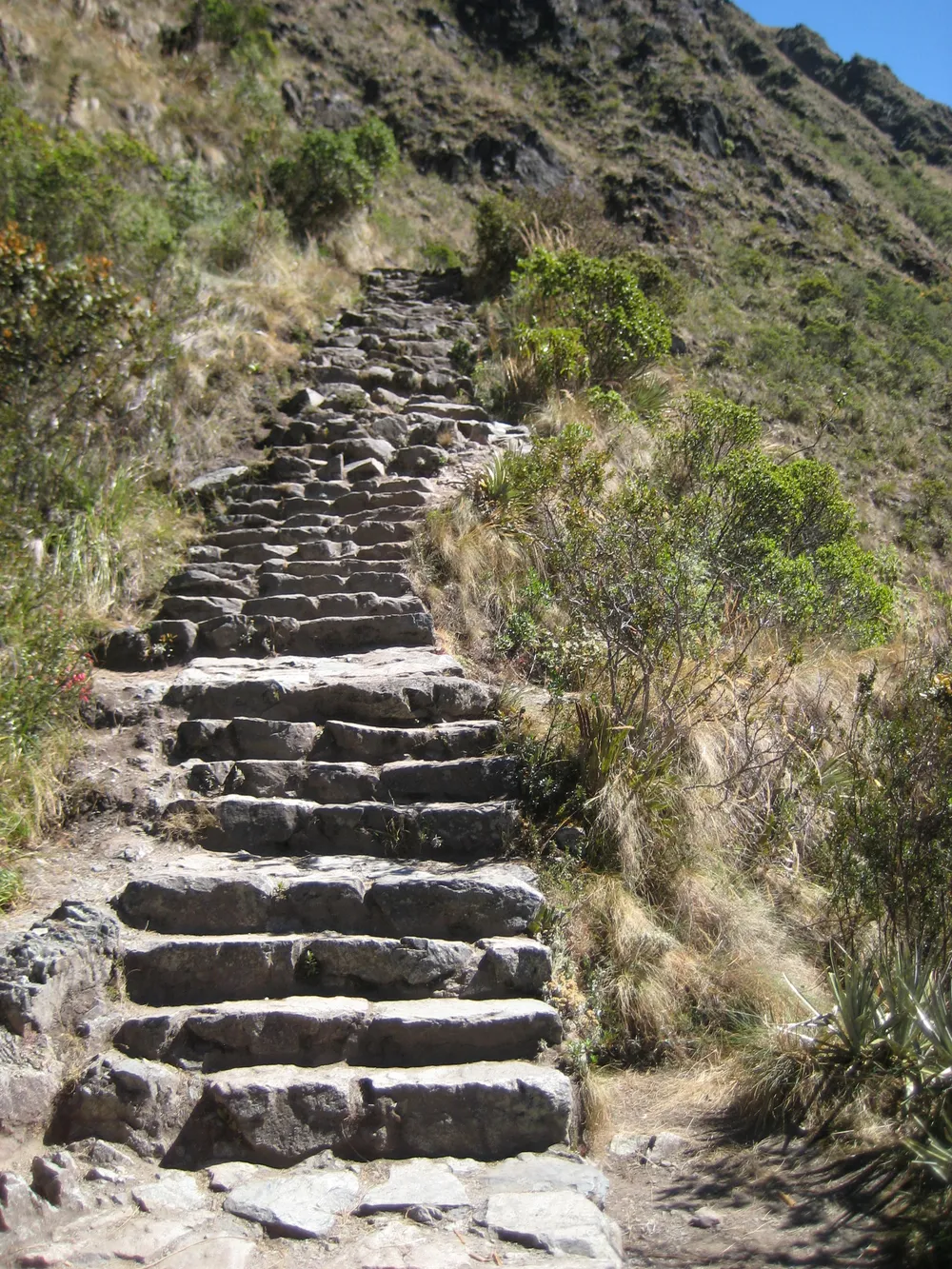
The Inca trail to Machu Picchu, the "Lost City of the Incas", is a world-famous trek in Peru. It's the best known part of the Inca road system, which was listed as a UNESCO World Heritage site in 2014. The hike takes you past staggering mountain scenery and many impressive Inca ruins, through ecosystems ranging from mossy forests to stark peaks. For much of the trail, you're walking on the very stone paths laid by the Incas hundreds of years ago.
Understand
Many countries have mountain ranges with beautiful scenery and Peru itself is richly blessed in this respect with many other areas for hiking. However the scenery is only one of the elements responsible for the magic of the Inca Trail. Can there be any walk anywhere in the world with such a combination of natural beauty, history and sheer mystery and with such an awe-inspiring destination? The various Inca ruins along the way serve to heighten the hiker's sense of anticipation as he or she approaches what would surely find a place in any new list of archaeological wonders of the world - Machu Picchu. The ruins on the trail are all many times less crowded than Machu Picchu, and most are open for exploration without the ropes and blocked-off areas at your final destination. If you're lucky, you'll also see colorful flowers and birds, and possibly even other animals on the trail. At the height of the Inca Empire, their road system was the most extensive transportation system in South America, stretching from what is now Colombia all the way to central Chile. The branching network of roads, many of them paved with stones, totaled close to 40,000 kilometers. Unfortunately, with the conquest of the Inca Empire by the Spanish in the 1500s, most of the roads have been destroyed or left to deteriorate. Many of the surviving portions are unmapped and little explored, but a few sections have been cleaned up and restored. The most famous of these is the Inca Trail, which allows you to walk in the footsteps of the Incas, on the same stone paths that they laid and used to get to Machu Picchu hundreds of years ago. The trail is 45 km/26 miles from start to finish, but it feels like more: you gain and lose hundreds of meters of altitude multiple times, and much of the trek is above 3,000 meters where oxygen is noticeably thinner. Acclimation to the altitude is a must, and good physical condition advised. The journey winds through the valleys and hills of the surrounding area, taking you through the scenic landscape, from high alpine to cloud forests. The trail is physically demanding, but doable by any fit person, barring specific health problems. If you have any concerns, chec
Prepare
Book tickets Tickets must be booked in advance, far in advance for the high season, through an authorized local tour operator, as it is not allowed to organize your own trip. For the high season, tickets must be booked immediately when they become available: it's wise to book six months in advance or more. Get these trail tickets before your plane tickets. If booked up, consider rescheduling your trip, or taking one of the alternative treks in the area, none of which require booking so far in advance. Don't expect to pick up last-minute cancellations, as tour organizers must register client passport numbers with the government, and they are strictly checked at control points on the trail. A passport is required both for reserving tickets, and for admission to the trail (copy not accepted), so you need to bring it in your day pack! It is easiest if you have the same passport when reserving your ticket as when you show up, so avoid renewing your passport or changing your name in the meantime: renew if necessary before, change name before or after. Tickets are by season: reservations are accepted from mid-January, for the season from March 1st to the following January 31st. Some agencies will accept pre-reservations and then book immediately when tickets become available. There are 500 permits available per day for the 4-, 5- and 7-day treks and 250 for the 2-day trek. This includes both trekkers and tour employees (guides and porters). Since there are about 1.5 employees per trekker, that leaves 40% for trekkers, so about 200 trekkers per day. You can check official availability of tickets at the Boletaje Virtual (Virtual Ticket) website. Beware that this is the total number left (trekkers and employees), so out of 500, and that days can book up in big chunks, due to booking a group (a group of 12 trekkers entail about 30 tickets total), so don't delay. Tickets for Machu Picchu should be included in your tour. Tickets are also required for Huayna Picchu (a large mountain nearby which you can hike up for magnificent views of Machu Picchu). Huayna Picchu is optional, and thus might be forgotten: make sure to get tickets in advance if interested!
Which tour?
Get in
See Inca Highlands. You first need to spend a few nights in Cusco (and before that, preferably a night or two in the Sacred Valley) to acclimatize to the altitude. From Cusco, you can take a train, bus, or private car to the trailhead. This will likely be arranged by your tour group, so you just need to get to Cusco. Some tour companies may also be able to pick you up from Ollantaytambo or Urubamba instead of Cusco. Since these are closer to the trailhead, this option lets you get a couple extra hours of sleep before starting the trail.
Costs
Around US$400 at least. If you are paying less than US$350 for the 4 day trip, something is fishy, and porters are probably being treated very poorly. Make sure your tour includes the entrance ticket to the Inca Trail and Machu Picchu (US$85) and the Vistadome train (US$71) back to Cusco. Tipping is expected, and a significant portion of the income, especially for porters. Verify exact composition of crew, expected tip amount, and protocol before the trek, and prepare tips. Use clean bills, given on either on last morning on the trail (for 5-day trek), or last night (for 4-day, due to early start), since porters return home early the last day. Please tip in soles, not foreign currency, to avoid giving porters the inconvenience of finding a currency exchange place and paying their (probably significant) fees.
Walk
The following roughly describes a typical 4-day trip along the Inca Trail. Everyone takes the same route, but your timing and campsites will depend on your tour operator, the speed of your group, and other considerations. Your ability to tour and explore the ruins will also depend on your particular tour: the 5-day tours include plenty of time for all the ruins, but many 4-day tours end up rushing past some of them without a chance to look around. In particular, Runkuracay and Wiñay Wayna are likely to be skipped on some versions of the trek that put them close to the end of a long day of hiking. The trail has stairs, most of which were put in by the Incas. The rocks are rough and uneven, and very slippery when wet. It is very easy to sprain your ankle, particularly when descending. Use trekking poles for balance, tread carefully, and be very careful when wet. Don’t rush, particularly on the 2nd day climbing up to Warmiwañusqa (Dead Woman’s Pass) – you have to climb down afterwards, after all. Slow and steady is better than rushing ahead and getting sweaty and winded. More subtly, climb down slowly, using poles – your knees will thank you. Toilets are found every couple of hours along the trail. On the first day they are sit-down toilets that cost S/1 to use; after that they are free squat toilets. They are filthy and lack toilet paper. Bring toilet paper and hand sanitizer or soap (benzalkonium chloride is best for the dry season, as it does not dry out your already-dry hands; soap is fine, though water may not always be available).
Day 1: Cusco to Wayllabamba
Your operator will probably pick you up early in the morning at your hotel in 1 Cusco for a drive to the trailhead. On the way, you might stop in 2 Urubamba or 3 Ollantaytambo for supplies or breakfast. When you reach the trailhead at 1 Piscachuco, you can buy a few last-minute supplies like toilet paper, coca leaves, and mosquito repellent. Then you'll go through a control checkpoint and set off by crossing a bridge across the river. From a distance, you'll see the ruins of 2 Qhanabamba and then the former large Inca settlement of 3 Llactapata (aka Patallacta), both in the valley below you. You shoul
Getting out
Which train to take Beware: if you ar
本指南改寫自 Wikivoyage (CC BY-SA)