
Culturally significant landscapes in Huelva
旅遊行程
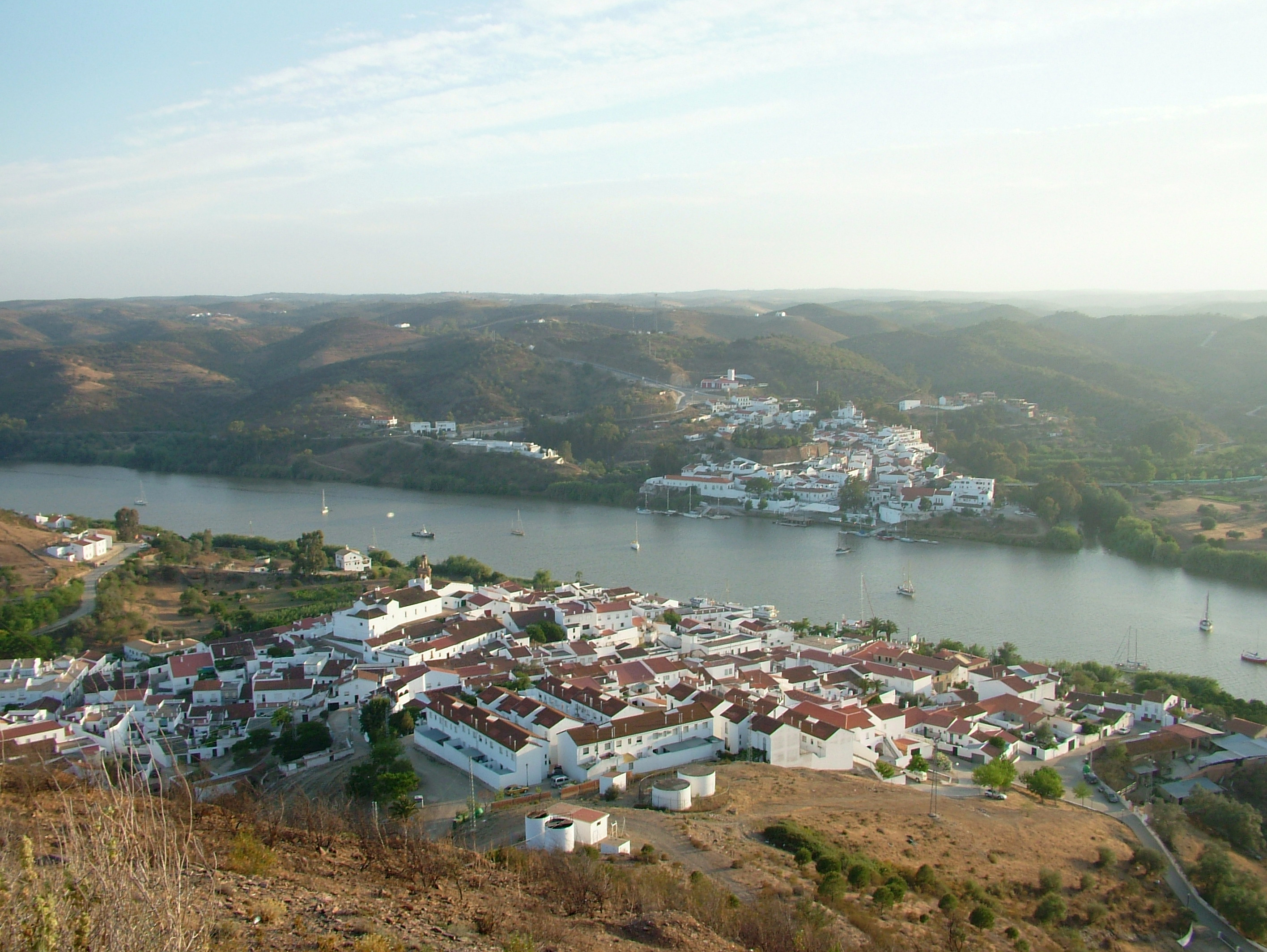
The Route of the Landscapes of Cultural Interest in the province of Huelva is a route that runs through various landscapes that are of special interest due to their socio-cultural, natural and geographical merits.
Understand
The Route through Landscapes of Cultural Interest in the province of Huelva offers a journey along 8 of the 117 landscapes included in the Register of Landscapes of Cultural Interest in Andalusia. To date, 15 landscapes in the province have been designated of cultural interest and some of those in the following categories in the Classification of Cultural Landscapes in Andalusia have been selected for this Route: the settlement system (the Tejada la Vieja landscape); the security and defence system (the Sanlúcar de Guadiana landscape and the Doñana coastal defence landscape); the system for obtaining and processing resources (the Isla Cristina fisheries landscape; the Chanza pasture landscape and the Riotinto mining landscape) and ideological and associative systems (the Alájar Pilgrimage and Rocío Pilgrimage landscapes).
All of these will be briefly described below. However, the technical information files that condense and analyse the scientific and technical information on each of these spaces can be referred to to garner some knowledge and pleasure from the Huelva province cultural landscapes included on this Route. They can be accessed via the Digital Guide of the Cultural Heritage of Andalusia by clicking on the landscapes on the map.
From the point of view of territorial characterisation, Huelva is the westernmost province of Andalusia and shares a border with the province of Badajoz to the north, the province of Seville to the east, the Province of Cádiz to the south-east, to the south, with the Atlantic Ocean and to the west, with Portugal. The province was created in 1833 out of the municipalities that had until then been part of the Kingdom of Seville and the old Province of Extremadura; it is divided into 80 municipalities with a total population of over 524,000 inhabitants in 2019, which makes it the least populated province in Andalusia. The tertiary sector is very important for the economy of the province, including tourism, which flourishes on the west coast especially and is consolidated in protected areas, especially the Aracena Mountains and Doñana National Park. The secondary sector, represented by the Huelva Chemical Complex, which include
Prepare
The route is designed to be done in a private vehicle. In order to use public transport, you must leave from Bus station of Huelva in the capital, which concentrates road communications; buses depart to the entire province. The timetables should be consulted beforehand in order to plan the route. However, some of the places indicated in the route may not be accessible by public transport. When travelling through mountainous areas, it should be taken into account that there may be sudden changes in the weather, such as storms or sudden drops in temperature, so you should always have warm clothing. On the other hand, in times of greater sunshine and sunshine hours, sunscreen should be used due to the greater impact of ultraviolet rays in this area.
Get in
The city of Huelva can be reached by road from Seville on the A-94 and from Extremadura on the A-66 . By train, access can be made from Córdoba, Madrid, Cáceres, Mérida, Talavera de la Reina and Seville. The nearest airports are Airport of Seville (102 km (63 mi) away) and Airport of Faro (Portugal) (113 km (70 mi) away). By boat it can be accessed from the Canary Islands with one trip per week.
Drive
1 Isla Cristina Fisheries Landscape
Route: Huelva, H-30 . E-01 , A-499 , N-431 , N-431a , Ayamonte (50.4 km (31.3 mi) - 40 min.) The fisheries landscape in the Isla Cristina wetlands is part of the outer tract of the Guadiana River and is formed of a complex drainage network with channels, creeks and marshes that are filled to overflowing with sediment deposits. The sand bars on the sea edge and the inland peacefulness of the marshes and creeks that are full of life convey the main environmental and cultural values of an area that, as a protected nature site, possesses a range of dissemination strategies.
This landscape is an excellent example of human activity to exploit the wetlands throughout time. This can be seen in the various buildings that are dotted around the area: tide mills, salt ponds, the fishing ports of Isla Cristina and Ayamonte and the El Pintado Mill eco-museum. The flour mills are linked to other forms of exploitation, such as salt production, artisanal fishing in some specific areas and shellfish fishing in channels and creeks. The golden age for tide mills was the 16th-18th centuries. They started to decline in the mid-19th century as a result of Spain losing its colonial markets and the introduction of new production systems. Nonetheless, as an exception, some continued to work from the end of the 19th century till the mid-20th century due to the bread shortage. When the technology became obsolete and was abandoned, along with the erosion of the coastal environment, this signalled the disappearance of most of the tide mills, although some sluice-gate arches, reservoir walls, wheelhouses and buildings remain. New multifunctional uses have allowed some of the installations to be preserved, such as the El Pintado, Eizaguirre, Tamujar Grande, Las Compuertas and Gazapo millpond fish farms.
1 Mill of El Pintao It is a mill built in the 18th century in stone, lime and brick. It is a tidal mill, that is to say, it takes advantage of the tidal force for milling. It contains a milling room of more than 60 m (200 ft) with 6 millstones, being one of the largest tidal mills in the Iberian sub-Atlantic. 2 Mill of San Diego These are the
Stay safe
The itinerary passes through safe, low-crime areas. The usual security measures should be taken, such as keeping the car locked or having backpacks or other objects in sight. As in most of the rest of Spain, the rural police force is the Guardia Civil. Larger municipalities may have their own municipal police officers. In many places along the route there are no shaded areas, so it is advisable to bring sunscreen and a hat during the hottest periods. Access to many places may not be accessible or even require hiking shoes and clothing or similar. When part of the route passes through a mining area, pay attention to all existing signs and take extreme precautions to avoid accidents.
Emergencies-112, ☏ 112. Guardia Civil, ☏ 062.
Stay healthy The nearest hospitals are:
1 Infanta Elena's Hospital, ☏ +34-959-01-51-32. 2 University Hospital of Juan Ramón Jiménez, ☏ +34-959-01-60-00. 3 Hospital of Virgen de la Bella, ☏ +34-649-90-27-22. 4 Hospital of Riotinto, ☏ +34-959-02-52-95.
Go next
Other destinations within the province of Huelva:
1 Palos de la Frontera 2 Sierra de Aracena Natural Park 3 Huelva
本指南改寫自 Wikivoyage (CC BY-SA)