
Colombia to Patagonia overland
旅遊行程
Colombia to Patagonia overland is an epic continental journey along the Andes across South America. This route starts from the sunny beaches of the Caribbean and crosses Colombia, Ecuador, Peru, Bolivia, Chile and Argentina before terminating on the icy shores of the Antarctic Ocean. Crossing 6 countries, spanning over 10,000 km, this is one of the ultimate overland journeys in the world.
Understand
This trip can be divided into three similar-sized segments, each with its own characteristics:
Cartagena to Lima (4,000 km): Tropical highland and rainforest (humid and warm to hot all year) Lima to Santiago (3,800 km): Altiplano and Atacama Desert (extremely dry, with large day/night temperature variations) Santiago to Patagonia (3,400 km via RN40): Temperate to sub-arctic (pleasant marine climate)
Bus classes
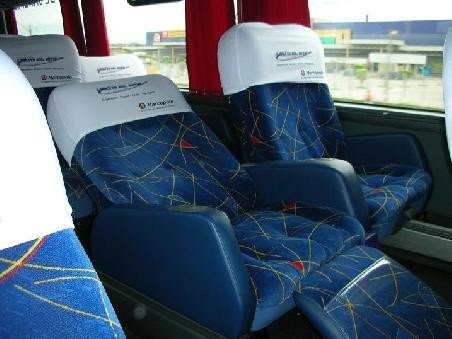
Although it is entirely possible to do the entire journey in chicken buses, it is the balance of cost and comfort that makes overlanding fun. To the purpose, long distance buses fall under 3 general comfort levels: Semicama, Cama, and Cama Suite. These names tend to shift from country to country.
Language Spanish is the official language in all countries on this trip. Various indigenous American languages such as Quechua are also spoken in some areas, especially in Bolivia and Peru. Speakers of those languages may not be bilingual with Spanish.
Climate Climate along the Pacific coast is mainly affected by latitude, with the temperature getting colder the further south you go. Colombia and Equador are tropical. Once you enter Peru, the humidity starts to decline. South of Lima, the environment becomes very arid. The Atacama Desert, known as the driest place in the world, lies in Southern Peru and Northern Chile. Around Santiago, desert gives way to subtropical rainforests. In Patagonia, climate gradually shifts from temperate to sub-polar, with evergreens increasigly dominating the landscape. In the Andes, altitude matters more than latitude. The rule of thumb is that temperature decreases by 6°C for every 1,000-m gain in elevation. The central portion of the trip in Peru and Bolivia crosses the Altiplano, where altitude hovers around 4,000 m. Daytime temperature is pleasant while nights can be freezing.
Prepare
Dress in layers to adapt to the diverse climates you will encounter along this trip. Start with T-shirts, bring a fleece or down sweater for the cold, and cover it all up with a waterproof outer shell. Be sure to bring comfortable shoes/boots for the numerous hiking opportunities you will encounter. Wear comfortable (loose or stretch) pants on the long distance buses.
Get in
By plane Bogota, Lima and Santiago are the principal airports for those flying in from outside of South America. Quito, Medellin and Cusco are more useful for those flying within South America. In Northern Patagonia, Puerto Montt and San Carlos de Bariloche are good entry points, while in Southern Patagonia, El Calafate, Punta Arenas, Rio Grande and Ushuaia are exit points. Uyuni has an airport for those unwilling to endure the hardship of Bolivian roads.
By boat
Cartagena is the principal port between Colombia and Panama. This is the only way to cross the inaccessible Darien Gap without flying. It is also possible to arrive by voyaging along the Amazon River. Start from Belem, take a ferry to Manaus (5 days), then another ferry to Iquitos (5 days). Once at Iquitos, three options existː Yurimaguas (2½ days), Pucallpa (4 days) and Coca (8 days). All three cities have motorable roads to the west of the Andes.
By bus Since every major city west of the Andes has been covered in the Routes section below, the only remaining starting points lie far beyond the Andes on the eastern Atlantic coast. These bus rides are epic journeys in and of themselves. From Sao Paulo, Ormeño runs a bus to Lima on the Interoceanic Highway (108 hours). Get off at Cusco to save 21 hours. From Buenos Aires, buses to Lima (72 hours), Santiago (19-20 hours), Bariloche (20-23 hours) and Rio Gallegos (36 hours).
Route
Colombia 1 Cartagena. Caribbean port city. Start of this journey.
Cartagena to Medellin or Bogota is a long bus ride. Stop by the quaint town of Santa Cruz de Mompox immortalized by the great Latin American novelist Gabriel Garcia Marquez in his book The General in His Labyrinth. The town is also a UNESCO World Heritage Site. 2 Medellin.
Day trip to climb El Peñón de Guatapé Medellin to Bogotá 3 Bogotá.
Bogota to Cali 4 Pasto.
Pasto to Ipiales 1 Las Lajas Sanctuary. Basilica straddling a canyon. 20-min from Ipiales by taxi (COP$4,000) or cableway (COP$12,000)
Ecuador Tulcán is a border town. Be careful with money changers as some may be crooks.
Tulcán to Quito (5 hours) In Quito you can go to the historical old town or take a day trip to go horseback riding at the Mount Cotopaxi volcano.
Quito to Cuenca Cuenca to Loja Loja to Piura
Peru Piura to Trujillo (6 hours) at Trujillo 5 Trujillo. is a sizable city to stop at in northern Peru. Near by are many sites of interest: Chan Chan (adobe constructed by Chimú), Huacas del Sol y de la Luna (largest adobe pyramid constructed by Moche). Trujillo to Lima takes 9 hours. 6 Lima. Capital of Peru. (updated May 2022)
Lima to Cusco land route contains some of the best scenery in Peru, but if you are in a hurry, there are direct buses from Lima to Cuzco (22 hours) Lima to Paracas (3½ hours) - Spend the night in Ica or Huacachina Paracas to Ica/Huacachina (1 hour) - There is a direct backpacker bus (Peru Hop) from Paracas to Huacachina leaving around 11:00. Otherwise, take a bus to Ica first then take a taxi from Ica to Huacachina. Huacachina is an oasis surrounded by tall dunes. It is a popular with backpackers. If you are tired from overlanding, this is a good stop. Ica to Nazca (3 hours) 2 Nasca. Rather rundown but near the famous Nazca lines. Avoid a scam hostel run by an obese man. This hostel goes by the name "Loki" (not affiliated with the famous Loki hostel chain). The hostel name changes every few years because of online feedback. Avoid him and his over priced tours as travellers have reported unwanted sexual advances by this man.
Nazca to Arequipa (9 hr 30 min bus) 7 Arequipa.
Arequipa to Cu
Stay safe
Even though violence in Colombia has greatly subsided since the 2016 peace agreement, the section between Cali to Pasto (Mojarras) is not very safe. Avoid night buses or even being outside at night.
Go next
The only land further south is Antarctica.
Alternative ways back Head to Rio Gallegos for a 36-hour (Cama Suite) bus ride north to Buenos Aires. From Buenos Aires, head further north to visit Iguaçu Falls. Continue to São Paulo, then take 108-hour bus across the Amazon to Lima. Buenos Aires to Machu Picchu overland
本指南改寫自 Wikivoyage (CC BY-SA)