
Camino de Santiago
旅遊行程
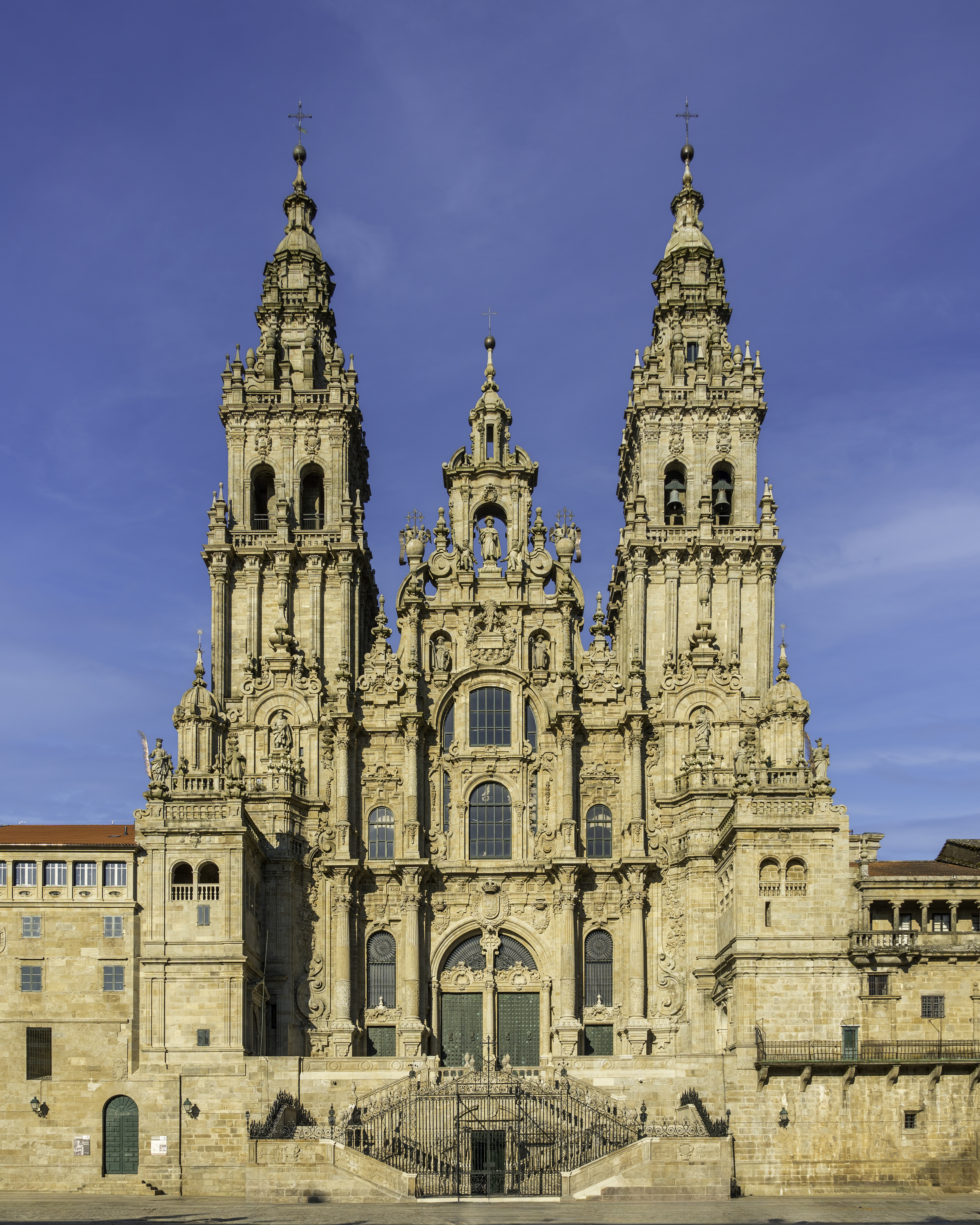
The Camino de Santiago (in English also The Way of St. James, Galician: O Camiño de Santiago, Ruta Xacobea), often referred to colloquially as simply the Camino in English or El Camino in Spanish, is one of the most important Christian pilgrimages in Europe and increasingly famous throughout the world, with Santiago de Compostela, Spain, as the final destination. In 2024 there were about half a million pilgrims recorded along the routes.
Understand
The pilgrimage goes to the Cathedral of Santiago de Compostela in Galicia in north-western Spain, where tradition has it that the remains of the apostle Saint James are buried. According to the legend, after being executed by King Herod in 44 AD in Jerusalem, St. James' body was taken by boat to Galicia, where he had been preaching prior to his return to Israel, and carried inland to where Santiago de Compostela is now. The discovery of his tomb in the 10th century by the king of Asturias led to the advent of a pilgrimage route from all across Europe that ends here. The pilgrimage is believed by some to be one of three pilgrimages for which the sins of the pilgrim will be forgiven, the other two being to Rome and the Holy Land. European pilgrims have been going on foot or by sea from their home countries to Santiago de Compostela. Since the turn of the millennium however, the trail has increased in popularity among non-Europeans and non-Christians through depictions in various books and movies. Since then, facilities for wayfinding and accommodation have gotten significantly better to cater more visitors. There are several routes that can be taken, the most popular being the French Way, which begins in Saint-Jean-Pied-de-Port in France. The routes have been inscribed on the UNESCO World Heritage List. Other popular routes include the Portuguese Way from Porto, the Primitive Way, and the Northern Way. It is however very common to start significantly closer; to get a certificate of accomplishment (compostela), one needs to walk or ride on horseback for at least the final 100 km to Santiago or cycle for at least 200 km. These starting points offer the distance of at least 100 km:
Sarria on the Camino Francés Tui / Valança on the Camino Portuguese Vigo on the Camino Portuguese da Costa Vilalba on the Camino del Norte Lugo on the Camino Primitivo Ferrol on the Camino Ingles by skipping A Coruña Ourense on the Via de la Plata Fisterra via Muxía on the Camino de Finisterre
In media The Camino de Santiago has been prominently featured in numerous media, signifying the importance of the spiritual journey on its tracks.
The Pilgrimage (Paulo Coelho, 1987). Coelho, f
Prepare
Since the route choice and starting points are completely arbitrary, it is up to you to decide by factoring in the time you have to your disposal, the season, the terrain, the trail surfaces, the infrastructure along the way, and whether you want to often walk with other people or have the trail mostly to yourself. By far the most pilgrims start on the Camino Frances in Sarria, so this section to Santiago is the busiest. Somewhat busy are the sections from Porto and Valença to Santiago, from León to Sarria as well as from Saint-Jean-Pied-de-Port through the Pyrenees. All other trails have fewer pilgrims. An average person generally hikes 20 km per day, however, you can adjust depending on your general health conditions; it is not uncommon for pilgrims to pace slower, rest for at least one day in a town, or skip to another using a bus or train. If you are a slow hiker, pick a route where distances between accommodations aren't too long. On these routes most albergues (hostels) are no more than 10 km away from each other: Camino Frances, C. Finisterre, C. Portugués da Costa, C. del Norte, C. Portugués from Porto, C. Ingles from Ferrol, C. Primitivo from Oviedo to Grandas de Salime, and C. Mozárabe from Almeria to Granada.
When to go Generally all caminos can be travelled all year round. Check the climate diagram of some towns of a route, so you get an impression of the temperatures and the rainfall. Take into account that mountain passes are colder than nearby towns in the valleys. The winter months on the caminos are usually pretty cold during the night and in the morning. Many accommodations are closed during November to March, with a few more open during April and October. During this time, you might have to walk somewhat further than normal. At the most common stopover points however, there is always at least one open place, especially the municipal hostel.
If any route can be suggested all-year-round, it's the Camino a Finisterre. In February, these routes can be suggested: Camino Frances from Sarria, the Camino Portugues between Lisbon and Porto, the Silver Route between Seville and Mérida, and the Camino Ingles. From March to June all routes offer good
Talk
Talking amongst pilgrims on the Camino de Santiago is a fundamental part of the experience. Conversations can be deeply personal, casual, or even spiritual, depending on the people involved. Many pilgrims are open to sharing their personal stories, motivations, and struggles regarding the pilgrimage and life. The Camino fosters a sense of trust and camaraderie, allowing for conversations that might not happen in everyday life. The pilgrimage naturally creates an environment where people feel safe to speak openly and listen deeply. Discussions range from practical topics like where to eat and local specialities, differences between the routes, origin and culture of somebody, weather of the upcoming day, walked distance and accommodations, to deeper themes such as personal transformation, life challenges, focussing on what's important in someone's life, and plans after the pilgrimage. Encounters are often brief and serendipitous. You might talk with someone for a few minutes, hours, or even days before parting ways, sometimes without ever exchanging names. While many enjoy talking, there is also a shared understanding that silence is valuable. Some walk in quiet contemplation, and others might choose specific days for silent walking.
Language English is generally spoken among the pilgrims, in many albergues, and in the office at Santiago de Compostela where you can get your certificate. Depending on the population and the popularity of the route, many establishments along the way may have some staff that understand at least basic English. Should you require help from the locals however, picking up some basic native phrases, especially Spanish (or Portuguese if you are in Portugal, French in France), will come in very handy.
Get in
By plane Depending on which route you are taking, the closest major international cities you can fly in to would be Biarritz, Bordeaux, Paris or Toulouse in France, Barcelona, Bilbao or Madrid in Spain, and Lisbon or Porto in Portugal. With the exception of Lisbon and Porto, which lay directly along the Portuguese Camino, and Bilbao directly on the Northern Camino, you have to connect using land transport to the place where you start walking. Smaller airports on the route that can also be of use are Zaragoza, Pamplona, San Sebastián, Logroño, Burgos (unserved as of April 2023), Santander, León, Oviedo-Asturias, Salamanca, Bragança, A Coruña, and Vigo. At the end of the route, Santiago de Compostela (SCQ IATA) offers flights to several domestic destinations, but only to a few international destinations within Europe. For direct international flights it's often more convenient to take a bus from Santiago to the Porto airport (OPO IATA or take a high-speed train from Santiago to Madrid and fly from there (MAD IATA). Both journeys take about 3 hours.
By boat From Plymouth and Portsmouth in the United Kingdom, there is a ferry service to Santander and Bilbao at the Northern Camino.
By train Most major towns along the route are well connected by train, including traditional starting points for the short hikes like Sarria for the French Camino, Tui for the Portuguese Camino, and Ferrol for the short English Camino. For the official start of the French Camino at Saint-Jean-Pied-de-Port, you can connect with a train to Bayonne. The TGV train to Bayonne also usually terminates at Hendaye, the official start of the Northern Camino. Santiago de Compostela also has a frequent train connection to other Galician cities, in addition to the high-speed Avant and Alvia trains to Madrid and Barcelona.
By bus Most towns and
本指南改寫自 Wikivoyage (CC BY-SA)