
Buffalo-Pittsburgh Highway
旅遊行程
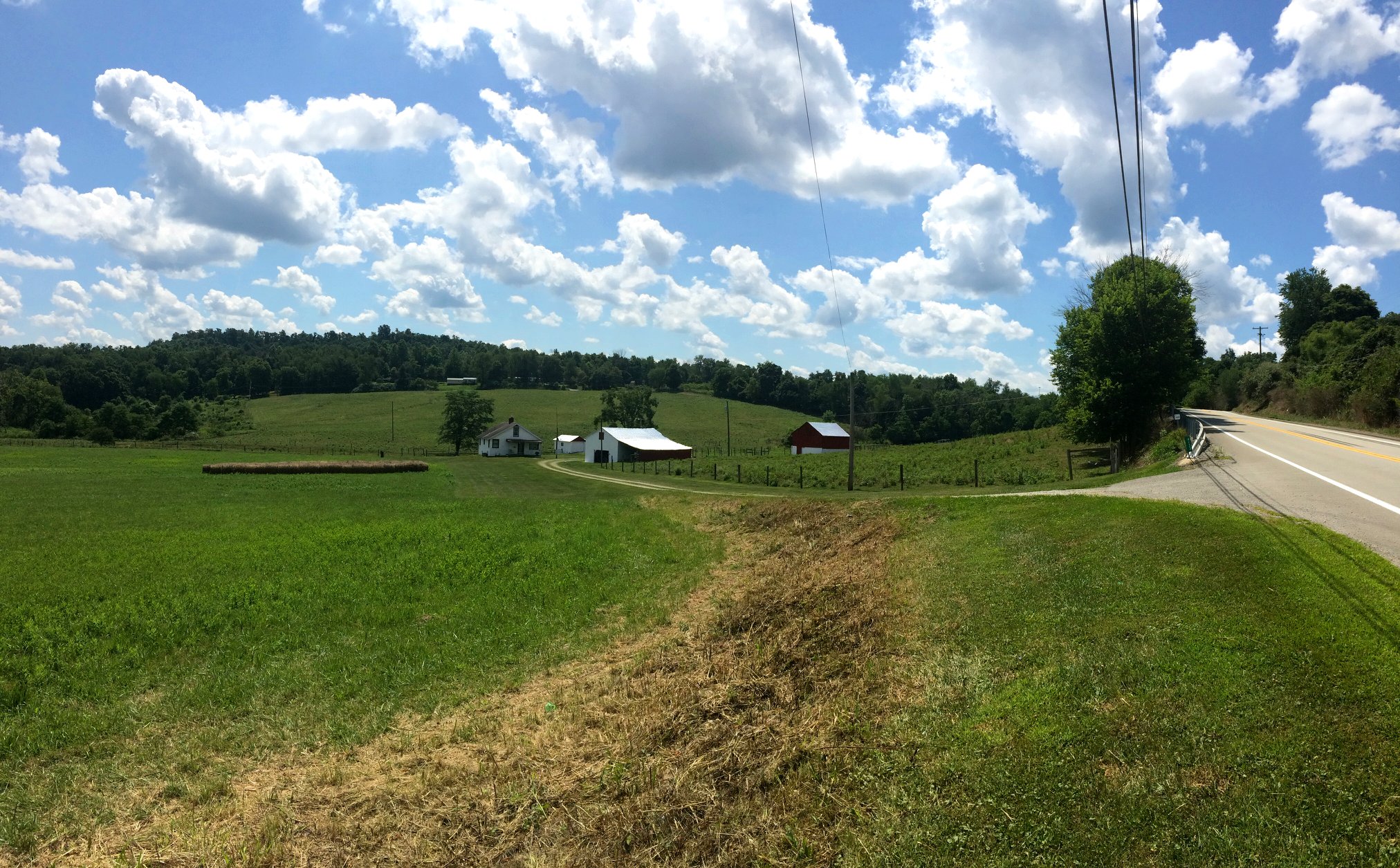
The Rust Belt. The Great Lakes. Appalachia. Ask any American what they know about these regions and they'll tell you they've got their share of problems. There's poverty, economic hardship, a sense of desperation, the feeling that time has passed them by.
Understand
Despite its name, the Buffalo-Pittsburgh Highway doesn't connect its two namesake cities directly. The route does indeed begin in Buffalo, but proceeding from there, travellers would have passed to the east and south of Pittsburgh by a roughly 30-mile (50 km) radius and ended up in Clarksburg, West Virginia. Pittsburgh-bound motorists would have turned off at one of two intersecting auto trails, as you'll read later.
History
The year was 1926. It was a time when automobiles were a known quantity, but were only beginning to become affordable to the middle class; before the Interstate Highway System had even been dreamt of, and when America as a nation was only just beginning to wrap its collective mind around the concept of long-distance travel by car. Back then, for the few motorists who dared such long trips, there were no state-funded numbered highways as we know today. Instead, they had to make do with an informal system of what were called auto trails. Basically, if you followed the colored stripes of paint on roadside telephone poles, you could more-or-less be sure that you were on a road that was in more-or-less suitable condition for an automobile to drive on. (Of course, "suitable condition" was a relative term in those days.) There was nothing official or carved in stone about the auto trails — more often than not, they were designated, maintained, and promoted by local chambers of commerce or tourist bureaux; the government had nothing to do with them. In fact, in some cases an auto trail was nothing more than the work of one enterprising individual with a bucket of paint and a lot of time on his hands. It was in this fateful year that the Buffalo-Pittsburgh Highway opened to motorists. On its back cover, the Pennsylvania Auto Trail Road Guide from the previous year advertised the soon-to-open highway with the slogan, "The Progress & Prosperity of All the World Depends Upon America's One Great Industrial Broadway". That's a pretty apt summation: as mentioned earlier, this was an era when the Rust Belt wasn't so rusty, and the regions through which the Buffalo-Pittsburgh Highway passed were among the world's foremost industrial powerhouses. The heyd
Prepare
Not surprisingly given that it dates to 1926, the original routing of the Buffalo-Pittsburgh Highway shuns modern expressways in favor of country back roads and small-town Main Streets, a somewhat different scenario from what many modern-day road trippers are used to. Notwithstanding that, this itinerary doesn't present any particularly unique challenges to plan ahead for (assuming you're at least familiar with the basics of long-distance auto travel). Generally speaking, the northerly half of the route — roughly from the outer fringe of the Buffalo suburbs through Indiana or so — is relatively more remote and isolated, so if you happen to be passing through a town, you might want to give some serious thought to the question of whether you need a bathroom break or to stop off for a snack, as it might be awhile before your next opportunity. But we're not talking "remote" on the level of needing to keep a spare fuel can in your trunk, or whatnot — this isn't the Dalton Highway! The itinerary as described in this article is 339.6 miles (546.4 km) in length. That number might be slightly different if you're travelling south-to-north, and doesn't include the return trip or any of the side trips described in this article. The question of how much time to allow for the trip depends on a couple of factors, namely what time of year you're travelling and how many of the points of interest you'd like to explore in the cities and towns along the way. For instance, if it's midsummer and you intend to through-drive the highway without stopping for any reason other than to refuel, one very long day is probably doable. But on the other hand, by rushing through the experience, you'll miss out on much of what makes it special. To allow time for a more leisurely pace and to check out some of those roadside attractions and side trips, "at least three days" is a more realistic answer. In autumn, when the days are shorter and nights are longer, plan for even more time than that. Speaking of the seasons: yes, summer is a great time of year to travel the Buffalo-Pittsburgh Highway — the days are long, the weather pleasant, outdoor destinations like Ohiopyle and Allegany State Park off
Get in
The corner of Main and Scott Streets in downtown Buffalo marks the north end of the itinerary. To get there, take Interstate 190 to Exit 6 (Canalside/Elm Street), following the signs for Canalside and Seneca Street as you pass along the offramp. At the end of the ramp, make a right onto Seneca Street and then another right at the first light, which is Michigan Avenue. Continue south, passing over the railroad tracks and under the overpass bridge, then make a right onto Scott Street. Main Street is two blocks away. Alternatively, if you're heading into downtown from points south, you might be better off taking the Buffalo Skyway (NY 5). Get off at the penultimate exit (I-190 northbound/Seneca Street); bear left and then right, following the signs for Seneca Street and Pearl Street respectively. At this point you're headed south on Pearl Street; you pass under two overpass bridges in succession and then come to a three-way intersection with Marine Drive. Make a left and proceed to Main Street: your first light, and the intersection where Marine Drive changes into Scott Street. If you're following the itinerary in the opposite direction, arriving at the south end of the route is as simple as getting off the Northwestern Turnpike (U.S. 50) at the West Pike Street exit: the Buffalo-Pittsburgh Highway's terminus is that precise junction.
Go
Today, it's no longer possible to follow the 1926 routing of the Buffalo-Pittsburgh Highway exactly: the continuous expansion and modernization of the American highway network meant the destruction of some of its original segments, and the 1950s and '60s saw the introduction of one-way streets into the downtown business districts of many American cities as a way to tame the traffic snarls that came with widespread automobile ownership. However, with this itinerary, we'll be retracing the original route of the highway as closely as the modern-day road network allows. This itinerary is oriented for those headed north to south. If you're starting in West Virginia instead, you can follow the list of cities and attractions in the reverse order of how they're presented here, but the actual route may be slightly different (thanks again to those one-way streets). In the italicized directions included in this article, any such discrepancies in routing will be flagged with bold underlining.
Buffalo metro area If you were plotting out a road in 1926 that aspired to be "America's Great Industrial Broadway", you could scarcely pick a better place to start than 1 Buffalo. Enjoying a privileged location where the Great Lakes met the Erie Canal, Buffalo had long been an inland port of immense importance, where wheat and corn from the vast breadbaskets of the Midwest would arrive by freighter, be stored at port in towering grain elevators, then expedited via canal to New York City and international markets. But the local economy had by now diversified well beyond grain: Buffalo was also the second-biggest railroad hub in the country after Chicago, and the Lackawanna Steel Company took advantage of new rail links to the coal fields of Pennsylvania to set up what was then the world's largest steel mill just south of town. As well, the automobile (see below for more on that) and aviation industries, important ones locally as the 20th century wore on, were beginning to emerge around this time. Of course, within several decades Buffalo's industrial economy would suffer from a series of body blows from which it would never really recover — the Great Depression, the opening of the S
Stay safe
The United States has developed a reputation as
本指南改寫自 Wikivoyage (CC BY-SA)