
Buenos Aires to Machu Picchu overland
旅遊行程
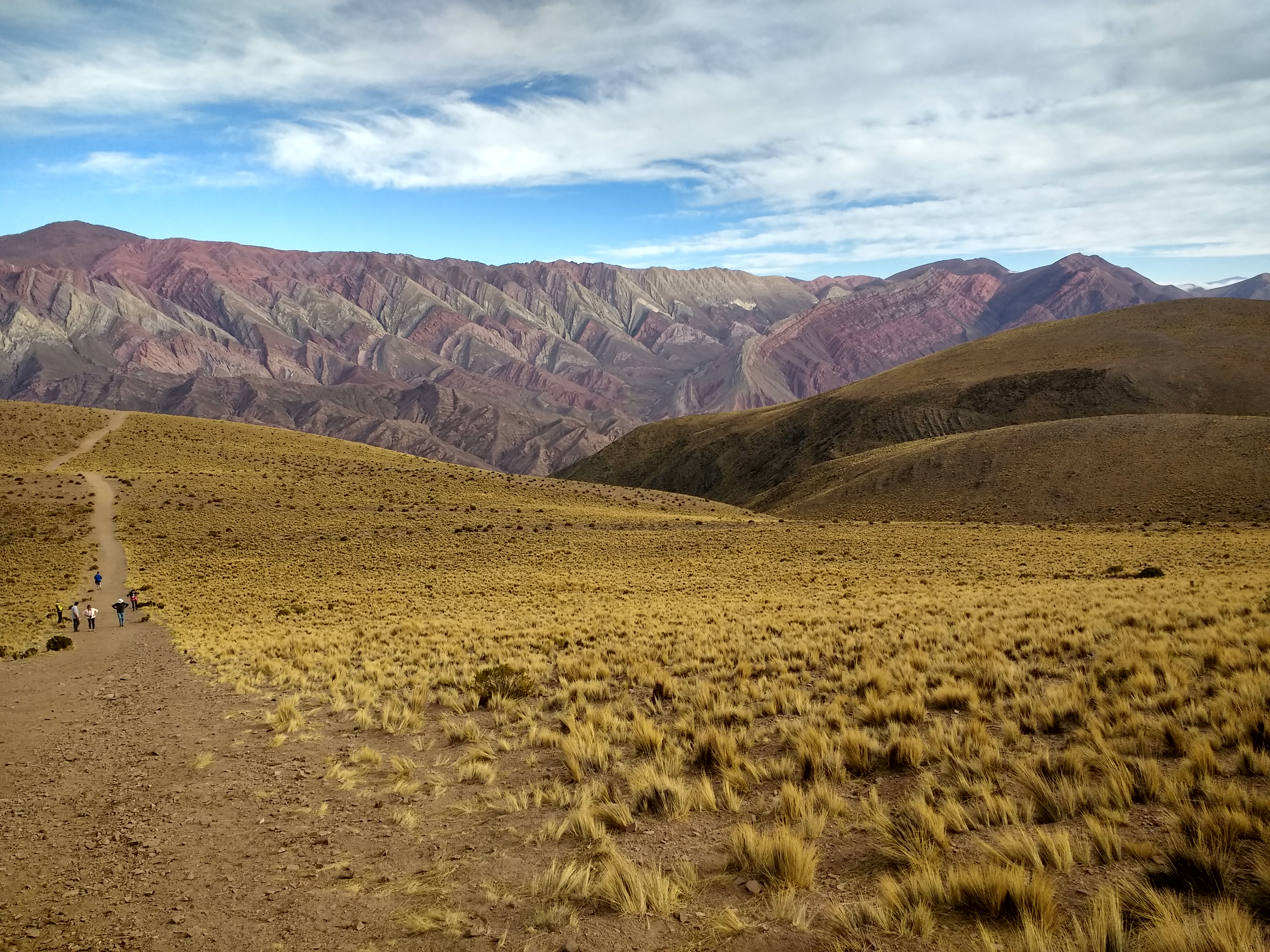
If you find yourself in Buenos Aires and want to do some overland travel in South America, why not make your way north, through northern Argentina and Bolivia all the way to the ancient city of Machu Picchu. This journey from Buenos Aires to Machu Picchu overland takes you through small towns and big cities, staggering mountains and stark deserts.
Understand
This trip, a version of a route that's popular with backpackers, makes a great ending to a program of work or study in or near Buenos Aires, or an adventure on its own. It can also be done as part of a longer overland trip between Patagonia and Colombia. Though it starts at sea level, most of this itinerary is at high altitudes. It is designed to allow you to ascend relatively gradually, so that you can acclimate and reduce the risk of altitude sickness. Still, symptoms are certainly possible. Coca leaves, which are easy to obtain in Bolivia, are said to help with the symptoms. Follow the safety advice given in the Altitude sickness article. The journey takes about two weeks if you only visit the main stops (labeled in blue) and don't spend more than one or two nights at each one. But if you take your time and explore some of the side destinations (in green), you could easily stretch it to a month or more. Most of the route is by bus and train, and it includes some long bus rides. If you're not good with taking a couple of overnight buses, you may want to add some extra stops along the way to break them up into smaller chunks.
Prepare
If you don't speak Spanish, it's a good idea to bring a Spanish phrasebook. That being said, every part of this trip is on the Gringo Trail and all the stops on the way get plenty of European backpackers, so you should be able to survive with English if you have to. If you decide to take the Inca Trail for the last leg of the journey, it doesn't hurt to learn a few words of Quechua, but again, English should be adequate and Spanish is plenty. Check the visa requirements before you go. The route starts in Argentina, goes through Bolivia, and ends in Peru. (An alternative variation goes through Chile instead of Bolivia.)
Get in
1 Buenos Aires is a huge city with many international connections. Fly into Ezeiza International Airport, take the ferry from neighboring Uruguay, or take the bus from elsewhere in Argentina.
Go
Buenos Aires to Salta The first step is to get from Buenos Aires to the northern Argentinian city of 2 Salta. The train only goes as far as San Miguel de Tucumán, so you'll have to either take the train first and then switch to a bus or just take a bus the whole way. It's a long way from Buenos Aires to Salta, so you may want to add a couple of stops on the way. Well-known destinations in between include 1 Rosario, 2 Córdoba, and 3 San Miguel de Tucumán. Once you're in Salta, it has some interesting sights of its own, but it's particularly good as a launching point for day trips to the small towns and mountains that surround it.
Salta to Humahuaca The dusty desert town of 3 Humahuaca is a four or five-hour bus ride from Salta, and you'll notice a distinct change in climate on the way, from green forests to dry mountains dotted with cacti. Spend at least two nights here to help you acclimate. While you're in town, take a day trip to Serranía de Hornocal, which is Humahuaca's star attraction, and consider visiting other towns nearby such as 4 Purmamarca or 5 Uquía.
Humahuaca to La Quiaca The border town of 4 La Quiaca is just a three-hour bus ride away, which will take you through impressive mountain scenery and a bunch of tiny towns. The second half of the ride is on a poorly maintained road, which is why it takes a whole three hours. If the last part of the highway was as well maintained as the rest of it, it would probably only take two hours. Spend a night in La Quiaca if you aren't pressed for time—this is good for acclimating to the altitude, and for experiencing a more authentic side of northern Argentina (Humahuaca and its surrounding towns are more touristy).
La Quiaca to Uyuni
You can cross the border into Bolivia on foot. Make sure to budget in a couple of extra hours in case the border crossing takes longer than expected. Once you're in Villazón, the border town on the Bolivian side, it's a 10-minute walk to the bus station or a 30-minute walk to the train station. Taxis are also available. If you've already spent a night in La Quiaca, there's not much point spending a night here too, so just head to the station and continue on your way. Fo
Alternative route
If you'd rather skip Bolivia, it's also possible to do the itinerary going via the Atacama Desert in Chile. Buses are available from Salta and San Salvador de Jujuy (near Humahuaca) to 1 San Pedro de Atacama, from which you can explore the desert and then head north to Peru. If you want to have it all, another option is to go from Argentina to San Pedro de Atacama, and then take a Salar de Uyuni tour that starts in San Pedro and ends in Uyuni, where you can continue with the rest of the itinerary.
Stay safe
Theft and robbery are risks on parts of the itinerary. In particular, be careful in the big cities of Buenos Aires and La Paz, and watch out for pickpockets anywhere where tourists congregate. This itinerary is designed to avoid the areas where yellow fever vaccination is recommended. All the destinations listed above are safe to visit without a yellow fever vaccine as of 2018. However, if you decide to add additional stops on the way, you should do your research. Locations to the southwest of stops on this itinerary don't have yellow fever, but if you go too far to the north or east, you may end up in a yellow fever transmission area.
Go next
Once you reach Machu Picchu, the only way out is to go down to Aguas Calientes (on foot or by bus), and then take the train to Ollantaytambo (an Inca town surrounded by mountains dotted with ruins, definitely worth visiting in its own right) or to Poroy, near Cuzco. If you're ready to head home, you can then fly out of Cuzco's airport. If not, the question is where to go next. You've barely begun to experience what Peru has to offer. Head west to the metropolis of 11 Lima and the mysterious 12 Nazca Lines, south to the colonial city of 13 Arequipa, or north and east to the jungles of the 14 Peruvian Amazon and 15 Madre de Dios. You can also continue your journey and keep heading north to Ecuador and Colombia. If you've done the itinerary in the other direction, ending in Buenos Aires, you can keep heading south to Patagonia, go west to Santiago via Mendoza, or take the ferry east to Uruguay, where it's possible to combine this itinerary with a trip along the coast of Uruguay.
本指南改寫自 Wikivoyage (CC BY-SA)