
Bangkok to Ho Chi Minh City overland
旅遊行程
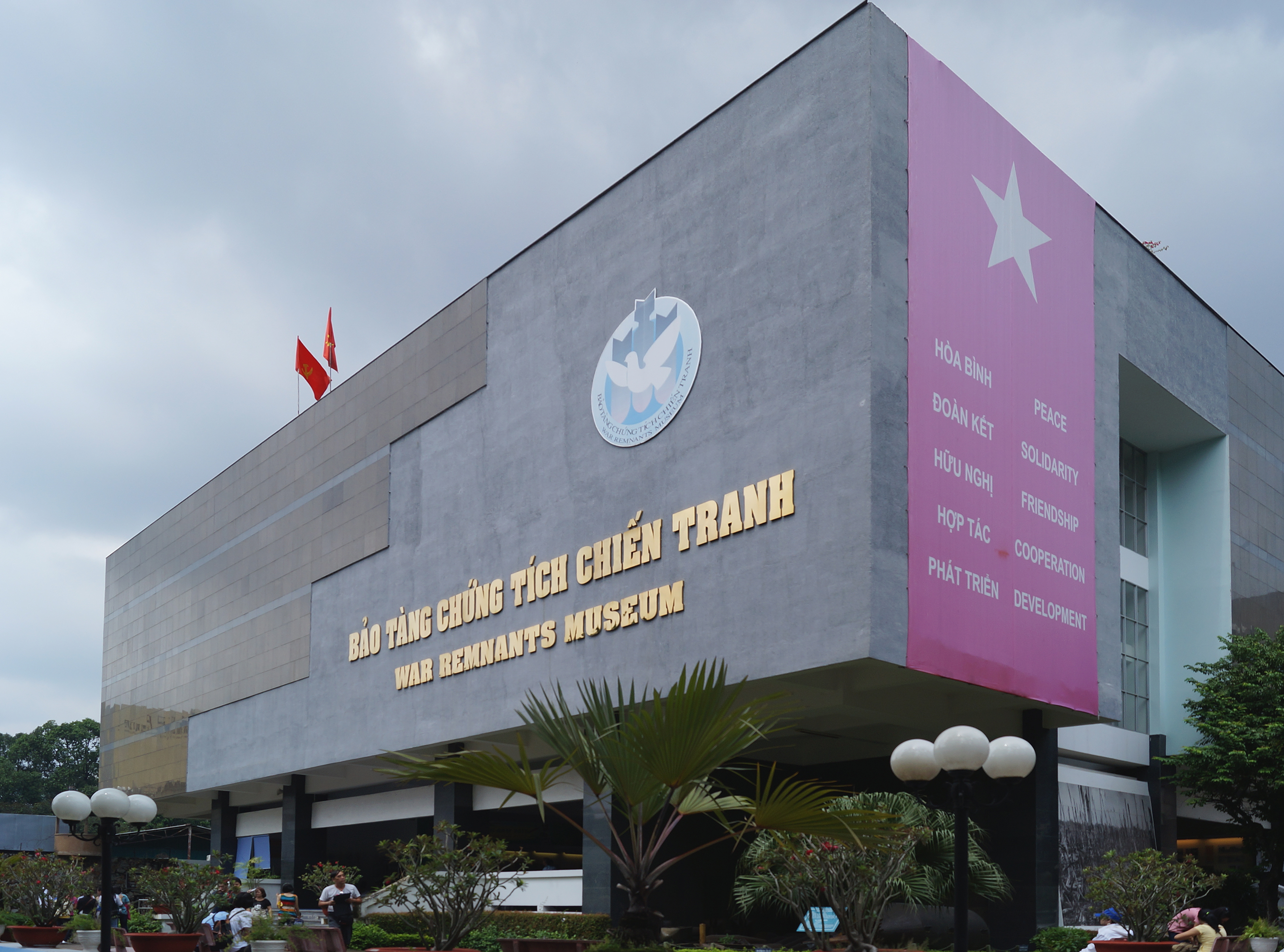
This is a suggested itinerary for a trip from Bangkok to Ho Chi Minh City, in Southeast Asia. This itinerary takes you through the core of former French Indochina, and through the fields of the Vietnam War, starting and ending in the two largest cities in continental Southeast Asia.
Understand
Cambodia and Vietnam gained final independence from French rule in 1954. You will even today find many signs of French influence. Thailand is the only Southeast Asian country that was never colonised, though European influences can also be seen in Thailand's cities, as the kings of Thailand were keen to modernise the country based on European models. Allied with Japan during World War II, Thailand became a U.S. ally following the war, and became an island of stability in what was otherwise a turbulent era for much of the region. Although Thailand also had to deal with its own communist insurgency, the insurgents for the most part had little success in gaining public support, due in large part to the immense popularity of then-king Bhumibol Adulyadej among the Thai people, and ended their struggle peacefully in 1983. Thailand would play host to U.S. troops deployed to Vietnam during the Vietnam War, which eventually led to the development of its tourism industry. However, it also led to the once-idyllic beach town of Pattaya becoming overdeveloped, and the town is now better known for its sex tourism industry than as a beach getaway destination. Nevertheless, Thailand has emerged as one of Southeast Asia's economic powerhouses, second only to Indonesia, and today attracts many migrant workers from its much poorer neighbours Myanmar, Laos and Cambodia. The French would return to Vietnam following the war, though they would face stiff resistance from pro-independence forces. Following a humiliating defeat by communist forces led by Ho Chi Minh at Dien Bien Phu in 1954, the French agreed to grant Vietnam independence, though it would also result in a divided nation. Ho Chi Minh would set up a communist regime with the support of the Soviet Union in the North, while Ngo Dinh Diem would set up a capitalist regime with the support of the United States in the South. The Vietnam War between both states would rage from 1955-1975, ending with victory for the communists when they successfully took the southern capital of Saigon. The subsequent crackdown on capitalism by the victorious communists would result in a massive refugee crisis, with many of the wealthy Vietnamese
Prepare
Citizens of most Western countries can visit Thailand without a visa. Visas for Vietnam need to be arranged in advance. You can obtain one from the Vietnamese embassies in Bangkok or Phnom Penh, or a Vietnamese embassy or consulate in your home country. Allow two-four days for processing in Bangkok, and a fee of US$45–60. Alternatively, citizens of most Western countries can obtain an eVisa, which takes about 3 days to process, but you will need to print out two paper copies of your visa, and you must enter Vietnam on the exact date, and at the port of entry stipulated on your visa. You will also need to pay a US$2 bribe to the immigration officer at the land border if you are entering or exiting Vietnam on an eVisa. For Cambodia, a 30-day tourist visa-on-arrival is available for citizens of most Western countries at most border crossings; the official price is US$30, but it usually costs more after factoring in the bribes that are usually demanded by Cambodian immigration officers. Alternatively, you may apply for an eVisa, which costs more at US$36 and takes about 3 days to process, but saves you the hassle of having to deal with the visa office at the border. Each country has its own currency, with Thailand having the Thai baht, Cambodia having the Cambodian riel, and Vietnam having the Vietnamese dong. The U.S. dollar is the official second currency in Cambodia, and is the preferred currency for larger transactions; the local currency is generally limited to small transactions below US$1 in value. You will need to obtain the respective local currencies for Thailand and Vietnam, as foreign currencies are generally not accepted outside major tourist establishments. ATMs are limited in Cambodia, where they are available in Siem Reap, Phnom Penh, and on the beach in Sihanoukville, and typically dispense US dollars. Thailand and Vietnam have well-developed banking systems with ATMs widely available across the country, and dispensing the local currency. Thai ATMS generally have a maximum withdrawal limit of 20,000 baht, while Vietnamese ATMs generally have a maximum withdrawal of 2,000,000 dong, sometimes less. Citibank branches in Bangkok have a withdrawal limit
Talk
Each country has its own language, with Thai being the main language in Thailand, Khmer being the main language in Cambodia, and Vietnamese being the main language in Vietnam. Despite the legacy of French colonial rule, French is not widely spoken in either Cambodia or Vietnam, and is largely confined to a few educated elderly elites. English is now the main foreign language studied in all three countries, though proficiency is generally poor. That said, service staff in the tourism industry, as well as young upper and upper middle class adults locals, are usually able to communicate in at least basic English. Bangkok and Ho Chi Minh City are both home to vibrant Chinatown districts with substantial ethnic Chinese communities, some of whom are able to speak various Chinese dialects. The main Chinese dialect spoken in Bangkok is Teochew, while in Ho Chi Minh City, it is Cantonese, though with a significant Teochew minority. Although there is no dedicated Chinatown district in Phnom Penh, there is significant number of ethnic Chinese scattered around the downtown area, most of whom speak Teochew. Mandarin is also increasingly being learnt by tourist personnel due to the growing importance of China's tourism industry.
Get in
Bangkok to Siem Reap Time: From 9–14 hours, depending on the season
Cambodian bus company Giant Ibis runs direct buses from their office in Phra Nakhon. If you are not planning to sightsee along the way, this is the most hassle-free way of travelling the route. Giant Ibis charges border crossing fee on international routes, and the conductor would take your passport and process you through immigration at the border. You may be able to avoid paying the fee and process yourself through immigration, but the Aranyaprathet-Poipet border crossing is a hotbed of scams, particularly on the Cambodian side, and you might be left stranded at the border as immigration officers deliberately hold you up in an attempt to extract bribes. Starts with a 4-5 hour bus ride from Bangkok to Aranyaprathet ("Aran"), the town on the Thai side near the border. Both public buses and private tour buses are available; tickets can be bought from nearly any travel agent in Bangkok and at any of Bangkok's four bus terminals. Make sure you get the right terminal for your bus. Public buses are the cheapest option and are of reasonable standard. From Aranyaprathet, get a tuk-tuk the last 6 km to the border crossing. Touts will approach you at the border. Ignore them as they will expect a whopping tip at the other end for not really helping you much at all. Beware of scams; the border police sometimes try to make an extra buck on various fees and fines they more or less make up on the spot. You do not need to pay a fine for not bringing your yellow fever certificate. You should only have to pay the visa fee with the price stamped in your passport, although in reality you'll probably have to pay at least 1,000 baht. From Poipet on the Cambodian side, it’s a further 3-6 hour bus or taxi to Siem Reap, in the dry season; in the rainy season the trip may sometimes take as much as 9–10 hours as the road gets flooded. You may get a bus or hire a taxi, and it may be a good idea to share one if you come across fellow travelers. Approach drivers directly and agree on a price to Siem Reap. Northern Cambodia is still one of the most heavily mined areas in the world; if you need to take a leak, you are wel
Highlights
Bangkok, Asia's most visited city and the main economic hub of mainland Southeast Asia, known for its vibrant nightlife, shopping, street markets and great food. The
本指南改寫自 Wikivoyage (CC BY-SA)