
Baja Whale Trail
旅遊行程
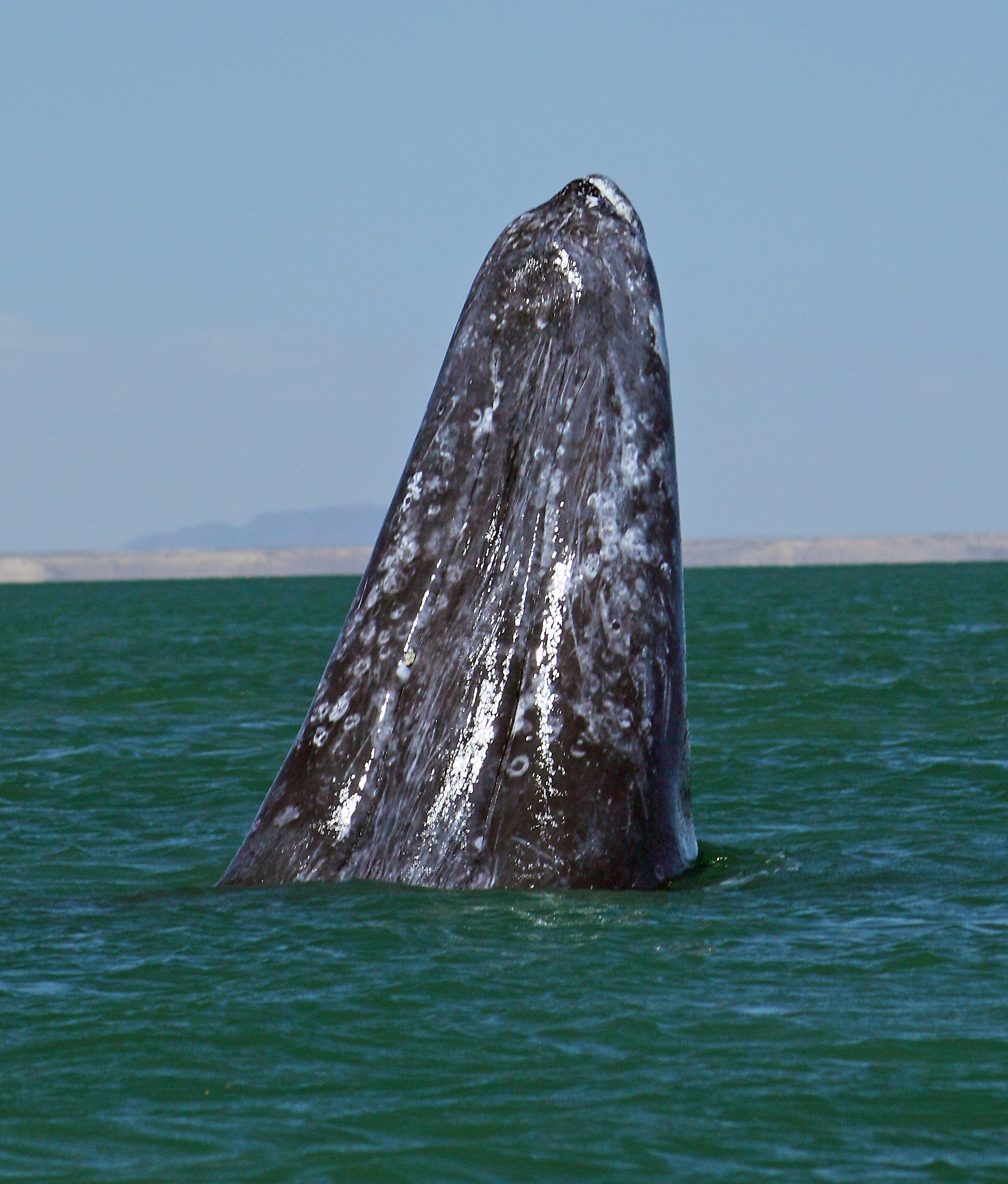
Baja Whale Trail is an itinerary that goes above and beyond taking a Whale watching tour in a coastal city. The itinerary takes a serious traveler through the bays and estuaries of the Baja Peninsula, focusing on the feeding and breeding areas. While commercial whale watching tours from large coastal cities are an easy and convenient way to see migrating whales, the places in this article are where the whales spend several months each year in the same place. These are typically remote and may be several hours off the beaten path and require persistence, some Spanish language skills, and maybe a level of fitness and outdoor skills.
Understand
The importance of Baja California to the world's whale population can not be overstated. UNESCO called the whale sanctuaries in the Vizcaino Biosphere Reserve "the key to the survival of the grey whale". French oceanographer Jacques Cousteau famously described the Gulf of California as "the world's aquarium" due to its astounding biodiversity. The Gulf of California (usually referred to as the Sea of Cortez in Mexico) is home to 39% of all the world's marine mammal species.
Whale Species A large number of species can be found along the Pacific coast of Baja and in the warm, relatively protected waters of the Gulf of California. Species with particularly good opportunities to observe include:
Gray Whales - the largest population of gray whales in the world spends summers in the northern Pacific (near Alaska), then migrates to Baja Mexico in late fall (around December), returning north in spring (around April). They feed and give birth in the warm waters of several estuaries of Baja California Sur, in particular Laguna Ojo de Liebre, Bahia Magdalena, and Laguna San Ignacio.
Humpback Whales - humpbacks can be found in oceans around the world, often migrating between cold summer waters and warm winter waters. Humpbacks can be seen along the North American Pacific coast, but the best concentration of migrating humpbacks can be seen from Los Cabos northeast into the mouth of the Gulf of California, including Cabo Pulmo. The best place to see young humpback calves is San Lorenzo. Blue Whales - largest of all the mammal species, these giants of the deep are frequently seen in the Gulf of California; Loreto is the top spot for blue whales but San Lorenzo is a popular birthing spot for them as well. Others: though not as commonly seen as the previous three species, many other whales are commonly spotted in the waters around the Baja Peninsula. These can include Fin Whales and Orca (killer whales).
Though not a whale, the Vaquita is a critically endangered porpoise species that is the world's smallest cetacean. When they are seen, the vaquitas tend to be in the northernmost waters of the Gulf of California though groups of vaquitas are also seen close to the Cabo P
Prepare
These are generally not places you visit on a quick day trip but rather they often require a more significant time commitment. An intrepid traveler can make arrangements locally at local prices, but this requires patience and language skills. Tour companies exist in most parts of Baja and you can arrange trips with tour operators that include camping (or other lodging), kayaks, or boat trips in pangas to the whale sanctuaries. There are also some dive shops that can arrange diving tours to some of these areas. See Diving in Mexico for more info. 3-5 days may be adequate in some locations, but you may want to plan to spend a week or more in some places or for more involved activities (like multi-island kayak trips).
Get in
The best airport for most travelers will be Los Cabos International Airport (SJD IATA), located 15 km north of San Jose del Cabo. The closest to most whale sanctuaries is Loreto International Airport (LTO IATA), though it receives fewer flights than SJD. Other airports that could be used are La Paz International Airport (LAP IATA) or Tijuana International Airport (TIJ IATA). Los Cabos has the best selection of flights from U.S. and Canadian cities. American Airlines flies to Loreto from Phoenix. Tijuana has the best service for Mexican domestic flights, but is far from the whale sanctuaries and would require a full day of driving (or a long bus ride). La Paz is very convenient to the lower Gulf of California, but usually requires a connection in Mexico City or another Mexican hub.
Trip Overview
1 Laguna Ojo de Liebre 2 Laguna San Ignacio 3 Bahia Magdalena 4 Cabo Pulmo National Park 5 Bahia de La Paz 6MISSING WIKILINK Bahia de Loreto 7MISSING WIKILINK San Lorenzo Marine Archipelago National Park This itinerary could be approached from various perspectives. The order of sites above assumes that a traveler would be driving from the north, focusing first on the Pacific Coast before going up the eastern (Sea of Cortez) coast later in the trip. But that's just one way to do it. If you have a week or less, then focus on just one experience so you don't waste a lot of time getting between areas but rather increase your chances of a mind-bendingly awesome interaction with the whales. The gray whale sites along the Pacific are probably most rewarding, but some of the sites near La Paz or Loreto are logistically easier (as in, no rustic camping required). If you are master of your own schedule and just can never get enough of whales, a great trip would be to start at the southernmost tip of Baja (Los Cabos) and work your way north over an 8-week period spanning the months of February and March. Try to end up in San Ignacio the second or third week of March and then shoot on up to San Lorenzo. By late March, many of the males have started their migration and the females and calves are often the most social towards humans. That's when you have the best chance of a whale approaching your panga and getting close enough to touch.
Gray Whales on the Pacific Coast
The three best areas to observe gray whales and their young calves are (from northernmost to southernmost): Laguna Ojo de Liebre, Laguna San Ignacio, and Bahia Magdalena.
Laguna Ojo de Liebre
Laguna Ojo de Liebre is part of the El Vizcaíno Biosphere Reserve. The town of Guerrero Negro offers numerous hotels with at least 10 clustered along Avenida Emiliano Zapata. Most hotels can help you arrange a boat for a whale tour into the lagoons. Hotels and tours should be booked ahead as the town tends to fill up during the busiest period between mid-January and the end of March. The lagoon is quite large and a multi-day trip would allow you to see more areas and of course, more whales. Guerrero Negro is easy to reach via federal highway MEX-1 (the main highway through the Baja Peninsula). It is a 12-hour drive south of Tijuana and is served by frequent bus service on ABC and Aguila. From the south, it is about a 12-hour drive north from La Paz.
1 Muelle Laguna Ojo de Liebre (Scammons Lagoon), Transpeninsular Highway (MEX 1), Guerrero Negro (get into Guerrero Negro, then follow unmarked roads about 15 km through the salt flats (use GPS or get a local guide)). There is a pier here, a whale museum, a small restaurant, and a campground with about 50 sites, half with palapa shelters (no hookups, but a shower facility is available). Campsites cost M$100 per night. The facilities are inside the salt mining area and are only open from December through April. 2 Mario's Restaurant, Camping, and Whale Tours, Transpeninsular Highway (MEX 1) Km. 217.3, Guerrero Negro, ☏ +52 615 157 1940, [email protected]. Well-run tour operation with comfortable air-conditioned buses that take you to the docks where you will board small pangas to take you to the whale breeding areas. The campground is close to the main highway and has sites that can accommodate RVs. 3 Whale Magic Tours, Concepción Casillas Segura SN, Marcelo Rubio Ruiz, Guerrero Negro. Naturalist-led tours into the whale sanctuary as well as camping and other lodging opportunities. 1 to 3-day packages available. This can be one of the most economical options for budget travelers. (updated Jan 2024)
Laguna San Ignac
Stay safe
Whale watching is generally a pretty safe activity, but there are some things you can do to prepare yourself:
Use a high-quality, insulated, reusable water bottle. Disposable single-use plastics are banned in many coastal areas and biospheres in Mexico, and tour operators are likely to insist you not bring disposable drink bottles. You're still likely to get thirsty out on the water for 2 or 3 hours, so bring the good water bottle. Protect yourself from the sun. A hat and sunglasses are a good idea. Sunscreen might be as well, but try to use the brands advertised as "reef safe" which do less damage to fragile coastal ecosystems.
本指南改寫自 Wikivoyage (CC BY-SA)