
Annapurna Sanctuary trek
旅遊行程
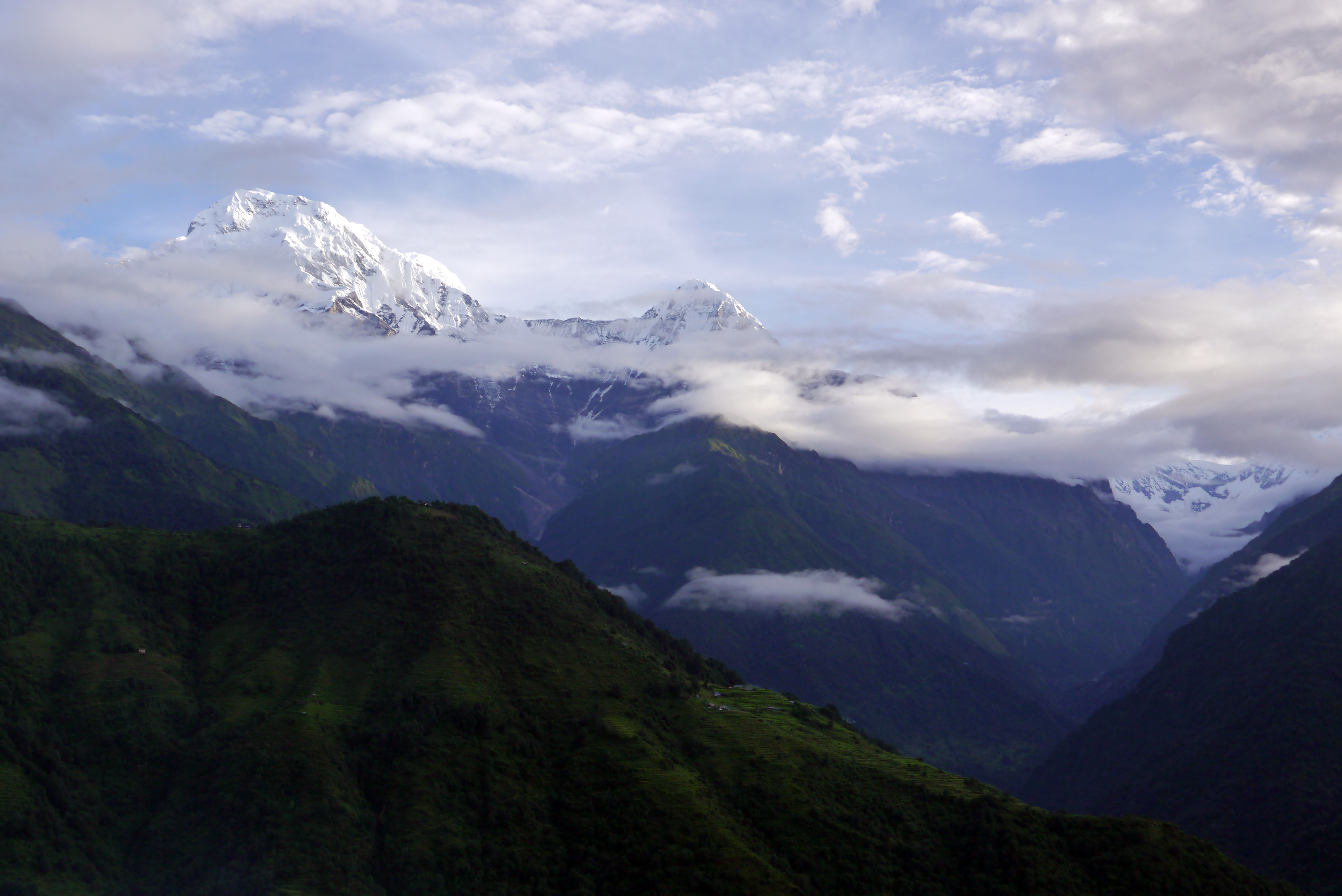
The Annapurna Sanctuary trek, also known as Annapurna Base Camp (ABC) trek, is in Nepal. It climbs from the Pokhara foothills through Gurung villages and terraced fields into a high glacial amphitheatre ringed by Annapurna I (8,091 m), Hiunchuli and the sacred Machhapuchhre, finishing at Annapurna Base Camp at about 4,130 m. Using the stages listed here, the distance from Phedi to ABC is about 38 km one way, with a typical out-and-back total of roughly 75-80 km depending on whether you exit via Phedi or Nayapul. The route follows old paths along the Modi Khola, passes bamboo and rhododendron forest, and has teahouses throughout.
Understand
The Annapurna Sanctuary trek is a trek in the Annapurna region which commonly starts or finishes in either Phedi or Nayapul and reaches the Annapurna Base Camp. Phedi is situated at a distance of 165 Kilometers (via Baglung Highway) from the capital city, Kathmandu. A total of 5 to 7 days is necessary for the whole trek to finish.
Prepare
Before beginning your journey, you must obtain the necessary permits, specifically the ACAP (Annapurna Conservation Area Permit) and the TIMS card, which are available in Pokhara or Kathmandu. It is essential to verify the latest trekking regulations before you depart, as the rules regarding the mandatory hiring of guides and porters are subject to change. While the trail is well-trodden, the steep terrain and high-altitude steps mean it is not suitable for baby carriages or wheelchairs. You can hire porters to carry your main luggage, but you should personally pack sturdy boots, trekking poles, a headlamp, and a first-aid kit. Ensure your travel insurance explicitly covers helicopter evacuation. Finally, carry enough cash from Pokhara, as you will need it for various fees along the way.
Eat There is no need to carry a camping stove or prepare your own meals, as the route is dotted with teahouses that serve hot, ready-made food. While these lodges provide your main meals, it is wise to carry a supply of high-energy snacks to keep you fueled between stops. Be aware that services like Wi-Fi and device charging at these establishments usually come with an additional fee.
Drink Staying hydrated is a priority, but environmental regulations are strict: single-use plastic bottles are not sold once you pass Chomrong. You should carry at least two reusable water bottles. To ensure your water is safe to drink, you must use purification methods, such as tablets or portable filters, for water collected along the trail.
Sleep The trek is serviced by a network of teahouses, so you do not need to carry a tent or camping gear. While beds are provided, the high-altitude environment means nights can be very cold, so you should pack warm layers to wear while sleeping. Most lodges offer basic amenities, though electricity is often limited and charging your devices will likely incur a small cost.
Climate The trekking season is at its best from October to November and from March to May, offering the clearest skies and most stable temperatures. If you travel during the winter, prepare for significant snow and ice, especially in the sections above Deurali; micro-crampons ar
Get in
By bus Travelers can take a bus to either Phedi or Nayapul from Pokhara. It takes around 2 hours to Nayapul by bus and costs around NRs 110-200. There are several bus stations in Pokhara from which you can begin your journey. The bus to Nayapul is usually taken from the Baglung bus station which lies north of the Phewa Lake. The walk to the bus station takes about 45 minutes from the lakeside.
By taxi Taxi service charges on the route from Pokhara to Nayapul costs around Rs 1500 for 1½ hrs, however on the way back Nayapul-Pokhara, it's possible to arrange it for as little as Rs 300. Taxi Service from Pokhara to Phedi costs around Rs 700 to 1000 which takes around 20 mins; the taxi service from Pokhara to Dhampus costs around Rs 2000. It's also possible to catch a jeep from Kimche to Pokhara at Rs 700/per person but the connection is infrequent and may delay at times.
Walk
There are a myriad of trails that traverse the Annapurna and lead to Chomrong from where there is only one path up to Annapurna Base Camp. Usually, hikers choose to hike a different route on the way down.
From 1 Phedi (1130 m) the trail climbs steeply for about 1.5 hours on stone steps through terraced fields and forest to 2 Dhampus (1650 m) with big views of Machhapuchhre. An easy, well-trodden path continues for another 1.5 hours to 3 Pothana (1890 m), then rises for an hour to Bhichok (2080 m). From there, a longer forested descent of about an hour brings you to Tolka (1700 m), passing 4 Ghyamu. The final, easy leg undulates for another hour on a mixed stone-and-dirt path to 5 Landruk (1640 m), a spread-out village on the east side of the valley with plenty of teahouses. From Landruk, the trail continues towards Chomrong, the last stop before the single path to Annapurna Base Camp.
From Landruk (1640 m) the trail contours and drops easily for about 1.5 hours to 6 New Bridge (1340 m) on the Modi Khola. The trail then begins a serious, sustained climb of about 2 hours to reach 7 Jhinu Danda (1780 m), a section known for its long, steep staircases. Down by the river below Jhinu are natural hot springs. The last push to 8 Chomrong (2170 m) is another step-heavy ascent of roughly 2 hours through farms and scattered lodges, with frequent suspension bridges and stone paving underfoot. Chomrong is a major junction and the last village before the trail narrows to the single path leading into the Annapurna Sanctuary and on to Base Camp.
Starting at 9 Nayapul (1070 m), a collection of roadside shacks functioning as a bus and taxi stop, follow the jeep track down to a swingbridge. Cross the river, turn left, and walk for about half an hour along the Modi Khola to reach 10 Birethanti (1120 m). In Birethanti you must cross another bridge to present your ACAP conservation permit and TIMS card at the checkpoints. The easy valley trail continues for an hour to 11 Chimrong (1130 m) and another thirty minutes to 12 Syauli Bazaar (1220 m) before continuing on to New Bridge. From there the route matches the section above: climb to Jhinu Danda and continue on the staircases to
Stay safe
There are official safe drinking water stations located at Landruk, Ghandruk, Jhinu and Chomrong. Past Chomrong, plastic water bottles are not permitted to be sold so trekkers will have to supply their own containers to be refilled. Lodges offer boiled or reverse osmosis water for around Rs. 130 per litre and untreated water for free. Above Deurali, snow may be present as early as mid-November. Foot traffic quickly compacts the snow into ice making the trail treacherous, especially travelling downhill. Trekking poles and micro crampons can make the going considerably easier and some trekkers resort to wearing socks on the exterior of their boots or wrapping them in rope for extra traction. The trail is exposed to avalanche danger where it crosses several slide paths, trekkers should practice appropriate Snow safety as conditions warrant.
Go next
Annapurna Circuit: classic high-route around the Annapurna massif via Thorong La, longer and higher than the Sanctuary trek with teahouses throughout. Mardi Himal trek: short ridge trek from the Pokhara side to viewpoints below Machhapuchhre, usually 4–6 days with simple teahouses. Everest Base Camp trek: iconic path in Sagarmatha National Park to the south base camp of Everest; typically accessed by flight to Lukla from Kathmandu or Pokhara. Numbur Cheese Circuit: quieter loop in Ramechhap District around Numbur Himal, known for village homestays, yak pastures, and big valley views.
本指南改寫自 Wikivoyage (CC BY-SA)