
Lake Okeechobee
United States · Americas
About
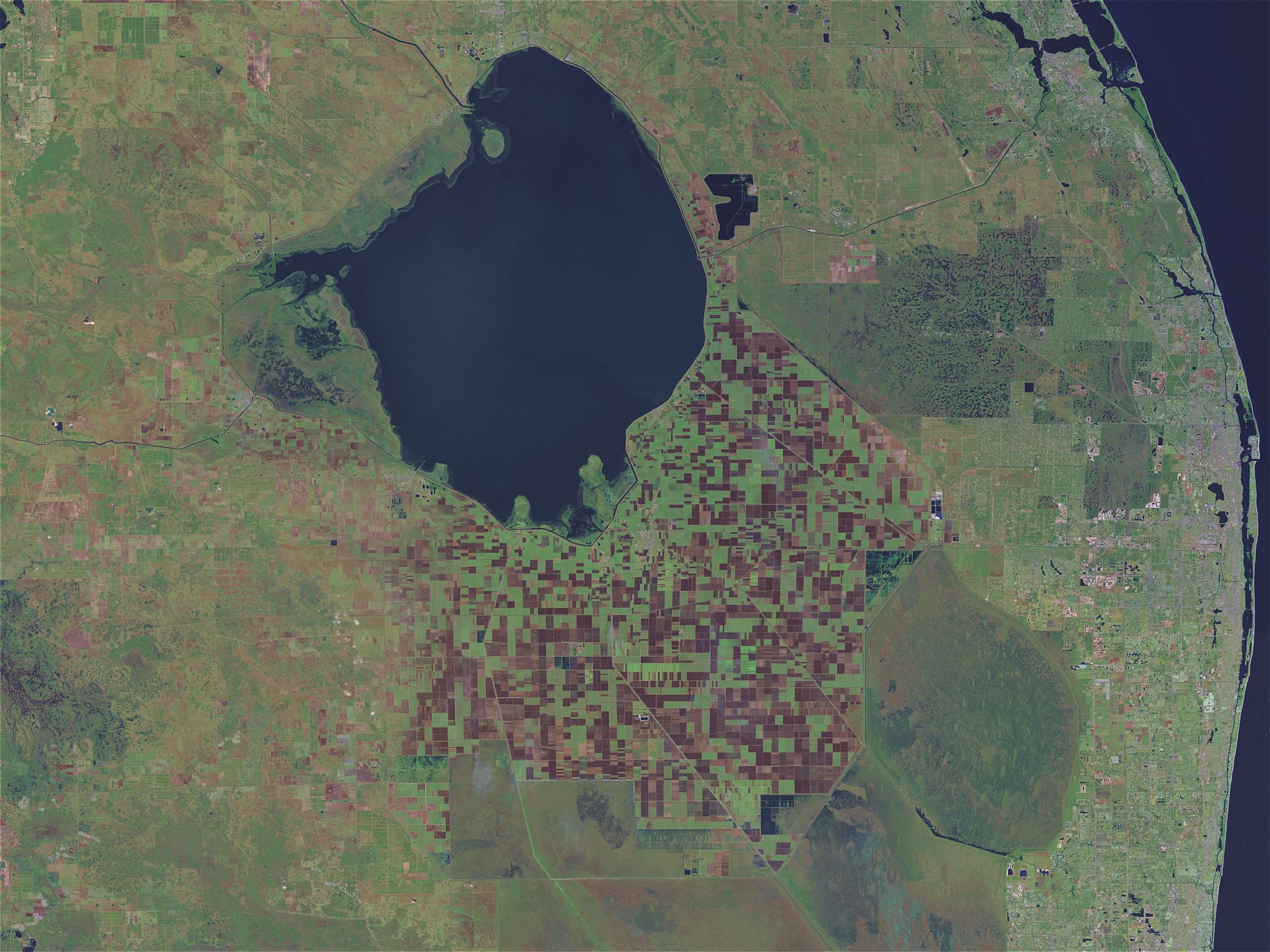
Lake Okeechobee ( OH-kee-CHOH-bee) is the largest freshwater lake in the U.S. state of Florida. It is the eighth-largest natural freshwater lake among the 50 states of the United States and the largest natural freshwater lake contained entirely within the contiguous 48 states, excluding Lake Michigan which is connected to Lake Huron. The name Okeechobee comes from the Hitchiti (the ancestral language of most of the Seminoles in Florida) words oki (water) and chubi (big).
Okeechobee covers 730 square miles (1,900 km2) and is exceptionally shallow for a lake of its size, with an average depth of only 9 feet (2.7 m). It is the largest lake in Florida and the southeastern United States, and is too large to see across. The Kissimmee River, located directly north of Lake Okeechobee, is the lake's primary source.
All of Lake Okeechobee was included in the boundaries of Palm Beach County when it was created in 1909. In 1963, the lake was divided among the five counties surrounding the lake: Glades, Okeechobee, Martin, Palm Beach, and Hendry counties. All five counties meet at one point near the center of the lake.
Adapted from Wikipedia (CC BY-SA)。Photography via Wikimedia Commons.