
Wales
United Kingdom · Europe
關於Wales
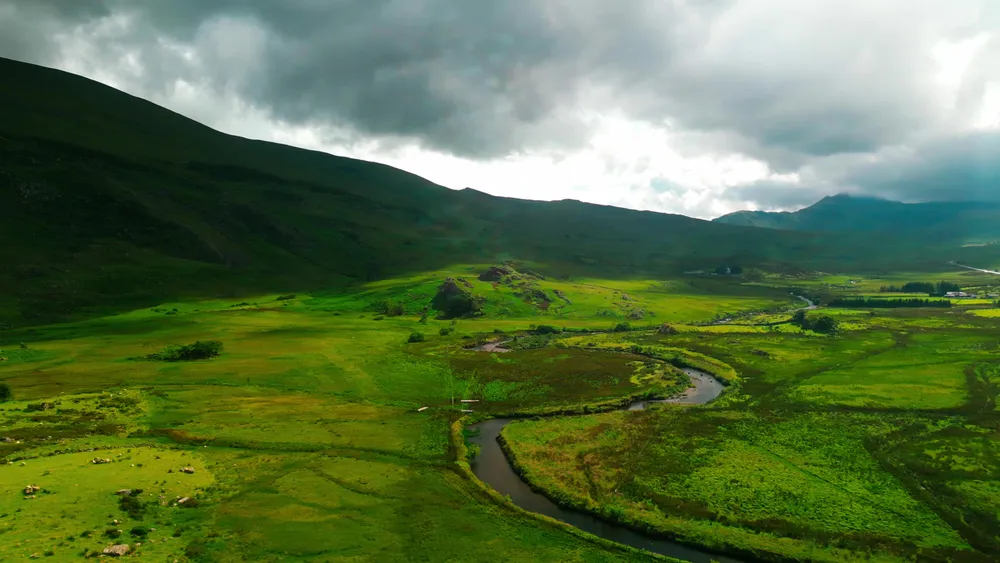
Wales (Welsh: Cymru) has a distinctive language and culture. Most tourists in Wales are attracted to the scenic mountains, impressive coasts, magnificent national parks, imposing castles, and elements of Britain's industrial heritage.
Wales旅遊指南
城市概覽
History Wales was once an independent, though rarely unified nation, with a strong Celtic and Druidical tradition. The word "Wales" is an exonym going back to a Germanic term meaning "foreign" which can also be found in words like "Cornwall" or "walnut". When King Edward I defeated Llywelyn the Last in 1282, the nation fell under the jurisdiction of England. At first, it was ruled as a separate country, but rebellion by Prince Owain Glyndŵr (considered in modern times as the 'Father of Welsh nationalism') led to incremental incorporation into England, and Wales was annexed through the Laws in Wales Acts 1535–1542. Since the Act of Union in 1801, Wales has been part of the United Kingdom which includes England, Northern Ireland, and Scotland too. Prior to the industrial revolution, Wales was a sparsely populated country dependent on local agricultural and pastoral trade. However, due to the abundance of coal in the South Wales valleys, there was a phenomenal growth in population and a dynamic shift in the economy of South Wales during the 18th and 19th centuries (see Industrial Britain). The area of central Glamorgan, in particular, became a national focus for coal mining and steel production, while the ports of Cardiff and Swansea established themselves as commercial centres, offering banking, shopping and insurance facilities. Moreover, places on the north coast, such as Rhyl and Llandudno, developed into fun-fair type resorts serving the expanding populations of the major industrial cities of Lancashire. Coal mining has all but ceased and heavy industry declined. However, Wales' attractive scenery and rich history has lent itself to the development of tourism, while at the same time, Cardiff and Swansea have retained their rankings as centres of commerce and cutting-edge industry. Cardiff, which was designated as capital of Wales in 1955, has seen a huge amount of investment in institutions through 'devolution', also giving rise to a significant amount of politi
如何抵達
Wales has the same immigration and visa requirements as the rest of the UK. All passengers travelling to the UK from outside Ireland, the Channel Islands and the Isle of Man go through systematic passport/identity card and selective customs checks carried out by the UK Border Agency on arrival in the UK. There is no internal border control between Wales and England. The road and train networks are fully integrated between England and Wales, meaning travel between the two nations should be stress-free.
By plane Cardiff Airport (CWL IATA) is the only international airport in Wales. It is 9 mi (14 km) west of the city, near Rhoose. Anglesey Airport (VLY IATA) is the only other commercial airport in Wales, with weekday services to and from Cardiff.
Eastern Airways operate flights to Aberdeen and Newcastle. KLM operates services to Amsterdam 4 to 5 times a day. There are also many seasonal flights catering to packaged holidays with companies such as Cosmos Holidays, Ryanair and TUI Airways flying to many destinations in Greece, Spain and North Africa. There are regular bus services from Cardiff city centre to the airport. You can also get to the airport using a bus service from Barry Station, which is closer to the airport and on local rail lines. A nearby railway line has a station at Rhoose, where there are shuttle buses to the airport. Bristol Airport is also gaining popularity, and there are dedicated coach services between Bristol Airport and central Cardiff. Birmingham Airport is well served by long-haul destinations and is in easy driving distance to Wales. Liverpool John Lennon Airport is smaller, having flights mainly to continental Europe, but is in striking distance of North Wales. It could be easier to fly to an airport in England such as one of the London airports when visiting South Wales, as a greater range of airlines and cities flown from are available from there to destinations around the world, with services from many airlines. However London is ov
當地交通
General Due to Wales' topography and historic development, most travelling in Wales is done east-west rather than north-south. Rail and road links between centres in South Wales and along the North Wales coast are usually quick and efficient, especially along the M4 and A55. An important exception to this is M4, J32 (the interchange with the A470), during peak morning rush hour, which gets congested with Cardiff commuter traffic. The roundabout at J32 is the largest in Europe. Most places in South Wales are within a 90-min drive of each other. Travelling between Cardiff and the other main population centres, Swansea and Newport, is very straightforward. Although only approximately 170 mi (270 km) from coast to coast, the topography makes north-south links more difficult in terms of time. By land, journey times are comparable to flight times across North America! However, the journey itself is something a visitor may wish to do to see the scenery.
Traveline Cymru - bus, coach and rail journey planning and timetable information
By plane Wales is a small country and flying is not a common mode of internal transport. The only domestic route, Cardiff International Airport to Anglesey Airport ceased in 2022.
By car
It is much easier to drive from east to west across Wales (via the M4 or A55, for instance) than from north to south, due to the lack of fast roads across the sparsely-populated interior. You should allow 5 or 6 hours to tackle this. But that is time well spent, as the journey takes in some spectacular scenery. The two main north-south roads are the A470 (Cardiff to Llandudno) and the A483 (Swansea to Chester). However, neither is a fast road: the A470, for instance, has only a 25-mile (40-km) dual-carriageway stretch, from Cardiff to Merthyr Tydfil; while much of the rest of the route has been improved, there are still many places where the road is narrow and winding, and where trucks or agricultural vehicles can slow traffic considerably. Those trav
必看景點
Wales has many significant attractions, and listed below are a few of the most notable. For more details about these attractions plus information on other places of interest, check under regional sections. To protect the environment certain parts of Wales have been designated as "National Parks" or as "National Landscapes" (formerly Areas of Outstanding Natural Beauty). An area with either of these designation will have a high degree of protection from inappropriate development. Whilst these rules exist for environmental reasons, rather than to promote tourism, because "National Parks" and "National Landscapes" have this protection, a visitor to these areas can be confident that they will see some unspoiled scenery. These areas offer some of Wales' most attractive scenery, and a visitor would be well advised to visit at least one of these areas. That is not to say that there aren't other attractive places in Wales, but the "National Parks" and "Areas of Outstanding Natural Beauty" are
城市概覽改寫自 Wikipedia,旅遊指南來自Wikivoyage (CC BY-SA)。照片來自 Wikimedia Commons.