
Veliki Preslav
Bulgaria · Europe
關於Veliki Preslav
Veliki Preslav (Bulgarian: Велики Преслав) is a small town in northeastern Bulgaria, not far from Shumen. It was the site of the second capital of medieval Bulgaria, and now the ruins are a national archeological reserve.
Veliki Preslav旅遊指南
城市概覽
Preslav (pronounced pre-SLAV) is about 15 km (9.3 mi) south-west of the province centre Shumen, and 90 km (56 mi) west of the nearest international airport (Varna on the Black Sea coast). With a population of about 7,000 people (2021), Preslav is the third largest settlement in Shumen Province. Under the Ottoman Empire, the town was named Еski Stambolchuk (Turkish: Eski İstanbulcuk, "Old Little Istanbul"). It was renamed Preslav after Bulgaria's liberation in 1878 in honor of the second medieval capital of Bulgaria, and the appellation Veliki ("Great") was added to the name in 1993 (presumably by analogy with Veliko Tarnovo, the capital of the Second Bulgarian Empire).
History Perhaps the site of an earlier human settlement, Preslav was fortified and came into being as an urban centre in the early 9th century. Seeing quick growth thanks to its proximity to the then Bulgarian capital, Pliska, Preslav was made the first capital of newly Christianized Bulgaria in 893, when a pagan revolt took place in Pliska which angered pious Boris I, the first baptised king of Bulgarians. However, it took no more than 80 years that the good luck of the city ran out; many parts of the city was no more than ruins burnt to the ground after it was occupied by the Kyivan Principality in 970 and changed hands several times between them and the Byzantines in the following year. The outer suburbs and the large monasteries built during Bulgaria's conversion to Christianity were all but abandoned, and the glorious riches which made the city a worthy capital were all taken away during the war. The central city was left somewhat spared from the misdeeds of war, and the city kept some of its earlier importance but it didn't take long before the capital of the kingdom was shifted to Skopje in what is now North Macedonia, a location much easier to defend against rowdy neighbours. The final blow to ancient Preslav came with the Tatar raids of 1270s, when the remaining population fled the fortres
必看景點
Beside the ruins, most of the sights in Preslav are of magnitude typical for a provincial town: old churches, war memorials, etc. Communist architecture aficionados may also enjoy the angular, futurist-modernist building of the Municipality on the main square.
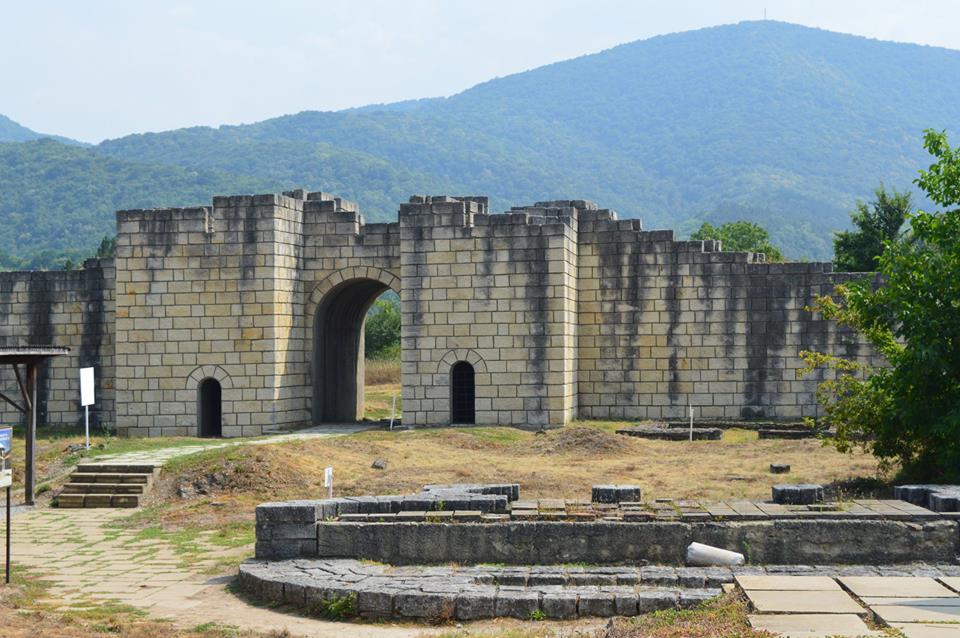
Preslav National Archaeological Reserve (starts at the southern edge of town; road to the ruins starts as a street leading south from the main square, passing by the town park and its entrance). The ruins of medieval Preslav. Not much is left above waist level, though some restoration and conservation has been done. The total area is about 3.5 km2 (1.4 sq mi), but the bulk of the exposed ruins is the Palace Complex in the Inner City south of the museum. Tickets cover both the ruins and the museum; there are ticket offices at the museum, the Palace Complex, and the Round Church. There's a parking lot by a restaurant at the back of the museum, as well as small parking lots at the Palace Complex and the Round Church. Alternatively, you can park somewhere in town and approach the ruins through the town park - the main alley of the park crosses it and continues to the back of the museum. (updated Apr 2025) Archaeological Museum (Археологически музей) (south of town; a street approaches it from the south-western corner of town), ☏ +359 538 432-43, fax: +359 538 426-30, [email protected]. Nov-Mar: daily 09:00-17:00; Apr-Oct: daily 09:00-18:00. On-site museum of the ruins, an angular 1981 building. Explains the history of medieval Preslav and showcases archaeological finds, including a vault for precious artefacts. The most notable exhibit is the gold Preslav Treasure, which consists of more than 100 pieces and was likely hidden when the city was sacked in the 10th century CE. Ticket includes admission to the fortress: 6 лв (students and children 2 лв, retirees 3 лв, discounts for families available; permission for taking photos 2 лв per photo). (updated Apr 2021) 1 Monument-Church of Sts. Cyril and Methodiu
體驗活動
Simeon Veliki swimming pool
Hiking Preslav is not far from the slopes of the wood-covered Preslav Mountain (Preslavska planina, lit. "Mountain of Preslav"); the ruins reach practically its foot. The mountain itself is considered a part of the Fore-Balkan (Predbalkan), the foothils of the Balkan Mountains. It has an oblong shape, spreading east-west with a length of about 25 km (16 mi) and width of 7 km (4.3 mi), with a mostly flat top. Preslav is under the eastern part of the mountain, where the Kamchia river separates it from its neighbour; to the west, it reaches to a similar gorge south of Targovishte. There are a few marked trails and a large number of more informal ones; the more adventurous can hike the whole length to the mountain all the way to the hut above Targovishte. One marked trail leads to the highest point of the mountain, Golyama Vashkadalnitsa (approx. "Large Flea-giver", 723 m (2,372 ft) above sea level). A map of the marked trails and their colours can be found on BGMountains.org (zoomed-in map online; downloadable maps for Garmin with place names in Latin letters).
Fishing Ticha Reservoir is on the other side of the mountain.
購物
Two banks with ATMs can be found on the central square.
住宿
Most international tourists visit Preslav on bus tours; independent tourists usually choose to stay in Shumen. Nevertheless, there's still a couple of small hotels. A few guest houses and rooms for hire also show up on booking websites.
Family Hotel Preslav - close to the town centre; small pool in the yard Hiker's Dormitory (Туристическа спалня) - analogous to mountain huts, but in an urban setting. Managed by the local hikers' society (i.e. people aged 50+ who probably don't know English). Very basic accommodations for backpackers and hikers, recommended only to adventurous tourists. Outside of town:
Hotel-Restaurant Omurtagov Most - small roadside hotel and restaurant south of the ruins, where the ruins road crosses the river to merge into Road 7 (hence the name - Omurtag's Bridge; Omurtag was a medieval Bulgarian ruler)
城市概覽改寫自 Wikipedia,旅遊指南來自Wikivoyage (CC BY-SA)。照片來自 Wikimedia Commons.