
Stony Stratford
United Kingdom · Europe
關於Stony Stratford
Milton Keynes is a city of 245,000 people (2019) in the South East of England. Milton Keynes is well known in the UK as a planned city built in the 1960s with emphatically modernist architecture. Milton Keynes is a thriving city of contrasts; from innovative new business and entertainment hubs, to theatre, cinema, walks in natural parkland, pub lunches and peaceful canal trips; and yes, it really does have the famous concrete cows (as well as real ones)!
Stony Stratford旅遊指南
城市概覽
Imagine being able to design the perfect city almost completely from scratch. This is the premise under which internationally renowned urban planners and architects set out to create Milton Keynes in the 1960s and '70s. Of course, when mentioning Milton Keynes, people will often be met with "Ugh, it’s a soulless new city" or "What, is that the place with the concrete cows?" Most irritating is that often, the people that make those comments have neither lived there nor indeed spent much time there. Yes, it is a new city and yes, the centre of that city could be described as a little soulless with its chain restaurants and large shopping centre, but it was built on and around land already settled and dotted around the 22,000 acres of countryside it resides in are many things to do, see and explore. Sites dating back to 2000 BC have been unearthed along with the remains of a major Roman villa, then dispersed amongst the city, itself built amongst many old towns. Also are numerous green spaces, a plethora of indoor and outdoor activities, and fabulous shopping opportunities. The Ministry of Housing and Local Governments brief in 1967 requested a new town that could accommodate an incoming population of 150,000 Londoners over a period of 20 years. The city includes a number of previous settlements and villages including Wolverton, Bletchley and Stony Stratford, all of which have expanded as part of its development. Stony Stratford in particular has fabulous British pubs serving good food and beer, a good variety of quaint shops to browse and beautiful river walks just behind the high street. Stony Stratford claims to be the place where the phrase ‘Cock & Bull Story’ was coined (from the name of two pubs/hotels on the High Street).
Visitor information Destination Milton Keynes
如何抵達
By train 1 Milton Keynes Central station. The main station of the City. As a station on the West Coast Main Line, Avanti West Coast and London Northwestern Railway run all the trains here, connecting with London Euston, Northampton, Birmingham, Liverpool, Manchester Piccadilly, and farther north. Local and slow services also stop at Wolverton in the north and Bletchley in the south. Trains from Bedford (the Marston Vale line) serve Bletchley and Fenny Stratford. Most local bus services connect with the central train station, with more limited services to Bletchley and Wolverton.
2 Bletchley railway station. Next to Bletchley Park and the National Computing Museum. 3 Wolverton railway station.
By bus National Express services provide regular connections with coach services to many cities and regional airports, as well as larger ones such as Heathrow. Regional coach services are provided linking Northampton, Aylesbury, Oxford and Cambridge, and can be taken from either the railway station, town centre or the 4 Milton Keynes Coachway, which is located near junction 14 of the M1.
By car Milton Keynes is on the M1 motorway and on the A5 trunk road. From London, Luton and the south, Milton Keynes can be accessed via junction 13. From Leicester, Northampton and the north, Milton Keynes can be accessed from junction 14. For east-west connections, the A421 links to Bedford and Cambridge to the east, and Buckingham and Oxford to the west. The Park and Ride service has 200 buses run every 30 minutes from Central Milton Keynes to MK Coachway (located near junction 14 of the M1) Sunday to Friday and every 15 minutes on Saturdays, see National Park and Ride Directory
By plane London Luton Airport (LTN IATA), 25 miles south via the M1. London Heathrow Airport (LHR IATA), 55 miles south via the M1 and M25. London Stansted Airport (STN IATA), 58 miles to the east via the A421 and A1.
5 Cranfield Airport (ICAO: EGTC) (7 miles east). Private flights only.
當地交通
Buses in Milton Keynes are frequent, and all estates are quite well covered. There are regular buses from most places to the city centre, train station, and Bletchley. Travelling by car is usually preferable as one of Milton Keynes's saving graces is its road network, although during rush hour, it can get somewhat congested in some areas. The dominance of the car is greatly helped by the road layout – the main roads of the city are laid out in a grid system with roundabouts at the intersections, so getting about is quick, although predictably less so in rush hour. The grid is formed of numbered 'H' roads running horizontally on the map and 'V' roads running vertically. Visitors who drive to Milton Keynes often get lost on these roads because they all look the same—the main roads are in tree-lined linear valleys to reduce road noise so there are few landmarks visible to navigate by. A map is recommended for people who are new to the town. Pedestrians and cyclists have their own network of 'redways' – paths made of red tarmac that broadly follow the grid roads but never meet them, either crossing over or underneath. The redways are a good way to get about. As with any place you are unfamiliar with, caution is advised, and as many of the redways cross minor roads cyclists and those with children should beware of traffic! The redways are often not well signposted, and that traversing them without a map can lead to you getting lost quite quickly!
必看景點
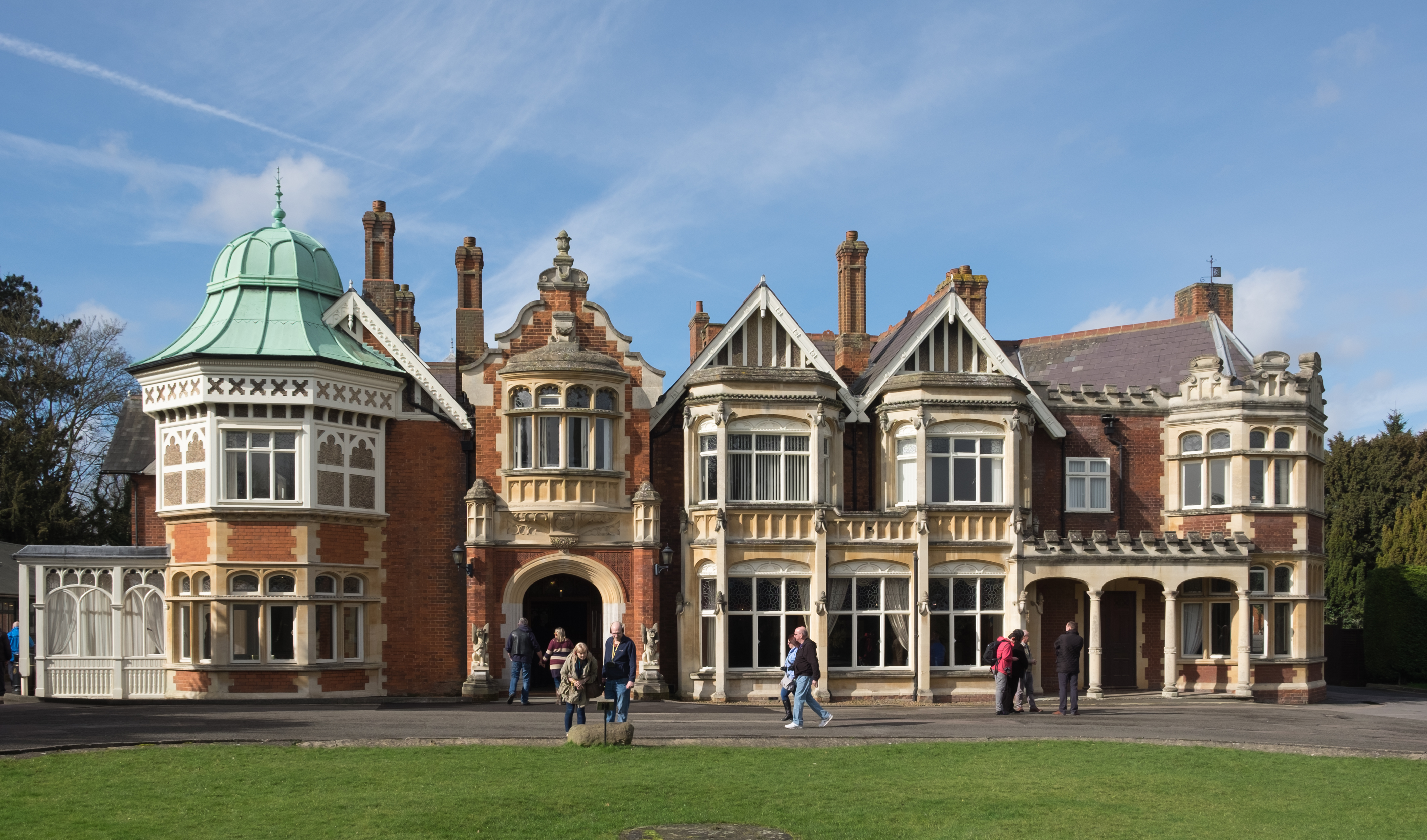
1 Bletchley Park, The Mansion, Bletchley Park, Sherwood Dr, Bletchley (next to Bletchley railway station), ☏ +44 1908 640404. During World War II this country estate was the headquarters of a code-breaking project named ULTRA. This was a huge triumph for British Intelligence; they broke nearly all the codes used by the Germans and Italians and read most of their supposedly secret communications throughout the war. This was of enormous value to Allied commanders.Arguably the Colossus machine — built at Bletchley to crack the Lorenz cipher used by parts of the German army — was the first programmable digital computer. Certainly Alan Turing — a Cambridge mathematician who was a key code-breaker during the war — made large contributions to the theory of computation before the war, and to both theory and practice after it. Several other ex-Bletchley people also became computer pioneers in the postwar yearsThe historic value of this site has now been belatedly recognised in the form of a museum with a significant number of things to do for both adults and children. All tickets are annual passes with unlimited entry for up to a year. Adult: £24.50, Concession (over 60s and students with valid ID): £22, Child (12 to 17): £16, Family (2 adults and 2 children): £65.50, Child (under 12): free. (updated Jul 2017) 2 The National Museum of Computing. Bletchley Park is home to the National Museum of Computing. Only the Colossus Galleries of the NMC are open 7 days per week; the full museum is open most weekends and some weekdays. (updated Dec 2017)
3 Concrete Cows. In the UK, the city is known for its concrete cows, an art installation created by Liz Leyh (was once just off the H3, in Bancroft, but now is in the Milton Keyn
城市概覽改寫自 Wikipedia,旅遊指南來自Wikivoyage (CC BY-SA)。照片來自 Wikimedia Commons.