
Shanghai French Concession
Republic of China · Other
關於Shanghai French Concession
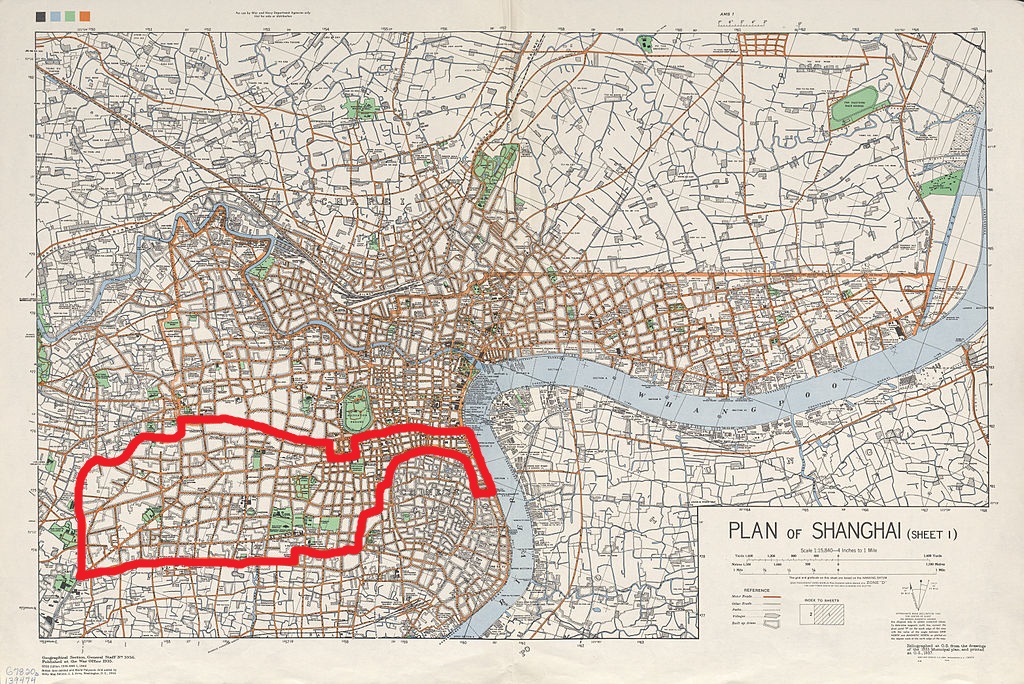
The French Concession is the area of Shanghai that the French government administered from 1849 until 1946. The tree-lined avenues and the many fine old houses in the area still retain an air of the "Paris of the East". In particular, the many wrought iron fences and stair railings will look familiar to anyone who knows Paris or Montreal.
This has been a fashionable area for well over a century and is now very developed as well. There are plenty of large buildings, mainly upmarket residential and office towers, quite a few hotels and a number of enormous shopping malls. At the same time, many of the picturesque older buildings — even whole neighbourhoods — have been renovated. There are a huge number of boutiques, galleries, bars and cafes scattered through the area.
For many years after the French left, the area was administered by the Chinese as two districts, Xuhui (徐汇区 Xúhuì Qū) to the west and Luwan (卢湾区 Lúwān Qū) to the east. Luwan is now administered as part of the Huangpu district, but we cover it here because for the traveller it has more in common with the rest of the old French Concession.
Shanghai French Concession旅遊指南
城市概覽
Orientation In addition to the official administrative districts Xuhui and Luwan, the French concession area has some well-known streets and neighborhoods.
Xujiahui
Xujiahui (old spelling Zi-ka-wei or Siccawei) is an area to the south-west of the French Concession. It was largely owned by the Catholic Church and was effectively an extension of the concession, though it was not part of it. The area has many buildings built by the Church during the French period and thereafter. The most prominent of these is St. Ignatius Cathedral, the neighbouring Bibliotheca Zi-ka-wei, a library built by the Jesuits; a number of preserved convent and school buildings; the Jesuit observatory; the T'ou-se-we Museum, housed in part of a former Jesuit orphanage with interesting displays on the history of Xujiahui, the orphanage and its workshop famed for producing works of Chinese and Western art; and the tomb of Xu Guangqi, an imperial official and famous Catholic convert whose family donated much of the land in Xujiahui to the church. This collection of buildings from Xujiahui's Catholic past is promoted as a themed walking tour called "Origin of Xujiahui", and boards with maps can be found near any of them with directions to visit the others. Today, its central area is an enormous road intersection with a metro station (lines 1 , 9 and 11 ) under it and much shopping around it. There is a large underground shopping area right in the station and at least half a dozen large malls or department stores nearby. From the station, you can get to most of them without going outdoors. Among other things, Xujiahui has Shanghai's largest cluster of consumer electronics vendors. It also has a lot of high-end residential and office space, and many restaurants. There is a large road which starts by the cathedral and becomes an elevated road just beyond it. It leads to the Xinzhuang interchange and beyond that to Humin Road, the main route south into Minhang District for cars and buses.
如何抵達
By metro Metro line 1 runs through the area. along Huaihai and Hengshan Roads. Stations along Huaihai Road are S. Huangpi Road, S. Shaanxi Road, which is fairly central, and Changshu Road. Along Hengshan Road are Hengshan Road Station and Xujiahui, which is one of the biggest metro stations in Shanghai. Further north, this line goes past People's Park and on to Zhabei. Going South, it leads into Minhang. Line 7 comes in from the north, crosses line 2 at Jing'an Temple, intersects line 1 at Changshu Road, makes three more stops further south in the Concession, then heads east and crosses the river into Pudong. Line 10 runs west from Laoximen (the 'Old West Gate' of the old town), stopping in the French Concession at Xintiandi, S. Shaanxi Road, Shanghai Library and Jiaotong university. Further west, it goes to Changning and Hongqiao Airport. Going east, it crosses the Old Town, swings north via Nanjing Road East, and ends up in Yangpu. Line 9 runs along the southern edge of the French Concession, stopping at Dapuqiao (near Tianzifang), Zhaojianbang Road and Xujiahui along the way. Further west, it goes to Songjiang. Further east, it leads into the center of Pudong. Line 11 comes in from Nanhui across the river, goes to several stations in the French Concession, intersects lines 1 and 9 at Xujiahui, and goes off to Changning, Putuo and Jiading to the north. At its western extreme it already (late 2017) extends outside Shanghai as far as Kunshan, and plans call for it to eventually link up to the metro systems of Suzhou and Wuxi.
必看景點
In general this is a pleasant area to wander about in. Explore the sylvan streets and admire Shanghai's Art Deco residential architecture, reputedly the world's largest group of such homes, although not the most well-kept. Most historic buildings have a bronze plaque that details their original use. The area sandwiched between Fuxing and Huaihai Roads is particularly interesting with a sprinkling of tucked-away shops and discreet cafes, a refreshing alternative to the city's generally manic streetscape.
Around Fuxing Road 1 Fuxing Road (复兴路) (parallel to Huaihai Road, one block south, exit 6 of the line 10 station at S Shaanxi Road). Walk along Fuxing Rd to see classical old buildings and much boutique shopping. The Shanghai Music Conservatory is near Fuxing Road. Some blocks west of Shaanxi Road here and there are a number of shops specialising in musical instruments, especially orchestral stringed instruments, and several shops for classical or jazz recordings. 2 Fuxing Park (复兴公园; Fùxīnggōngyuán), 105 Fuxing Zhong Rd (卢湾区复兴中路105号; Lúwānqū Fùxīngzhōnglù), ☏ +86 21 53861069. 06:00-18:00. This European-style park formerly known as French Park has gardens, open spaces and restaurants and clubs dotted throughout. Early in the morning, the park is filled with dancers (some Chinese styles, but mainly Western ballroom) players of various games (cards, mahjong, Chinese chess and Go), Tai Chi artists, and singing groups. Free. 3 Former Site of the Provisional Government of the Republic of Korea (大韩民国临时政府旧址/대한민국 임시정부 상해 유적지), No. 4 Lane 306, Madang Road, Huangpu District (黄浦区马当路306弄4号) (120 meters north of exit 6 of Yidahuizhi Xintiandi Metro Station (Lines 10 and 13 ); alternatively take City Sightseeing Bus #1 (都市观光旅游1号线) and get off at the stop named after the building), ☏ +86 21 53829554, +86 21 53829057. 09:00-11:30, 13:30-17:00. In 1919, during the Japanese occupation of Korea, Korean independence activists in Shanghai established the Provisional Government
體驗活動
1 Jinjiang Amusement Park, No. 201 Hongmei Rd (in Xuhui District, line 1 to Jinjiang Park). Has a 108-metre (354 ft) Ferris wheel with, on a clear day, a fine view over the city.
購物
Lots of additions to this district, on a seemingly weekly basis. Check out the entire Xujiahui area and Times Square Huaihai Road for some of the larger malls. Creative boutiques can be found on Julu, Changle, Anfu and Xinle Roads throughout the French Concession, in addition to a high concentration of one-of-a-kind buys for sale in Tian Zi Fang northwest of the Luwan Stadium. If you are looking for anything electronic, Xujiahui is the place to start. The Metro station is under the intersection of five roads (see photo). It has shops (mostly food or clothing) and there is at least one shopping mall on each of the five corners.
Pacific Digital Plaza Phase 2 (red building in lower right of photo, exit 10 of the metro station), has all sorts of consumer electronics — computers, digital cameras, game consoles, MP3 players, cell phones, memory cards, and computer accessories. Pacific Digital Plaza Phase 1 (exit 9) is better for computer parts and for repairs or services like printer cartridge refills. The idea of shopping at "PDP-1" may appeal to hackers; that was the model designation of DEC's first computer. If you look like a foreigner then at quiet times you will probably find you are constantly called out to by shop owners, whic
城市概覽改寫自 Wikipedia,旅遊指南來自Wikivoyage (CC BY-SA)。照片來自 Wikimedia Commons.