
Ruhr
Germany · Europe
關於Ruhr
The Ruhr (German: Ruhrgebiet) is a region in North Rhine-Westphalia, Germany. Once the uncontested heart of Germany's economy, the region was formed during the 19th and 20th century by the coal and steel industries and is going through a structural transformation, which makes it one of the most dynamic regions in Europe. Its borders are defined by the Ruhr River in the south, the Lippe in the north, the Rhine in the west and the city of Hamm in the east. That makes the region about 100 km from west to east and about 40 km from north to south. A "city of cities" as the marketing campaign would have it, the Ruhr area is one of Europe's most densely populated areas with both a strong regional identity and strong identities of many component cities and neighborhoods. About 5.3 million people live in the Ruhr, the third-most-populous metropolitan region in Western Europe after greater London and Ile de France (Paris) - ahead of greater Berlin. The Ruhr area lies in the center of the so called "Blue Banana", an area of high population density and industrial activity extending from northern Italy to the Netherlands and beyond the North Sea to England.
Ruhr旅遊指南
城市概覽
If one were to count the Ruhr Area as a single "metro area" (which most residents would scoff at, given the strong identities of individual cities) it would be bigger than Berlin and its surrounding suburbs and thus the biggest "metro area" in Germany by population and among the top ten in the European Union, depending on which boundaries are drawn for this and other agglomerations. The Ruhr area used to be mostly rural until the 19th century, when the region's rich coal deposits were suddenly in great demand. Steam engines needed coal but also enabled better mining; railroads expanded the export market for coal and were also coal-fired, but above all the demand for steel rose above anything ever seen before and companies like Krupp built an empire on coal and steel. Enormous immigration inflated the population fifty-fold and the favourable geographic conditions, including the location close to four rivers, caused towns to rapidly grow to accommodate the bustling heavy industry and its workforce. This led to a development of a contiguous urban area with barely noticeable borders between the cities and an efficient - if sometimes overcrowded - transportation network.
Because of its strategic importance, the Ruhr area was extensively bombed during the Second World War. After the war, the region rebounded in the 1950s and 60s, driving the German "economic miracle" with GDP growth rates of 9% a year. With the economic crises of the 1970s came a downturn, however, as the coal mines and steel works, by then uneconomical, started to close. The Ruhr began a slow process of reorientation towards more high-tech industries, while also cleaning up its polluted environment. While there is still significant steel production in the Ruhr and new industries have partially replaced coal mining, Ruhr still has higher-than-average unemployment. Thanks to the overall economic strength, the region does not come off as impoverished, and can surprise with the abundance of greenery and cu
如何抵達
By plane As this region is rather densely populated, there should be more than one airport within reasonable proximity to choose from. Airports that serve this area, both within and outside it include the following: Dortmund Airport (DTM IATA) is the region's international airport, with scheduled service to several European cities and sizeable holiday charter traffic. Shuttle buses connect the airport to Dortmund Hauptbahnhof and the local railway station in Holzwickede, where you can change to trains heading towards other cities in the Ruhr region. Düsseldorf Airport (DUS IATA) is one of Germany's largest, with flights to all major European airports and some intercontinental services. It is immediately south of the Ruhr area and has its own train station on the high-speed line towards it. High-speed and regional trains depart from there towards all the major cities in the Ruhr. Travel times to most of them are below one hour. The airport is also well connected to the local highway system. Germany's largest airport by passenger traffic, Frankfurt Airport (FRA IATA) also has very frequent direct high-speed train service to major cities in the Ruhr, taking between one and a half and two hours. There are also direct long-distance buses offering similar travel times by not stopping along the way, but the departure frequency is low. Frankfurt has a large network of connections all over Europe, and to all other continents except Antarctica. Cologne-Bonn Airport (CGN IATA) is also a major airport in terms of domestic and European traffic, also served by a dedicated on-site train station but with direct train connections to Ruhr less frequent. That said, by changing at Cologne's train station one may almost seamlessly get to the Ruhr in 1½ hours or less. Direct bus services are also offered. Some low-fare carriers, in particular Ryanair, use the Niederrhein Airport Weeze (NRN IATA) east of the Ruhr. There is shuttle transportation offered from the airport to Duisburg and
當地交通
In general inside the big cities public transport is well developed and faster than going by car. But outside and between cities the car can be a better choice - outside rush hour, that is.
Public transport Since most cities have their separate transport association, coordination is not always the best. But they are all linked together including trains like S-Bahn and Regionals-Express by Verkehrsverbund Rhein Ruhr (VRR) and Westfalentarif (WT) at the eastern limits. Look for tariffs and timetables there. Within a city use bus, tram or underground. Many lines cross city limits several times during their route, this is common and should not be considered alarming. Since most cities in the region blend into one another, traveling across cities is possible but slow. However riding a bus or tram can give you views and insights you will get nowhere else. If you are short on time, use the S-Bahn or Regional-Express. These are trains, and you will have to get to the nearest station. They all have the same pricing system so that the tickets are valid for all vehicles within the VRR and WT respectively. For change from VRR to WT and vice versa special conditions apply. Refer to the internet sites or contact one of the information offices of the organisations. Generally, single tickets are quite expensive, usually cheaper are day tickets, group tickets, family tickets or for longer stays, tickets with a monthly pass. As of 2025, the fare system has been simplified: the entire VRR area is split up in multiple zones, where "A" tickets cover a single zone (or two zones if purchased for a city that covers two zones, such as Essen or Wuppertal), "B" tickets cover a zone and all its surrounding zones, while "C" tickets cover the entire VVR tariff area. You can obtain tickets from the customer offices of the local transport association, from the ticket-machines at the subway stations, from ticket machines within the trams, from bus drivers and from designated kiosks. The surface
必看景點
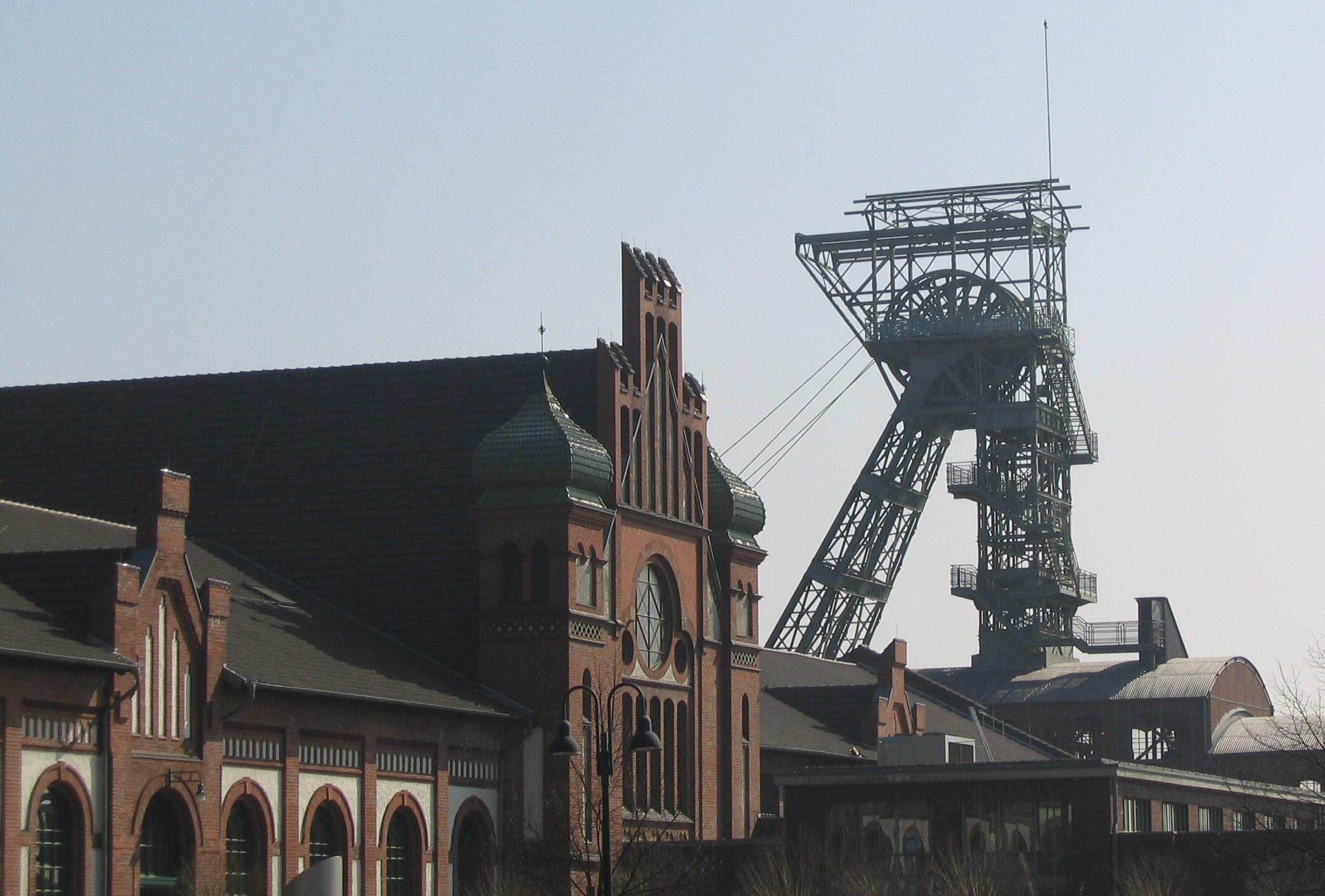
Industrial Heritage Trail The most interesting sites of the industrial heritage of the Ruhr region are combined under the keyword Industrial Heritage Trail. Among the most prominent sites on the trail are the Zollverein pit and cokery in Essen (a UNESCO World Heritage site), Gasometer in Oberhausen and Zeche Zollern pit in Dortmund. A number of objects relate to the importance of riverine transportation, like the entire Innenhafen of Duisburg or the Henrichenburg ship lift in Waltrop. There are also preserved industrialist residences, for example the Hochenhof in Hagen
Workers' settlements
The booming population of the Ruhr area needed to be housed, and thus the local industrialists built numerous workers' settlements throughout the 19th and early 20th centuries. Some of them have been preserved. The oldest one is Eisenheim in Oberhausen, which is pretty basic and reminiscent of the sombre beginnings of the industrial revolution. Other, however, paint a different picture, forming
城市概覽改寫自 Wikipedia,旅遊指南來自Wikivoyage (CC BY-SA)。照片來自 Wikimedia Commons.