
Rhône-Alpes
France · Europe
關於Rhône-Alpes
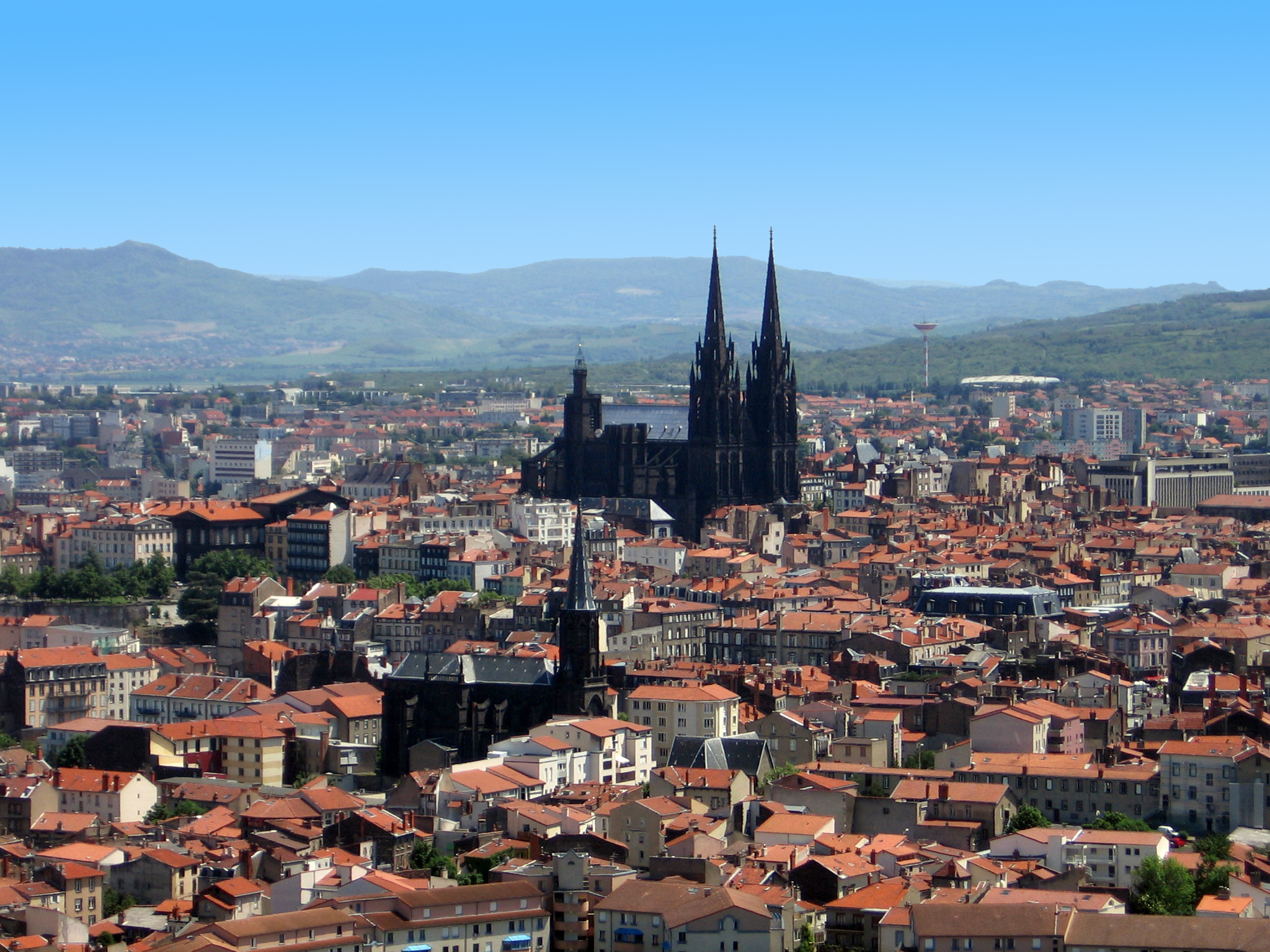
Auvergne-Rhône-Alpes is a large region in southeastern France. It is popular with all kinds of visitors, from mountaineers and winter sports enthusiasts, to gastronomes, wine buffs, and those looking for a city break. To the west, Auvergne is a mostly rural area of medium volcanic mountains (the Massif Central) and an abundance of interesting churches. Visitors to the Rhone Valley in the centre of the region can enjoy a temperate climate, rocky canyons, extensive vineyards and the urban area of Lyon, one of France's most important cities. In the east, the stunningly beautiful French Alps are havens for all manner of outdoor activities, not least skiing.
Rhône-Alpes旅遊指南
城市概覽
Auvergne-Rhône-Alpes has a huge diversity of landscapes due to its climactic and topographic variation. The topography of the region consists of two areas of high elevation, divided by the Rhône Valley, which runs north-south. The western mountains are part of the Massif Central. It is an area of high hills and plateaux, mostly made of old, acidic metamorphic rock. There are several recently extinct (geologically-speaking) volcanoes in this range. East of the Rhône Valley are the Alps. These tall, young mountains are themselves very diverse, and should be divided into at least two groups. A central part of the region is occupied by a north-south line of well-defined mountainous massifs: from north to south, Bornes, Bauges, Chartreuse, Vercors and Baronies. These mountains are mainly made of limestone and are becoming a karst landscape. Another, less prominent valley divides this central area from the eastern part of the region, the Alps proper, which contains some of Europe's highest mountains, most notably Mont Blanc. These mountains are made of acidic rocks such as granite. The diverse climate of the region is due to a blending of four weather influences: Mediterranean in the south, Alpine in the east, Continental in the north, and Atlantic in the west. The region is well-known overseas for its agriculture, and particularly its wine industry. Lyon is considered the culinary capital of France, if not of all Europe, and there are many dishes of great renown from all around the region; see the Eat and Drink sections for more information on this. Auvergne-Rhône-Alpes was created in 2016 with the merger of the old regions of Auvergne and Rhône-Alpes, as part of the national territorial reform. Unlike elsewhere in France, local politicians were unable to agree on a brand new name for the larger region (other exciting proposals included "Auvergne-Alpes" and "Rhône-Alpes-Auvergne"), so the provisory alphabetic amalgamation of the old names stuck.
Tourist information A
如何抵達
By plane
Major airports Geneva International Airport (GVA IATA), though not in either Auvergne-Rhône-Alpes or even France (it is just over the border in Switzerland), Geneva has by far the widest range of international flights of any airport in the area, due to its important role in world diplomacy. The airport welcomes flights from pretty much everywhere in Europe and the Middle East, as well as transatlantic crossings from New York JFK, Newark and Washington Dulles and a solitary far-eastern link to Beijing Capital. Passengers on 'domestic' flights from France leave the airport on the French side, without ever having to officially enter Switzerland, while all other passengers must leave on the Swiss side. As Switzerland is a member of the Schengen agreement, this should pose no additional visa troubles. Lyon–Saint-Exupéry Airport (LYS IATA), named for pioneering aviator and Lyon native Antoine de Saint-Exupéry, handles flights from all over Europe and North Africa. The only transatlantic flight is an Air Canada service from Montreal Trudeau.
Minor and seasonal airports Chambéry Airport (CMF IATA) operates in winter for the annual skiing season. It receives flights from plenty of European cities, including several competing services from Moscow Domodedovo. Outside of winter, don't expect to be able to fly there. Clermont-Ferrand Auvergne Airport (CFE IATA) serves a limited number of regular flights from around France (including Paris Charles de Gaulle and Orly) and Europe (Amsterdam Schiphol, London Luton, London Stansted and Porto) Grenoble Isère Airport (GNB IATA) is also pretty much entirely seasonal. During the winter ski months, there are direct services from many British and European airports, and even from as far afield as Tel Aviv Ben Gurion, while the rest of the year, only Ryanair offers regular flights from London Stansted.
By train
Paris to Lyon was the first TGV (Train à Grande Vitesse, high-speed train) route to be unveiled all the way bac
當地交通
By car The main motorways (autoroutes, denoted by A##) and routes nationales (denoted by N##) of Auvergne-Rhône-Alpes are:
A6: Bourgogne-Franche-Comté, from Beaune/Paris, Mâcon, Lyon (A42, A43, A46), continues as A7 A7: continuation of the A6 Lyon, N88, Vienne, Valence (N532), Montélimar, Provence-Alpes-Côte d'Azur, towards Marseille A40 / N205: from A6 near Mâcon, A39, Bourg-en-Bresse, A42, Geneva (A41), Cluses (for Samoëns, Le Grand Massif, Portes du Soleil), (continues as N205), Saint-Gervais-les-Bains, Chamonix, Mont Blanc Tunnel, Italy towards Aosta and Turin A41: Geneva, A40, Annecy, Aix-les-Bains, A43 (W), Chambéry (runs as N201 and A43 around Chambéry), A43 (E), Grenoble (A48, A51) A42: Lyon (A6, A7, A43, A46), A40 near Bourg-en-Bresse
A43: Lyon (A6, A7, A42, A46), A41 (N), Chambéry (runs as N201 around Chambéry), A41 (S), Vanoise, Fréjus Tunnel, Italy, towards Turin A46: passes east of Lyon, as a bypass to the A6 and A7 which go through the city centre. Links to A42, A43, A47, A432 A47 / N88: Givors (A7 / A46), Saint-Étienne (A72), Le Puy-en-Velay A48 / A51: A43 (from Lyon), Chartreuse, Grenoble, eastern Vercors A49 / N532: A48 (from Grenoble), western Vercors, Valence (A7) A71: Centre-Val de Loire, from Bourges, Montluçon, A719 (for Vichy), A89 (for Clermont-Ferrand) A72: A89 from Clermont-Ferrand, Saint-Étienne (N88) A75: Clermont-Ferrand (A89), Massif Central between les Volcans d'Auvergne and Livradois-Forez, Occitanie, towards the Cévennes and Montpellier A89: Nouvelle-Aquitaine, from Bordeaux and Brive-la-Gaillarde, les Volcans d'Auvergne (for Mont-Dore and Puy-de-Dôme, A71, Clermont-Ferrand (A75), Thiers, A72, Lyon A430 / N90: A43 after Chambéry, Albertville, Vanoise, Bourg-Saint-Maurice, Italy, towards Aosta A432 links Lyon Saint-Exupéry Airport to the autoroute network All the ski resorts of the region are connected by major highways and paved mountain roads, but be sure to carry change though as most of the motorways are pay roads. Toll motor
必看景點
Mountains! There are literally hundreds to explore, across two primary ranges:
In the west, the Massif Central is a medium-height range with lush green slopes and extinct volcanoes to explore. In fact, the Auvergne is the largest volcanic region in Europe, though the volcanoes themselves are all dormant or extinct. The Puy-de-Dôme is the most well-known of these. You can also visit an interactive volcanic theme park, Vulcania. In the east, the majestic Alps tower white and grey into the sky, culminating in Mont Blanc. The highest point in western Europe, the 'White Mountain' can be easily viewed from the mountain town of Chamonix. In the summer months, the slopes of the Alps are places to linger among sweet-smelling grass and wildflowers, listening to the tinkle of cow and goat bells and perhaps enjoying a picnic of local produce. The region is liberally sprinkled with fascinating Romanesque churches, often dating to before 1000 AD. Visit, and you will quite likely hear some beautiful
城市概覽改寫自 Wikipedia,旅遊指南來自Wikivoyage (CC BY-SA)。照片來自 Wikimedia Commons.