
Osnabrück
Germany · Europe
關於Osnabrück
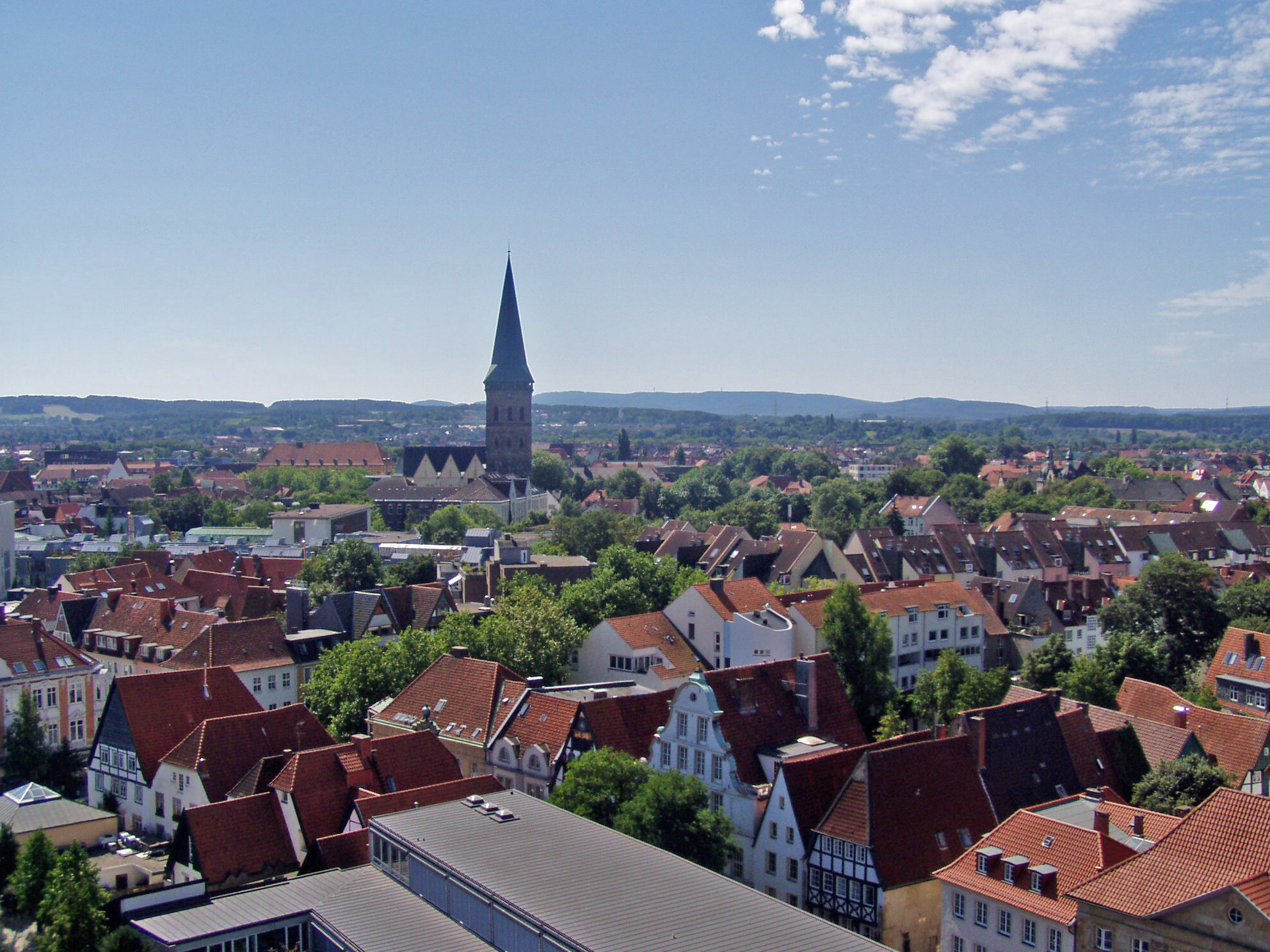
Osnabrück is a city of 165,000 people (2018) in Lower Saxony. It is one of the four largest cities in Lower Saxony, and sits in a valley penned between the Wiehen Hills and the northern tip of the Teutoburg Forest. After over two thirds of the city was destroyed in World War II, the Altstadt (old town) was eventually reconstructed extensively with designs faithful to the original medieval architecture.
Osnabrück旅遊指南
城市概覽
Osnabrück is a typical mid-sized Lower Saxon city. Osnabrück has become well known for its industry. There are many companies in the automobile, paper, steel and grocery sectors in the city and its surrounding area. Osnabrück's modern, urban image is enhanced by the presence of more than 22,000 students studying at the University and the University of Applied Sciences. Surveys have shown its residents to be the most satisfied citizens in Germany. Although part of the state of Lower Saxony, historically, culturally and linguistically Osnabrück is considered part of the region of Westphalia.
History The founding of Osnabrück was linked to its positioning on important European trading routes. Charles the Great founded the Diocese of Osnabrück in 780. The city was also a member of the Hanseatic League. At the end of the Thirty Years' War (1618–1648), the Peace of Westphalia was negotiated in Osnabrück and the nearby city of Münster. In recognition of its role as the site of negotiations, Osnabrück later adopted the title Friedensstadt ("city of peace"). The city is also known as the birthplace of anti-war novelist Erich-Maria Remarque (All Quiet on the Western Front) and painter Felix Nussbaum. Osnabrück was also the home of the largest British garrison outside the United Kingdom.
如何抵達
By plane 1 Münster Osnabrück International Airport (FMO IATA) is the closest option. The majority of the flights are scheduled and public charters to holiday destinations around the Mediterranean, as well as some domestic flights within Germany. The shuttle bus X150 brings you to central Osnabrück in about 30 minutes for €9.50. Many travellers choose to use other nearby airports for budget airlines and international connections. These include: Bremen, Dortmund, Düsseldorf, Cologne or Hannover. Consider the cost of ground transportation from these airports as train tickets can cost upwards of €70 if not pre-booked.
By train 2 Osnabrück Hauptbahnhof. Osnabrück is well connected as it is a railway junction. Trains on the Amsterdam-Berlin route meet here with trains on the Hamburg-Cologne route. Deutsche Bahn operates most trains and connections for around Europe and Germany. The Dutch Nederlandse Spoorwegen (NS) sells discounted tickets from places like Amsterdam. Osnabrück is about 3 hours by express train from Amsterdam, Hamburg, Berlin and Cologne. Flixtrain serves the city. Other railways operate many of the local services but are always included in the DB search engine and tickets.
NordWestBahn runs several local services. WestfalenBahn runs services from Münster.
By car Osnabrück is also an Autobahn junction: A1 from Bremen to Cologne A30 from Amsterdam and Hannover A33 from Bielefeld
By bus
Intercity buses from domestic and international destinations arrive at the main bus station ZOB Osnabrück, which is next to the train station.
Flixbus is by far the biggest player in the German market. Ecolines carries passengers from Riga.
By boat The Mittellandkanal has a tangent running directly into Osnabrück (from Kilometer 30,4). There are no public boat services.
當地交通
The city is most easily navigated by city/regional bus. The Stadwerke Osnabrück operates standard daytime as well as NachtBus (night) service on Friday and Saturday. They have an online trip planner and digital signs at many bus stops to inform you of the current predicted wait time. Fare information is posted inside all bus shelters and most bus operators speak some English. Tickets are bought from the bus operator of from vending machines on the Neumarkt. Bus operators are obliged to give change if you over-pay in cash. Many Osnabrückers choose to ride a bicycle as transportation since the compact size and good infrastructure make it easy to get around. While utilizing the red-colored cycling lanes in Osnabrück one should exert caution. These lanes are often narrow, at street level, and/or shared with the city buses and taxis. Dangerous conditions lead to at least one bicyclist death a year in Osnabrück. Please use your best judgement and walk your bike on the sidewalk if you feel uncomfortable. Additionally there are many places where bicycles (and all cars) are forbidden in the city center. If you are riding on a street where there are no cars, be sure to double check that bicycles are not forbidden, because the police will stop you.
必看景點
Osnabrück, like most other larger cities in Germany, suffered extensive destruction during World War II, about two thirds of the historical city center were in ruins. Most destroyed buildings were not reconstructed, so there is limited historical architecture to visit.
Churches 1 St. Peter's Cathedral (Dom Sankt Peter), Große Domsfreiheit. Daily 07:00-19:00 except during services. Charlemagne founded the diocese of Osnabrück. Today's late-romanesque cathedral was erected from 1218 to 1277 and consecrated 1277. The shape is dominated by the two Western spires, which were built with 400 years in between. The triumph cross in the church was manufactured in the 12th century and is the largest cross in Lower Saxony. Free. (updated Apr 2018)
Secular buildings 2 Osnabrück Castle and its gardens (Osnabrücker Schloss). It is now a university. (updated Jan 2016)
3 Rathaus. The Osnabrücker Rathaus (city hall) played a key role in the end of the Thirty Years War. The "Peace of Westphalia" was signed here and in nearby Münster because most Catholic and most Protestant states did not wish to attend the same peace conference at the same place. (updated Jan 2016) 4 Heger Tor. A monument of Osnabrück soldiers who died at Waterloo and the neighbouring old town are remnants of an earlier manifestation of Osnabrück. (updated Jan 2016)
Museums
Museumsquartier The following museums are close to each other in the "museum quarter".
5 Felix Nussbaum Haus, Lotter Straße 2, ☏ +49 541 323-2207, [email protected]. Tu-Su, M closed. A museum dedicated to the Osnabrück native, Felix Nussbaum, a Jewish painter who was executed at Auschwitz during the World War II. The extension of the building was designed by Daniel Libeskind (of Berlin Jewish Museum fame). €5, reduced €3. 6 Kulturgeschichtliches Museum Osnabrück. 7 Villa Schlikker. 8 Akzisehaus.
Other museums 9 Domschatz- und Diözesanmuseum. 10 Kunsthalle Osnabrück. Housed in a former church. 11 Museum am Schölerberg.
體驗活動
Football: VfL Osnabrück were promoted in 2026 and now play soccer in 2. Bundesliga, the second tier. Their home ground Bremer Brücke (capacity 16,100) is in Schinkel district 2 km east of city centre. 1 Theater Osnabrück. 2 Nettebad. 3 Moskaubad.
購物
The favourite shopping area is the pedestrian zone Große Straße (Big Street) in the city centre starting at the Neumarkt.
美食
Osnabrück offers an array of foreign cuisine in addition to the "typical German food".
Budget The best place to get a quick bite is at a döner (Turkish kebab) stand or restaurant. There are several local operations offering this type of food throughout the c
城市概覽改寫自 Wikipedia,旅遊指南來自Wikivoyage (CC BY-SA)。照片來自 Wikimedia Commons.