
Lake District
United Kingdom · Europe
關於Lake District
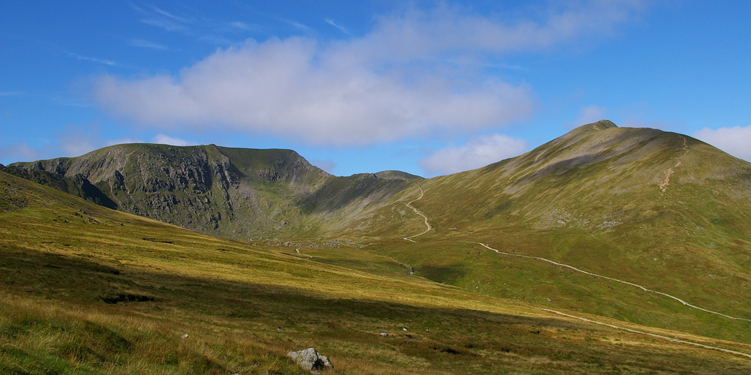
The Lake District National Park, in North West England is the largest national park in England, occupying 885 sq mi (2,290 km2). It is considered one of England's most scenic regions and is the country's premier destination for hiking and climbing. The park lies entirely within the modern county of Cumbria, shared historically by the counties of Cumberland, Westmorland and Lancashire. Known as much for its mountain peaks (called fells) as its lakes, the park is home to England's tallest mountain, Scafell Pike, and its largest lake, Windermere.
Lake District旅遊指南
城市概覽
The main attraction is the lakes and fells carved by glacial erosion and providing dramatic and inspiring scenery although much modified by man's intervention mainly by farming. It is the former home of cultural luminaries such as William Wordsworth and John Ruskin, and the walks and fells are famously documented by Alfred Wainwright. First settled in the Stone Age (some residents still exist) and occupied by the Romans the area was heavily influenced by the Norse in their occupation circa 900 AD. They cleared the woods to produce charcoal to smelt lead in Glenridding and copper in the Borrowdale Valley and Coniston. They introduced the Herdwick sheep to the fells and left a legacy of language such as 'gill' gorge, 'beck' stream, 'tarn' lake, 'dale' valley and 'force' waterfall; of them all 'thwaite', a clearing in a wood, is the most common. The Agricultural Revolution and the Enclosure Acts in the 18th century saw the erection of the dry stone walls which are a predominant feature on the fellsides. In the 19th century, tourism began with the arrival of the railway in the town of Windermere where it terminates. The destination is popular with national and international visitors and this can easily cause congestion in busy periods at the most popular locations. Visitor attractions are numerous and not limited to scenic attractions.
Visitor information Lake District National Park visitor information from Cumbria Tourism. Lake District National Park Authority
如何抵達
By rail The high speed West Coast Main Line skirts the eastern edge of the Lake district with stations at Oxenholme and Penrith. Fastest journey times from London are 3 hours to Penrith and 2 hr 40 min to Oxenholme. Windermere station is most conveniently located for the Southern Lakes. The train from here travels to Oxenholme station on the main West Coast line. As of 2018 4 trains Monday to Saturday run through to Preston, and 1 of these continues to Manchester. On Sundays 1 service runs through as far as Preston. On Saturdays and Sundays a small number of early morning and late evening services are operated by rail replacement bus. The Leeds-Settle-Carlisle line also links the lakes to Yorkshire, as does the line from Leeds to Barrow via Hellifield. For the northern lakes, it is best to travel to Penrith, from where it is possible to catch a Stagecoach bus X4 or X5 to Keswick and Ullswater. Wright Bros operate a daily service on route 888 in the summer direct from Newcastle to Keswick. The South and West Lakes are accessed by one of the most scenic railways in the country. Starting from Carnforth the line travels across the Lake District peninsulas by a series of impressive viaducts to Barrow in Furness. The Cumbria Coast line then travels via Millom to Whitehaven, and re-joins the West Coast Main line at Carlisle. At Foxfield the old market town of Broughton in Furness and the Duddon valley is accessible. From Millom northwards some of the most interesting of the western valleys can be seen and accessed from such as Drigg, Seascale and Ravenglass stations. Onward travel in such as the "Wasdale bus", or by taxi may be necessary for those without bicycles. Further north the line literally runs along the beach at Braystones and after a superb serpentine section next to the Irish Sea it passes through St Bees with its Heritage Coast and ancient priory, and thence to Whitehaven.
By car M6 motorway and enter the park via either the A590 from Junction 36 for the S
當地交通
The area is served by multiple bus routes, many of them operated by Stagecoach. However, as this is a rural area, and routes are necessarily limited to the roads in the valleys, it is sensible to plan your travel in advance. This also applies to getting around by car, with journey times being extended due to the slow winding roads. Bringing your own car to the lakes is the most popular option, but motorists may encounter hefty parking fees and restrictions in large towns, or even at the base of popular hill walking routes. The beautiful coastal railway, travelling between Carlisle and Barrow-in-Furness allows access to many of the rarely visited seaside towns and villages. The "Lakes Rover" ticket offers good value for rail travel around this area. It is also possible to travel the lake district by bicycle - however it's only recommended for very experienced and well-prepared cyclists. Be prepared for rain, wear high-visibility clothing and fit lights, as the weather in this part of the country changes very quickly and rain can cause road-conditions to be slippery and visibility is greatly reduced. Also be particularly cautious of traffic - although the roads are not busy, local drivers who are familiar with the roads tend to drive very fast so take particular care when approaching blind corners. Although bike-rental is available in some larger towns in the region, the bikes available are generally sub-standard mountain-bikes - a high-quality road, hybrid or touring bike is more highly recommended. Bikes can be carried on all trains operating in the region (although a free reservation must be acquired before boarding).
必看景點
The National Park features an extensive network of footpaths throughout the valleys and on the fells (the local term for mountains), allowing excellent access. Surprise View in Borrowdale, with views over Derwentwater, Keswick and Skiddaw.
體驗活動
Go walking: Most visitors spend their time walking on the Fells, Peaks or Lakes. The Lakes are also a pleasure to sail on. The park has over 200 fells, all of which are open to visitors. Maps (available in most shops locally) show the huge network of footpaths which both cross the fells and run through the valleys. The district is mapped on four sheets by the Ordnance Survey - NW, NE, SW, SE. There are many guidebooks available locally which suggest walks. See also the Itinerary Hikes in the Lake District. Go cycling: Cycle touring in the Lake District is now very popular, with shorter family-friendly routes around the outside of the National Park, and more challenging routes inside the National Park. Routes from Keswick include a circuit of the Skiddaw range, while routes from Ambleside include challenging rides over Kirkstone Pass or around Coniston Water. Various cycle maps and guide books have suggested routes. Mountain biking: The Lake District offers exceptional landscapes for mountain biking in England. In Whinlatter Forest Park near Keswick and Grizedale Forest, there are purpose-built trail centres which offer everything from blue to black graded trails. There are also many natural trails, the routes of which can be found in maps sold in the many cycle stores (Keswick in particular has a lot) in the county. Boat trips can be taken on many of the lakes, including Windermere, Ullswater, Coniston and Derwentwater. Ullswater Steamer. Stops at Glenridding, Howtown, and Pooley Bridge. Keswick Launch. offers both clockwise and anticlockwise circuits of Derwentwater. (updated Jun 2020) Windermere La
城市概覽改寫自 Wikipedia,旅遊指南來自Wikivoyage (CC BY-SA)。照片來自 Wikimedia Commons.