
Karlsruhe Government Region
Germany · Europe
關於Karlsruhe Government Region
The Rhine-Neckar area is part of the German state (Bundesland) of Baden-Württemberg. It is largely urbanized in the west, with the three major cities Mannheim, Ludwigshafen am Rhein and Heidelberg. The eastern part is more sparsely populated but also a popular area for trips thanks to the Odenwald forest, old towns and the Neckar river.
Karlsruhe Government Region旅遊指南
城市概覽
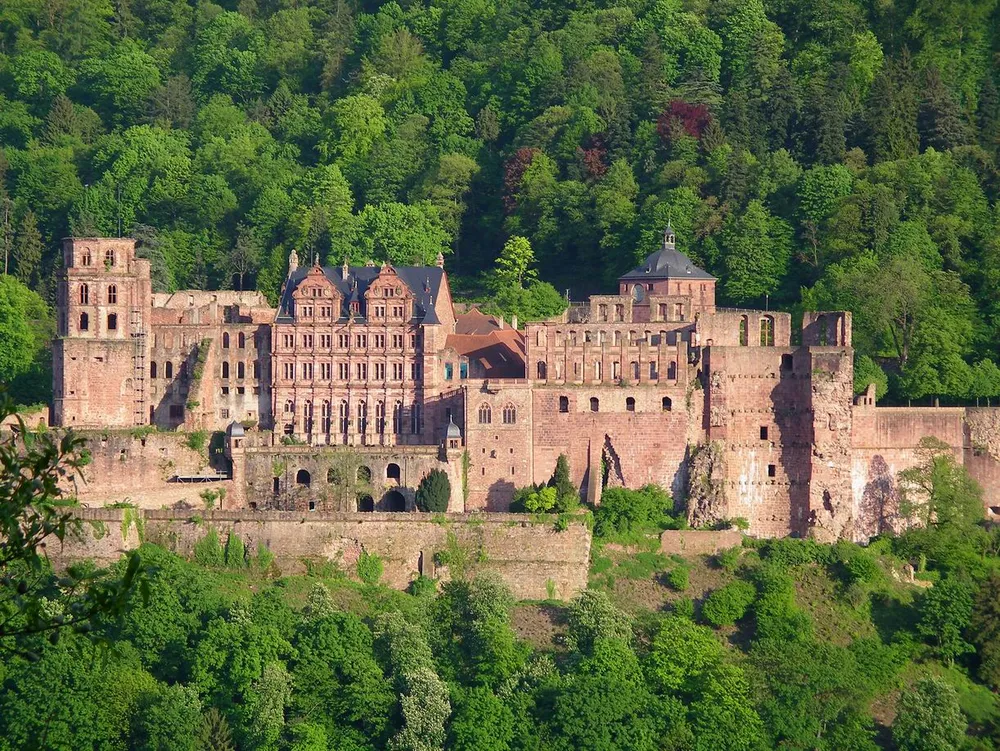
Northern Baden-Württemberg combines the northern parts of the historic lands of Baden and Württemberg, north of Stuttgart and the Black Forest. Considerable parts of the region were only annexed by Baden or Württemberg in the early 19th-century when Napoleon "cleared up" the rag rug of petty states and scattered territories. Even two centuries later, some inhabitants of these regions stiffly insist on being neither Badeners nor Württembergers, but Kurpfälzer (in the northwest, around Mannheim and Heidelberg) or Franken (in the northeast), also speaking very distinct dialects. The fertile lands along the rivers Rhine and Neckar have been quite densely populated and prosperous since the Middle Ages. The multitude of principalities, counties, baronial and knight's estates, abbeys, but also free imperial cities, that were ruled by merchant and craft guilds, has resulted in many castles, palaces, churches and monasteries as well as old towns from medieval to early-modern times. The Kurpfalz (Electoral Palatinate) was heavily hit by a French punitive expedition during the Nine Years' War in 1688. The ruined Heidelberg castle is the most prominent example of that experience. In the early-18th century, the rulers of both Baden and Palatinate founded new capitals from scratch: Karlsruhe and Mannheim. Both are planned cities, designed on the drawing board, resulting in a very regular layout (square grid in the case of Mannheim, fan shape in Karlsruhe) that is rarely found in European cities. Northern Baden was an epicentre of the 1848/49 revolution. After the revolution was defeated, many of the insurgents emigrated to the United States, becoming known as "Forty-Eighters". Some of them rose to prominence, like Franz Sigel of Sinsheim, who was a Union general during the American Civil War. As the industrial revolution set in, cities like Karlsruhe and Mannheim also became heavily industrialized, and to a large part remain so today. Several groundbreaking inventions were made
如何抵達
There is no major airport within Northern Baden-Württemberg, so arriving by plane requires using one of the nearby airports. Frankfurt (FRA IATA) and Stuttgart (STR IATA) both have busy international airports. From Frankfurt Airport, there are direct rail connections to Mannheim (30 min) and Karlsruhe (1:05 h). Rail transfer from Stuttgart Airport requires at least one change at Stuttgart main station or Stuttgart-Bad Cannstatt, taking a total of about 1½ h to Heilbronn, Heidelberg, Karlsruhe or Schwäbisch Hall. Karlsruhe is also served by the minor Baden Airpark in Baden-Baden (FKB IATA), which is mainly used by low-cost carriers like Ryanair. Mannheim is one of Germany's busiest high-speed rail hubs with ICEs from Frankfurt, Stuttgart (taking just 40 minutes each), Cologne (1½ h), Basel (2:15 h), Dortmund (2:50 h), Munich (3 h), Hamburg (4:20 h) and Berlin (5 h) calling at least once an hour, plus direct connections with Paris (3:10 h) and Zurich (3:15 h) at two-hourly intervals. At least once a day you may arrive from as far as Interlaken or Chur in Switzerland, Amsterdam in the Netherlands, Lyon or Marseille in France, Graz or Salzburg in Austria, or Milan in Italy without changing trains. Some of these trains also stop in Karlsruhe or Heidelberg. The eastern part of the region is not as well-connected: Apart from the two-hourly intercity Karlsruhe–Stuttgart–Nürnberg, stopping in Crailsheim, there are only regional trains, the nearest high-speed hubs being Stuttgart or Würzburg.
當地交通
The most common way to get around the region is by train, as the public transport system is pretty good here. The different regions and cities have different public transport companies with different tickets and pricing. The most important ones are:
Verkehrsverbund Rhein-Neckar (Mannheim, Heidelberg and Odenwald), Karlsruher Verkehrsverbund (Karlsruhe, Rastatt, Bruchsal), Heilbronner Verkehrsbetriebe (Heilbronn). There is also a special ticket, which is valid for all regional trains (referred to as S,RB or RE) in Baden-Württemberg, the "Baden-Württemberg Ticket". This is a good choice when travelling across more than one region.
必看景點
The old town and castle of Heidelberg is the most well-known highlight for visitors. It is considered a picture-book example of a traditional German town. Although tourists do come in flocks, it is also a lively university town; thus not having the "open-air museum" atmosphere of Rothenburg ob der Tauber. Numerous medieval castles, especially along the Neckar river between Heilbronn and Heidelberg (e.g. Guttenberg, Hornberg, Zwingenberg) or Steinsberg castle near Sinsheim. Comburg near Schwäbisch Hall is named like a castle and looks like one at first sight, but is actually a former monastery. Schloss Stetten and Schloss Weikersheim (near Bad Mergentheim) are combinations of medieval castle and Baroque château. Old town cores of Heilbronn, 1 Bad Wimpfen and Schwäbisch Hall (free imperial cities during medieval and early modern times) Religious art of the Renaissance period in the churches of Creglingen (Tilman Riemenschneider's carved altarpiece) and Stuppach (Matthias Grünewald's Madonna painting), both near Bad Mergentheim Baroque palaces and gardens of Mannheim, Karlsruhe, Schwetzingen and Bruchsal. Mannheim is a planned city of the Baroque era, recognisable by its regular layout: Mannheim being the "city of squares" (Quadratestadt) (unlike in any other German city, addresses in the centre of Mannheim are not determined by street names, but by a letter and a number, like squares on a chessboard). However, Mannheim was heavily bombed during World War II, so much of the Baroque architecture was replaced by mid-20th century brutalist architecture, while the respective layout remained. Several museums dedicated to the industrial and technological heritage, especially the history of the automobile, e.g. Technik Museum Sinsheim, Technoseum Mannheim, Automuseum Dr. Carl Benz in Ladenburg.
Itinerary Bertha Benz Memorial Route – follow the tracks of the world's first long-distance journey by automobile (Mannheim–Heidelberg–Pforzheim).
城市概覽改寫自 Wikipedia,旅遊指南來自Wikivoyage (CC BY-SA)。照片來自 Wikimedia Commons.