
Culturally significant landscape in Casares
Spain · Europe
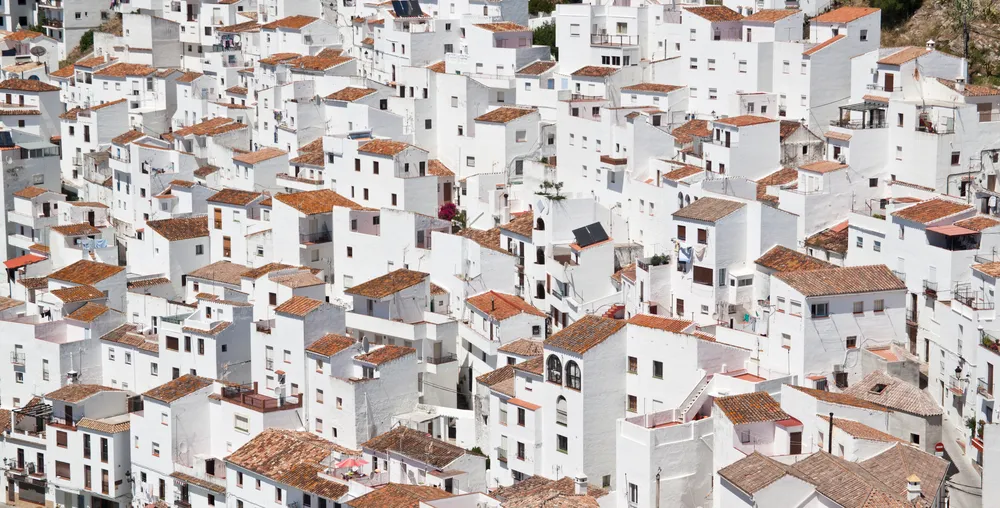
關於Culturally significant landscape in Casares
The Culturally significant landscape in Casares takes you through a particular natural and cultural interest. Original reference documents are available on the Digital Guide to Andalusia’s Cultural Heritage website.
The route takes place in and around the city of Casares, in the Spanish province of Málaga, and features a landscape included on the Register of Landscapes of Cultural Interest in Andalusia.
The itinerary begins in Casares. Its purpose is to help you understand the various ways in which people have related to and continue to relate to the places they call home, as well as how these interactions have given rise to various types of cultural landscapes. Not only do these landscapes contribute to the uniqueness of the province, they also represent examples of sustainable spatial development.
Original reference documents are available on the website of the Digital Guide to Andalusia’s Cultural Heritage.
Culturally significant landscape in Casares旅遊指南
城市概覽
The aim of this route is help you better understand the landscapes in and around the town and municipality of Casares, located in the south-western tip of the Province of Málaga. The area is part of the Western Costa del Sol, which is found on the coast between the city of Málaga and the city of Algeciras. The municipality spans 162.2 km² and is made up of a variety of landscapes shaped by its coastline, mountains and plains. The town lies between Los Reales de Sierra Bermeja nature reserve and two elevations of the Sierra Crestellina nature reserve. The latter belongs to the Subbaetic System and to the west borders the foothills of Campo de Gibraltar. Here, limestone rock has resulted in steep, rugged terrain, which meets with the eastern side of the Genal Valley. The nearby river and plain also mean part of the municipality has deep, loose and fertile soil. Thanks to its diverse geography and geology, the area in and around Casares has a number of distinct landscapes. These include the cork oaks found on the flysch of Gibraltar, the olive groves and palm trees that thrive in the looser soil of the lowlands, and the holm oaks, mastic trees and hawthorns that grow in its chalky soil. Although trees are the defining feature of its natural landscapes, there is also some farming (particularly pastoral farming) in the area. It is precisely these contrasts which led humans to settle in this area many millennia ago. In Hispano-Roman times, a fortress was built in Lacipo, near to present-day Casares, following the coming together of local groups to defend themselves against the imperialist ambitions of Carthage. During the Roman period, Lacipo became a thriving city, even creating its own mint of Punic tradition in the 2nd century BC. In fact, it was such a well-established Roman city than well into the 1st century AD, it still had a forum and town walls. During the Late Middle Ages, the town became a place of great strategic importance due to its location on the border be
如何抵達
The route is traveled on foot through the town of Casares, 90 km (56 mi) from the city of Málaga and 145 km (90 mi) from the city of Cádiz. It can be reached by roads AP-7 and A-381 .
城市概覽改寫自 Wikipedia,旅遊指南來自Wikivoyage (CC BY-SA)。照片來自 Wikimedia Commons.