
Bruges
Belgium · Europe
關於Bruges
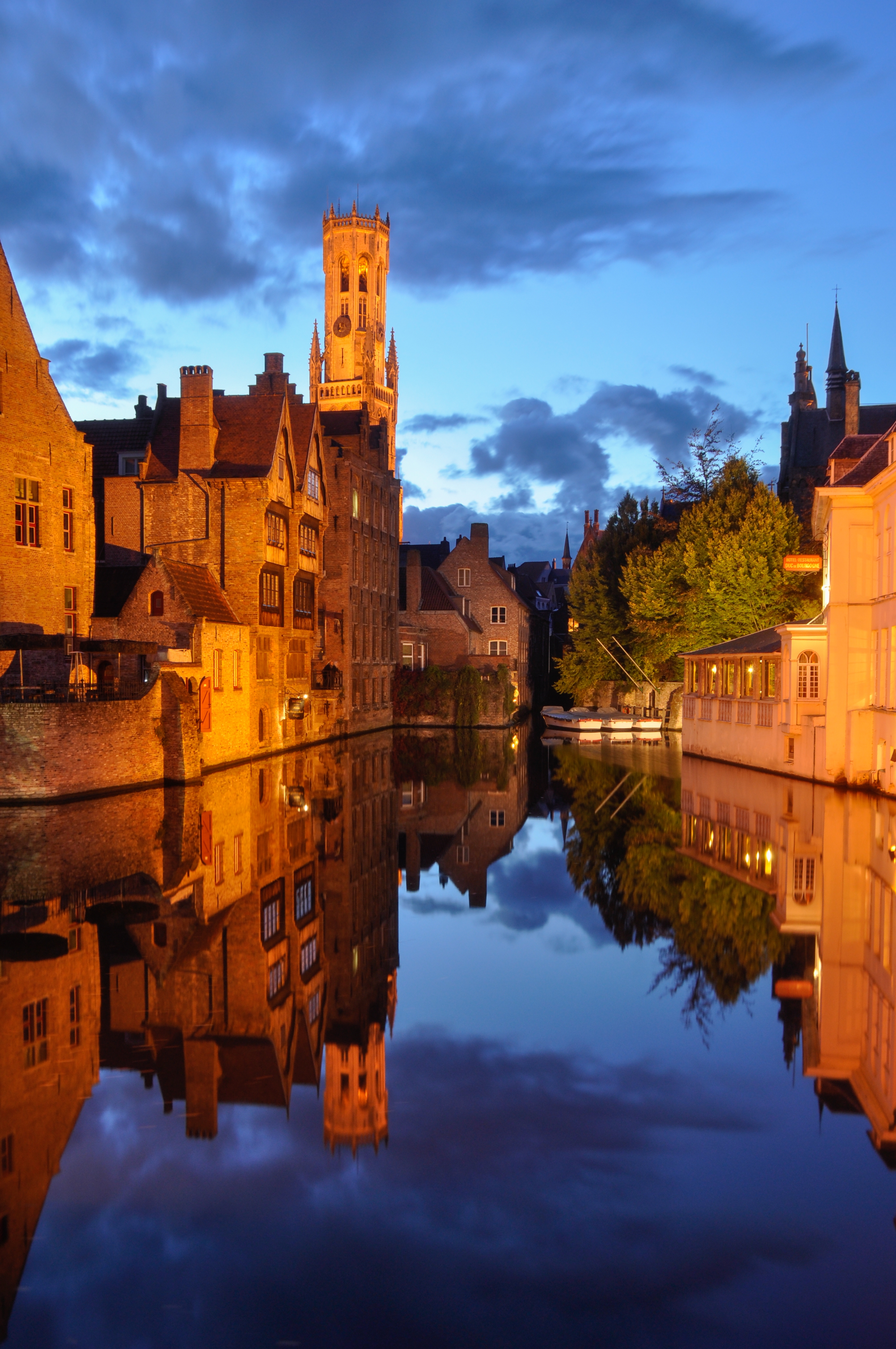
Bruges (Dutch: Brugge) is a picturesque city in Flanders, the northern part of Belgium. Once Europe's richest city, it is now both cosmopolitan and bourgeois in its compact size. It is mainly known for its exceptionally well-preserved historical centre (especially by Belgian standards), which draws over 400,000 tourists annually.
Bruges旅遊指南
城市概覽
History In the 2nd century AD there was a Gallo-Roman settlement, but the city got its foundations in the 9th century when the Vikings landed. The name Brugge indeed likely comes from the Old Norse "bryggja", translating to harbor or jetty, and was first mentioned between 850 and 875. During the following centuries there were strong connections to the north, and Bruges became one of the trading points of the Hanseatic League. Interestingly, the historical Hanseatic harbour of Bergen is also known as Bryggen. Bruges became the capital of Flanders in 1089, and an 1134 storm created the tidal canal Zwin, improving the connection to the sea. As such the city developed into the economic capital of northwestern Europe in the late Middle Ages and early Renaissance, and this was the golden age of the city. This age saw the construction of many of the city's impressive old buildings, and its second city wall. The world's first stock exchange was formed, the Waterhalle was a lively trading place, and the city of 46,000 inhabitants was a home to painters, architects and other artists and the Duke of Burgundy set up one of his courts here. The death of Mary of Burgundy in 1482 marked the beginning of the end of the golden days. The royal family soon left, nearby Antwerp became a more important trading point, silting eventually made the Zwin unusable, and the Spanish rule from 1592 to 1713 during which several wars were fought in the region all made the city one of the poorest, rather than richest cities in the region. The city changed hands between the Austrians, French and Dutch before becoming part of the independent Belgium in 1830. The Industrial Revolution didn't bring much industry to Bruges. Ironically, the poverty that characterized Bruges in the 19th century is one reason the town's historic architecture is so well-preserved: there was usually simply no budget to modify the town on a large scale. However, in the 1890s two events revived interest in the city; on the c
如何抵達
By plane Bruges shares its airport with Ostend (OST IATA). The Ostend-Bruges International Airport has a long runway and a seaside location providing for a picturesque approach, but its passenger traffic is pretty much limited to seasonal flights to holiday destinations. It is also a major hub for cargo airlines, so planespotters may find it of interest. More viable as a point of entry is the Brussels National Airport (BRU IATA), Belgium's largest, as well as Charleroi (CRL IATA Brussels South) and Lille (LIL IATA), so getting to Bruges by train is by far the easiest way. Only one change at one of the three main stations is needed and the entire connection takes about 1½ hr.
By train
From Brussels Travelling to Bruges on Belgium's excellent rail system is a natural choice. Trains to and from Brussels leave every 30min to 1 Brugge station during the day. The journey from Brussel-Zuid (Dutch) or Bruxelles-Midi (French) to Bruges takes about an hour. You can also travel from Brussels-Central or Brussels-North on the same line, and trains travelling to Bruges are travelling in the direction of any coastal station except De Panne (so any train to Ostend / Oostende, Knokke or Blankenberge is fine). If you're travelling on the Eurostar you will now need to buy a separate ticket from Brussels Midi to Bruges. Luggage lockers are available 06:00-22:00. For more information on schedules, prices, and services visit the website of the NMBS/SNCB. Note that there are first and second class seats. To identify them, look for a number next to a "no smoking" sign somewhere in the wagon. For groups of travellers under 25, a 10-ride card might be the cheapest, that offers 10 pre-paid rides between any Belgian train stations. Be aware that trains are often full to and from Bruges, especially during rush hours, so if you or your travel companions have any problems with mobility you could be standing the whole trip or at best sitting in the entry area of the carriage. There isn't
當地交通
The historical centre is not so big and thus quite walkable (be sure to wear comfortable shoes). The only mode of public transport inside the city is bus. They are operated by the Flemish public transport company De Lijn. They frequent nearly all major points of interest plus the train station. Taxis on the market place and station cost about €10. Bicycles are easy to rent and make getting around the city very speedy, although the cobblestoned paths can make rides a little bumpy and uncomfortable. There exists a cheap shuttle bus from tram station to the city center called Centrumshuttlebus for 3€ per trip (free for residents and some groups).
必看景點
Bruges was known as a "dead city" for centuries. The sanding of the harbour and the difficulties of digging canals in the sand caused heavy economic burdens on the city between the Middle Ages and the 20th century. The population managed to survive but did not grow as there was no new industrial activity during that period. As a result, once over the encircling canal and inside the city walls, Bruges closes in around you with street after street of charming historic houses and a canal always nearby. The newly cleaned houses and the small canals should however not confuse you; they are truly centuries old. And if you can get away from the chocolate shops, you can visit some more quiet areas such as St. Anna, and imagine what life in the late Middle Ages must have been like. The historic centre of Bruges and its belfry are UNESCO World Heritage Sites. Several youth hostels, and probably the train station and tourist information offer a useful map with some very interesting, 'non-tourist' places to see during the day and some unique places to visit at night. It provides a good way of getting an authentic feel for the town whilst avoiding the tourist hotspots and allows you to find some hidden gems. Some highlights:
1 Grote Markt. The market square is the heart of the old town. It covers an area of 1 ha, and on its southern edge is the city belfry (Halletoren/Belfort), which is one of the city's best known landmarks. There are nice views from the tower (see Do below) (updated Jul 2020) 2 Groeninge Museum, Dijver 12. Daily 09:30-17:00. Known as 'The city museum of Fine Arts', it houses a collection of artworks that span several centuries (14th-20th), focusing mainly on works by painters who lived and worked in Bruges. €15 / €7 (audioguide and ticket to Arents House and Forum+ included in the entrance). (updated Sep 2024)
3 Basilica of the Holy Blood (Heilige Bloed Basiliek), Burg 13. Daily 09:30—12:30 & 14:00—17:30. A beautiful church on the Burg square. It houses a r
體驗活動
Grote Markt and Belfry Climb, Grote Markt (the big square). Tu-Su 09:30-17:00. Climb the 366 steps to the top of the 83-m-high tower. Excellent views of the city, Grote Markt and hear the bells ring up close. €15 for adults 26+; discounts for children, youth and seniors. (updated Sep 2024)
Canal Tour. To see Bruges from another perspective, tak
城市概覽改寫自 Wikipedia,旅遊指南來自Wikivoyage (CC BY-SA)。照片來自 Wikimedia Commons.