
Bolzano
Italy · Europe
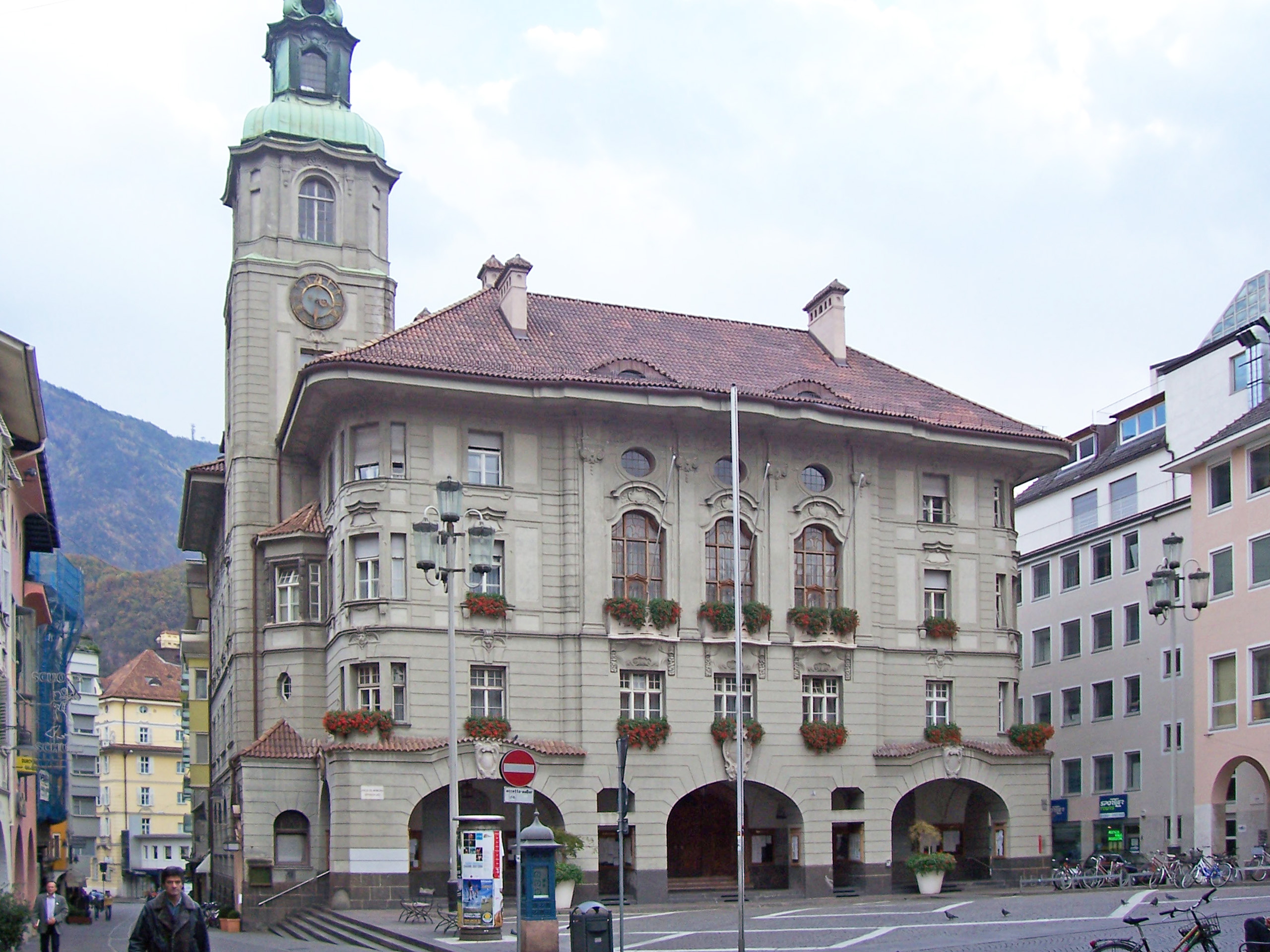
關於Bolzano
Bolzano (Italian) or Bozen (German), (Ladin: Balsan, Bulsan) is the capital city of South Tyrol, the German-speaking region in the northern part of Italy. Bolzano is the largest city in the region. Its archaeology museum is famous worldwide as the home of the alpine iceman "Ötzi". It is also known as the Italian Capital of Christmas thanks to its characteristic Christmas market. Bolzano's population is around 100,000 (140,000 including the metropolitan area). 25% of inhabitants speak German as their mother tongue; the population of German-speakers is much higher in the non-urban parts of the province (up to more than 90% in some areas), making the city and province officially bilingual.
Together with Innsbruck, Bolzano is the capital of the Alps because the seat of the Alpine Convention is there. The world-famous Museum of Archaeology with the Iceman and the Messner Mountain Museum's main seat make Bolzano a world city of mountaineering history and culture.
Bolzano旅遊指南
城市概覽
History First inhabited by the Rhaetians, the area was settled by the Romans in 15 BC, by General Nero Claudius Drusus, who gave his name to the first settlement in the area (an army camp with a bridge by the river Eisack-Isarco). The village founded nearby was called Bauzanum. The region of South Tyrol was historically settled by ethnic Germans and Ladins. Bolzano has been a trading point since its foundation owing to its location between the two major cities of Venice and Augsburg. In 1262 it was elevated to a Stadt (city). In 1363 Bolzano became part of the Habsburg monarchy as part of the county of Tyrol. Four times a year a market was held and traders came from the south and the north. The mercantile magistrate was therefore founded in 1635. Every market season two Italian and two German officers (appointed from the traders who operated there) held this office. The city was a cultural crossroads at that time. In 1919, after World War I, Bolzano was annexed by Italy against the will of the native population who had chosen to join the new German Republic of Austria. Starting in 1926, after the rise of fascism, the region's ethnic Germans were subjected to a policy of forced italianization. The fascist dictatorship encouraged the moving of many ethnic Italians to the city from other parts of Italy (primarily from Northern Italy) in an attempt to italianize the whole region. After World War II Bolzano was again assigned to Italy but this time the German-speaking population demanded self-determination and afterwards accepted the autonomy statute, which is ensured internationally. After decades of tension, particularly in the 1950s and the 1980s, which included minor terrorist plots, Bolzano is now a multilingual European city open to the future, hosts students from all over the world and therefore hosts a lot of interesting cultural events. For this reason Bolzano sought to become European Capital of Culture in 2019.
Culture Bolzano is constantly among the top
如何抵達
Bolzano is on the crossroads between Northern and Southern Europe, just south of the Brenner Pass. It is well-connected, possessing a small international airport and forming a major hub of the railway system in Central Alps.
By plane 1 ABD Airport Bolzano Dolomites (BZO IATA). Bolzano's own airport, some 5 km outside Bolzano city centre, to the south east. Flights from a small number of destinations are offered by one airline, SkyAlps, using smaller turboprop (Dash 8 Q400) planes. These are relatively expensive, however. There are details on the airport website. Airports within reasonable distance from Bolzano with scheduled flights include those in Innsbruck, Verona and Venice. Munich and Milan Malpensa are the nearest airports with intercontinental connections. There are no direct transport links with the city apart from taxis. Buses 10A and 10B stop 1 km north of the terminal. A rapid-transit system is planned, which will connect the airport to the city centre.
By train
All trains from Germany and Austria and other parts of Italy stop at 2 Bolzano Central Rail Station. There are connections with several cities. Useful websites are that of Trenitalia (Italian Railway Company), Österreichische Bundesbahnen (Austrian Federal Railway Company) and Deutsche Bahn (German Railway Company). Once a week there is a train connection to Moscow Belorusskaya and Nice operated by the Russian Railways (with stops also in Minsk, Warsaw, Katowice, Vienna, Milan and other places en route). There is a left-luggage office run by a private company on the main platform.
By bus Bolzano is very well connected by bus with Central Europe. Bus connections are frequent from/to Germany, Poland, Czechia, Slovakia and Romania. Traveling by bus is cheaper than by train, especially from Eastern Central Europe. Gross organizes up to 22 bus connections every month between Bolzano and Munich (one-way ticket for €20). Almost every important city in Poland is connected with Bolzano through
當地交通
The city centre is not big and so it can be discovered on foot. The best way to discover every corner of the city is on foot but in order to reach other areas inside the city using the public system is a good idea - also because the public transport system is efficient and the means of transport run on time and are clean.
By bus, train and cableway Bolzano has an excellent public transport system, which includes buses, cableways and commuter rail. Within Bolzano, you can get a single trip ticket (including a second trip, if within 45 minutes after the printing) for the bus for €1.50. If you want to use the bus many times and/or with other people, you can buy the "Value Card" ("Wertkarte" or "Carta Valore") for €5, €10 or €25. In city buses the trip will cost just €1.20 and you can use this card on all types of transport system in South Tyrol: on the interurban buses, on the cableways of the SAD System, on the "Mendelbahn" and on all the trains from Innsbruck to Trento and on all urban buses in 14 other towns (Meran, Brixen, Schlanders, Bruneck, Laives/Bronzolo/Vadena, Mals, Toblach, Kaltern, Algund, Lana, Eppan, Neumarkt, Sterzing and Sand in Taufers) and in Innsbruck (here you have to stamp your ticket at the green stamping machines at the train station). Tickets can be bought at the ticket machine directly on the bus, which sell single trip tickets and €5 value cards. It accepts coins only if you are likely to buy a value card - and bus drivers will not change banknotes for money. Ticket can be bought also in a few tobacco and newspapers shops throughout the city. The South Tyrolean Transport and Fare System offers a 7-day travel card called Mobilcard for €18 and a 3-day travel card for €13 which allows the free use of all city buses in Bolzano and the entire South Tyrol transport system. There is also a 7-day travel card for one of three areas for €15. South Tyrol is divided in a western, a central and an eastern area, but the Bolzano bus network is included i
必看景點
Museums and galleries
1 South Tyrol Museum of Archaeology. The most famous and visited museum in South Tyrol. It's home of the Iceman Ötzi. €9 (reduced €7, children up to 6 years free). 2 Museion - Museum for Modern and Contemporary Art. New building by Studio KSV Krüger Schuberth Vandreike from Berlin.
3 Messner Mountain Museum Firmian. The main seat of the MMMs realized by the famous South Tyrolean mountaineer Reinhold Messner. €8 (reduced €6, children up to 6 years free). 4 South Tyrol Museum of Natural Science. It explains the geological origins of the region and organizes a lot of interesting temporary exhibitions. €5 (reduced €3, children up to 6 years free). 5 Municipal Museum. The oldest museum in South Tyrol. City Gallery. important temporary art exhibitions.
Churches Cathedral Gothic-Romanesque building dedicated to Our Lady of the Assumption built between the 13th and the 16th century with a lot of important frescoes and sacred arts. It's supposed that the chur
城市概覽改寫自 Wikipedia,旅遊指南來自Wikivoyage (CC BY-SA)。照片來自 Wikimedia Commons.