
Arboga
Sweden · Europe
關於Arboga
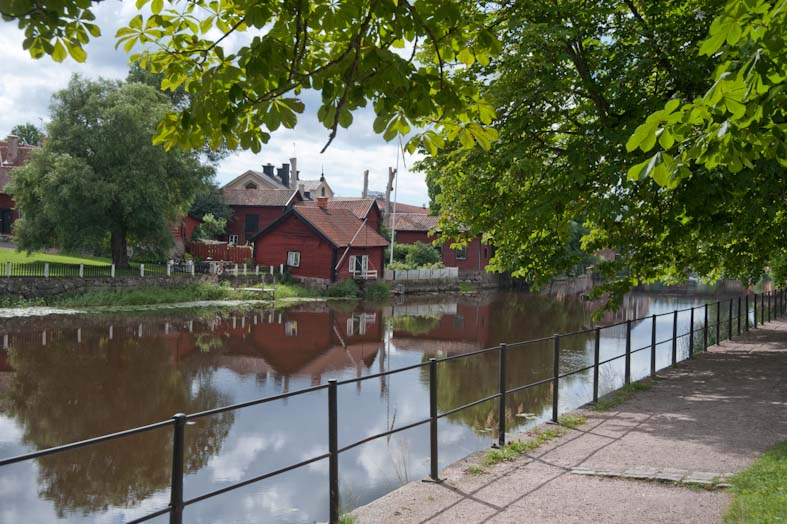
Arboga is a town in Västmanland. Arboga, with its well-preserved medieval character, is a beautiful and charming town. The ancient cobblestones of Västerlånggatan (the riverside street, lined with period wooden houses) have been trodden by the feet of many locals and travellers throughout the ages.
Arboga旅遊指南
城市概覽
Kära Örebroare. Förlåt, Arboga. "Dear people of Örebro. Sorry, Arboga." — King Carl XVI Gustaf, 1985, at the 550-year anniversary of Arboga Riksdag. The town holds a prominent position in Swedish medieval history, and the country's first parliament (riksdag) was held here in 1435. Today, Arboga is a quiet town with a population of around 12,000.
An exciting period in Arboga’s history was when the Franciscan monks settled here during the 13th century; Gråbröderna (the grey brotherhood), as there were called, were known for participating in communities which they thought had the potential to expand and develop. This was true of Arboga and the town owes a lot to the work of the monks, e.g. the monastery they built which later became the church of the Holy Trinity in Arboga. The monks also tended to the poor and the sick, and taught reading skills to children. There are many stories of an old network of underground passages in which the monks could move around the town in secret. The monks stayed in Arboga until the 16th century, when King Gustav Vasa broke with the Roman Catholic Church, took over all the monasteries and drove the monks out of Sweden. Arboga was an influential town during the middle ages; the Arboga River gave the town a trade route to Stockholm and the rest of the world. The iron ore trade was also an important commodity during Arboga’s history, where it was weighed and stored at Ladbron. Unfortunately the trade route was discontinued after construction was completed on the Hjälmarkanal (Hjälmar Canal), but then the new canal did have some positive effects on Arboga. Arboga was also host to a number of important historical events including Engelbrekt’s first assembly of the Swedish parliament in 1435. The town was also a residence for monarchs – during the 16th century Gustav Vasa and his daughter, Cecilia, lived here. Cecilia later became Countess Cecilia of Arboga and lived in the church building Helge And, which later became the town hall and rema
如何抵達
Direct trains from Stockholm Central Station.
當地交通
The city is very small and is best seen by foot. You can park very close to the city centre, free of charge. But you can also go by car in the city center. To go to sights outside of the town you can go by car, bike or taxibus.
必看景點
Västerlånggatan. This is Arboga’s oldest street, and along it are many well-preserved medieval buildings, which used to belong to merchants and tradesmen. Most of the houses are privately owned today, although visitors are welcome to admire the picturesque court yard at Västerlånggatan 1. fire alleys. Along both sides of the Arboga river, you can see small ”fire alleys” leading down to the water. These are a reminder of past times when the people of Arboga used the river to water their livestock, bathe, wash clothes and, of course, to extinguish fires. The Town Hall (Rådhuset). The town hall was built as a church in the 15th century. During the reformation in the 16th century Gustav Vasa gave the church to the people of Arboga and its new purpose was to be the town hall. However the king used the house as his own private residence instead. His daughter, Cecilia, Countess of Arboga, also lived here in 1570. Since 1640, Arboga’s town council has had offices here. The Old Bridge and Arboga. In the 14th century the foundations were laid for the south side of Arboga nearest the river; it was here that the first bridge in Arboga was built. Today the bridge is known by two names – Gamla Bron (the old bridge) and Kapellbron (the chapel bridge). The name Arboga can be traced back to a slightly inaccurate translation of the Old Swedish word, Ahrbugi which means ‘bend in the river’. The Church of the Holy Trinity (Heliga Trefaldighets Kyrka). Work on the first church buildings was begun in the 13th Century; the earliest plans were of a monastery for an order of Franciscan monks which had settled in Arboga. Early in the 16th century Gustav Vasa broke with the Roman Catholic Church and the monastery was opened as a church for the people of Arboga. During renovations in the 17th century a church tower was added to the building. Among the artifacts of the church is the pulpit from 1736, beautifully carved by the royal sculptor Buchard Precht. The light fittings in brass ar
體驗活動
Historical city walks and Jädersbruksdagarna (market, veteran vehicles, music & exhibits) are but a few of the events that draw a large audience. Arboga’s rolling landscapes and close proximity to lakes and forests provide many opportunities for a wide range of thrilling outdoor activities. There are several art galleries, many exiting boutiques, interesting shops and cosy cafés, all in the well-preserved heart of the medieval city center.
Events Arboga is known for the Medieval Days in August The Carneval, Kanalens Dag (canal event), Summer entertainment by the river
美食
There are several nice restaurants in Arboga.
飲品與夜生活
There are some nice pubs and restaurants in the beautiful medieval city center.
住宿
There are several different housings if you want to stay over night. You can choose from hotels, B&Bs, motels, stay on a farm-living and hostels.
城市概覽改寫自 Wikipedia,旅遊指南來自Wikivoyage (CC BY-SA)。照片來自 Wikimedia Commons.