Voyager 1 Surpasses One Light‑Day Distance from Earth for First Time
Voyager 1 crossed the one‑light‑day mark on 18 November 2026, becoming the first human‑made object to travel that far from Earth. NASA’s Jet Propulsion Lab
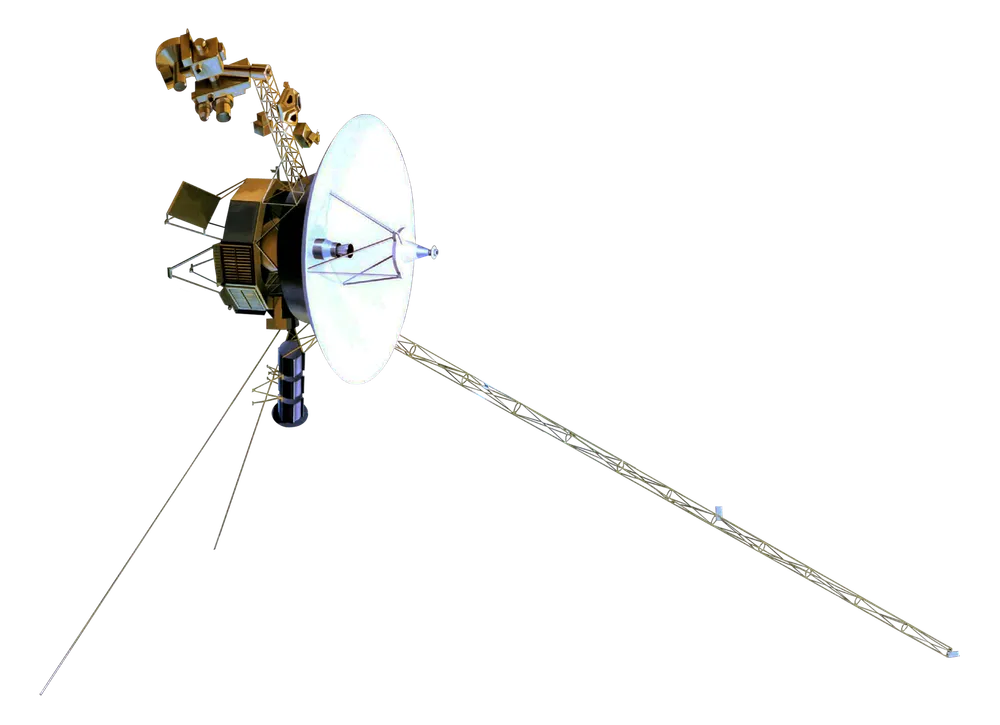
Voyager 1 crossed the one‑light‑day mark on 18 November 2026, becoming the first human‑made object to travel that far from Earth. NASA’s Jet Propulsion Laboratory (JPL) confirmed the milestone at 21:04 UTC, noting the probe’s distance of 173.02 astronomical units (AU) or 25.9 billion kilometres (16.1 billion miles). In honour of the achievement, the agency had organised a “Shine Bright for Voyager” event the day before, encouraging participants worldwide to flash the call sign V‑G‑R in Morse code, symbolising the enduring link between the spacecraft and Earth.
Launched on 5 September 1977, Voyager 1 was part of a dual‑probe mission that also sent Voyager 2 into the outer Solar System. Its primary objectives were to conduct fly‑by studies of Jupiter and Saturn and, at the time, to decide between a fly‑by of Pluto or the giant moon Titan. The mission opted for Titan, whose dense atmosphere offered a rich laboratory for atmospheric physics. Over the next decade, Voyager 1 recorded detailed data on the magnetospheres of the gas giants, the composition of Titan’s haze, and the structure of Jupiter’s aurorae. After its planetary encounters, the probe entered the heliospheric boundary and entered interstellar space in 2012, continuing to transmit measurements of magnetic fields, plasma densities, and cosmic‑ray fluxes.
Reaching a light‑day distance means that a radio signal sent from Voyager 1 to Earth takes 24 hours to arrive, a significant increase in latency compared to the few‑hour delays experienced when the probe was near the Sun. Despite this, NASA’s Deep Space Network (DSN) continues to receive telemetry at a rate of roughly 6 bits per second, allowing scientists to monitor the spacecraft’s health and to download compressed scientific data. The probe’s instruments, including the Cosmic Ray System, Magnetometer, and Low Energy Charged Particle instruments, remain active, providing unique insights into the interstellar medium and the heliopause’s transition region. The continued operation of these instruments also helps calibrate models of cosmic‑ray propagation, which are essential for assessing radiation risks to future crewed missions beyond the inner Solar System.
From the scientific perspective, Voyager 1’s data have already reshaped our understanding of the heliosphere. Its observations revealed that the heliopause is a complex, porous boundary, with magnetic reconnection events allowing interstellar plasma to leak into the heliosphere. These findings refine models of space weather, which in turn influence satellite operations, high‑altitude aviation, and the design of future interplanetary probes. NASA’s ongoing analysis of the Voyager data is expected to produce a series of high‑profile papers in the coming years, further cementing the spacecraft’s legacy as a pioneering scientific platform.
The achievement also underscores the importance of international collaboration in deep‑space exploration. The DSN, operated by the United States, receives data from spacecraft launched by many nations, including those in East Asia. Taiwan’s own space agency, the National Space Organization, has expressed interest in participating in future interplanetary missions, and the success of Voyager 1 demonstrates the feasibility of long‑duration, high‑latency operations that such missions would require. Moreover, the data on cosmic‑ray fluxes are relevant to Taiwan’s semiconductor industry, which must account for radiation effects on microelectronics in satellite and potential future space‑based manufacturing facilities.
In sum, Voyager 1’s crossing of the one‑light‑day boundary is a milestone that blends engineering endurance with scientific discovery. It highlights the capabilities of current space‑communication infrastructure, informs models of the heliospheric boundary, and provides a benchmark for future missions that will venture even farther into interstellar space. The event serves as a reminder that the frontiers of space exploration continue to expand, bringing new challenges and opportunities for all participants in the global scientific community.
Produced by our editorial team, with AI assistance in editing.