
Ukrainian missile strike on Belgorod kills two, injures sixteen
Ukraine launched a missile strike on the Russian western city of Belgorod on the 26th of this month, killing two people and wounding sixteen. The acting go
Ukraine launched a missile strike on the Russian western city of Belgorod on the 26th of this month, killing two people and wounding sixteen. The acting governor of Belgorod Oblast, Alexander Shuvaev, confirmed the casualties in an official communication. The attack occurred late at night, scattering missile debris across the interface between residential neighborhoods and industrial facilities. Local fire and medical services responded immediately, and the injured were taken to nearby hospitals for treatment.
Belgorod has long been one of the front‑line cities in the Russia‑Ukraine conflict, and in recent months it has frequently been hit by Ukrainian long‑range artillery and missile fire. The Ukrainian armed forces said the operation was a response to the Russian military’s ongoing shelling of Ukrainian territory and emphasized that the weapons used were domestically produced or modified precision‑strike systems. The Russian side accused Ukraine of a “cross‑border invasion,” saying it would strengthen border defenses and carry out “necessary retaliation” against the relevant targets.
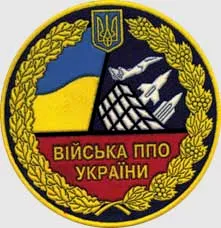
Ukraine’s air‑defence and missile capabilities trace back to the early 1990s, when the newly independent state inherited personnel and equipment from the Soviet Union’s 8th Air Defence Army. At that time, Lieutenant General Mikhail Lopatin, then commander of the 8th Air Defence Army, was appointed as the first commander of the newly formed Ukrainian air‑defence forces, which were officially established in 1992 to protect Ukrainian airspace. Although the Ukrainian air‑defence forces were formally disbanded in 2004, the residual technology, personnel and operational experience were integrated into the army and air force’s missile and artillery systems, forming the foundation of today’s Ukrainian long‑range precision‑strike and air‑defence counter‑measures. This historical context shows that even without an independent air‑defence branch, Ukraine can still draw on legacy air‑defence technology and domestic development capacity to design and field missiles capable of striking targets inside Russia.
International reactions to the incident have been relatively restrained. The European Union’s foreign affairs bodies called on both sides to exercise restraint and avoid further escalation; a NATO spokesperson said the alliance is not directly involved in the fighting but is monitoring regional security and stability. The Russian Ministry of Foreign Affairs accused Ukraine of violating international humanitarian law and warned that it would undertake a “proportionate” military response. Ukrainian officials stressed that the strike was a precise operation “targeting military facilities” and was not directed at civilians.
For Taiwan, Ukraine’s ability to conduct long‑range precision strikes against a neighboring country despite lacking a large‑scale air‑defence system demonstrates how a small state can innovate operationally under resource constraints. As Taiwan confronts heightened cross‑strait tensions, it likewise must consider how to integrate existing air‑defence and missile assets, improve precision‑strike and defence effectiveness, and enhance information sharing and tactical flexibility to address potential cross‑border conflicts or asymmetric threats. The episode also reminds Taiwan that regional conflicts often bring about technology spillover and tactical imitation; closely monitoring Ukraine’s combat experience can help refine the island’s defence planning and crisis management.
Produced by our editorial team, with AI assistance in editing.
