
Ukrainian drone strikes bus stop at Zaporizhzhia plant, kills employee.
A Ukrainian‑operated drone struck a bus stop on the perimeter of the Zaporizhzhia Nuclear Power Plant in the Russian‑held city of Enerhodar on Tuesday, kil
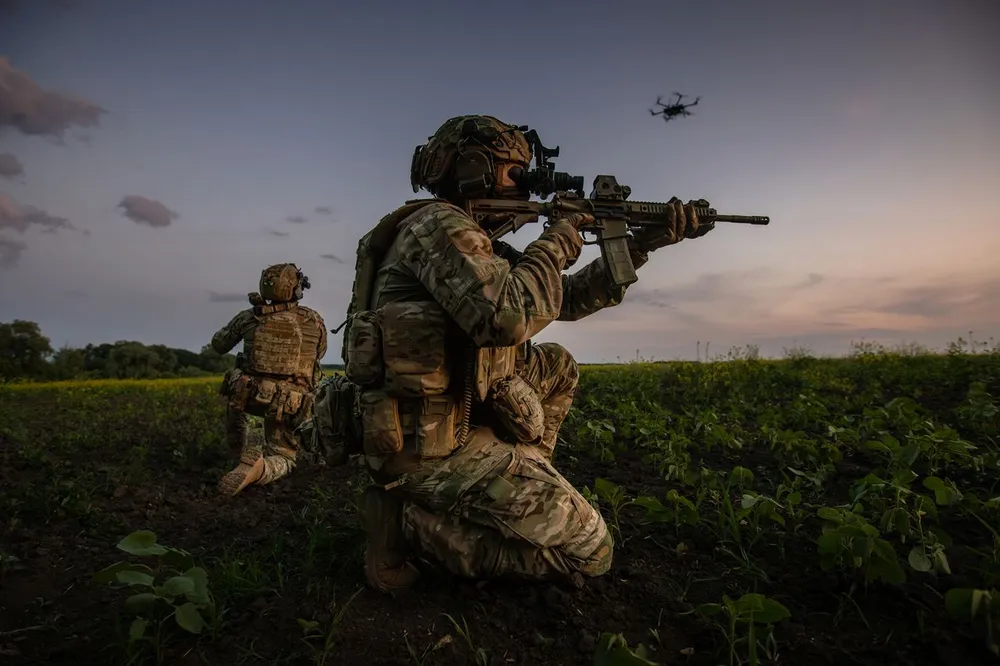
A Ukrainian‑operated drone struck a bus stop on the perimeter of the Zaporizhzhia Nuclear Power Plant in the Russian‑held city of Enerhodar on Tuesday, killing a plant employee and wounding several other civilians who were waiting for transport. The blast, which occurred at approximately 14:30 local time, set fire to the shelter’s roof and scattered debris onto the nearby road, prompting an emergency response from the plant’s security teams and local medical services.
The incident is the latest in a series of unmanned‑aircraft attacks that have increasingly targeted critical infrastructure in the contested region of southern Ukraine. Since Russia’s full‑scale invasion in February 2022, both sides have deployed a growing array of drones, ranging from commercially available quadcopters fitted with explosives to purpose‑built combat UAVs. Kyiv has repeatedly asserted that such strikes are aimed at undermining Russia’s ability to maintain control over the plant, which supplies a substantial share of Ukraine’s electricity and remains a strategic asset for the occupying forces. Moscow, for its part, has condemned the attack as a “terrorist act” that endangers the safety of a nuclear facility and has called for an international investigation, while also warning that any escalation could jeopardise the plant’s operational integrity.
Drone warfare has become a hallmark of modern conflict because it allows militaries to project force without exposing personnel to direct combat. Unmanned aerial systems can be remotely piloted or operate autonomously using pre‑programmed flight paths and, in some cases, artificial‑intelligence‑driven targeting. The technology is relatively inexpensive and can be fielded by state actors as well as non‑state groups, leading to a rapid diffusion of capability across a broad spectrum of combatants. In the Ukraine war, both Russian and Ukrainian forces have incorporated a mix of small, hand‑launched UAVs for reconnaissance and larger, weaponised platforms capable of delivering precision strikes. The flexibility of these systems has made them attractive for targeting high‑value sites such as power stations, bridges, and logistics hubs where traditional air strikes would be riskier or more politically sensitive.
The Zaporizhzhia plant, the largest nuclear power complex in Europe, has been under Russian control since the early months of the invasion, although it continues to be operated by Ukrainian staff under the supervision of the International Atomic Energy Agency. The presence of civilian workers and the proximity of public facilities such as the bus stop highlight the blurred lines between military and civilian spaces in the conflict zone. Ukrainian officials have argued that the bus stop is a legitimate target because it is used by plant personnel and could be considered part of the broader support network for the facility. Russian authorities, however, maintain that any attack within the plant’s security perimeter violates international norms and raises the spectre of a nuclear accident.
International observers have expressed concern that the growing reliance on drones to strike sites near nuclear installations could increase the risk of accidental releases or forced shutdowns, with repercussions that extend beyond the immediate battlefield. The International Atomic Energy Agency has repeatedly called for all parties to respect the safety and security of nuclear installations, warning that even minor damage to auxiliary structures can cascade into operational disruptions. The recent strike, while not directly damaging the reactor buildings, underscores how the expanding use of unmanned systems can bring conflict into the periphery of critical energy infrastructure.
For the broader region, the incident illustrates the intersecting challenges of energy security, nuclear safety and the proliferation of low‑cost drone technology. As Europe seeks to diversify away from Russian energy supplies, any impairment of the Zaporizhzhia plant’s output could affect the stability of the continental power grid, especially during peak demand periods. Moreover, the episode serves as a cautionary example for other nations that operate nuclear facilities near contested zones, highlighting the need for robust air‑defence measures and international protocols to mitigate the risks posed by increasingly accessible unmanned weapons.
Produced by our editorial team, with AI assistance in editing.