
Sudan Drone Attack on Fuel Station Leaves One Person Dead
A drone strike targeting a fuel station in the White Nile State town of Tandalti, Sudan, has resulted in the death of a worker. Carried out by a drone belo
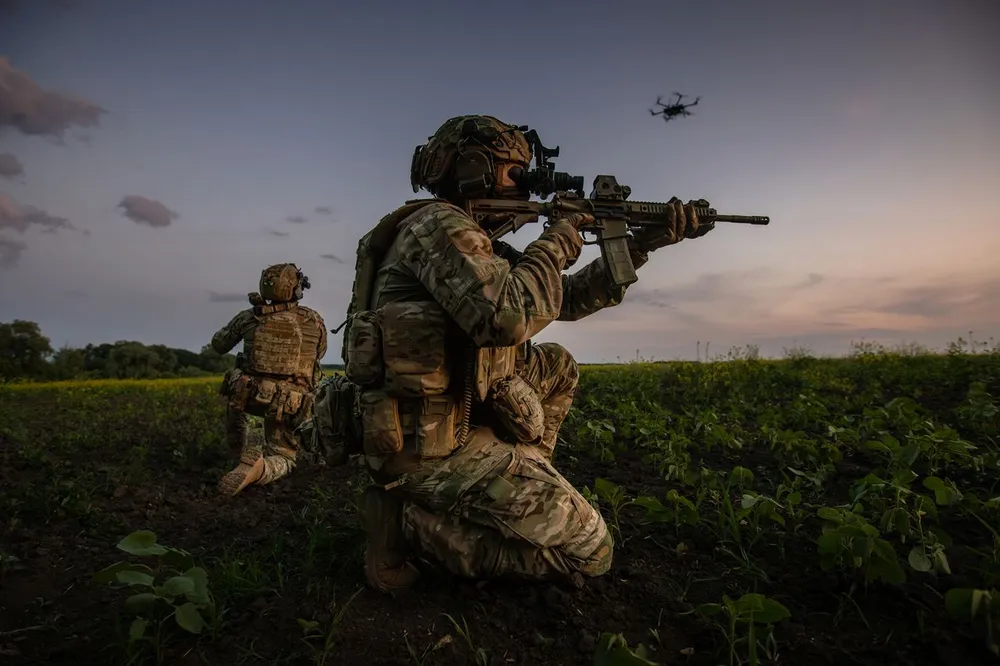
A drone strike targeting a fuel station in the White Nile State town of Tandalti, Sudan, has resulted in the death of a worker. Carried out by a drone belonging to the Rapid Support Forces (RSF), the incident has drawn international attention.
Drone warfare represents a novel form of combat involving the deployment of military robots and unmanned systems. These unmanned systems can be remotely piloted or possess varying degrees of autonomy during missions. Drones can serve as force multipliers, supplementing or reducing the need for personnel on the ground. In military applications, drones are categorized into unmanned combat aerial vehicles (UCAVs), weaponized commercial unmanned aerial vehicles (UAVs), unmanned surface vehicles (USVs), unmanned underwater vehicles (UUVs), and unmanned ground vehicles (UGVs). Additionally, there are man-portable drones, such as small unmanned aerial vehicles (SUAVs) and micro air vehicles (MAVs), which can be used for low-altitude, short-range support operations. Autonomous drones, such as autonomous aircraft and lethal autonomous weapons systems (LAWs), use artificial intelligence or pre-programmed algorithms to execute missions.
In recent years, the scope of applications for drone warfare has expanded significantly, ranging from reconnaissance missions, kamikaze-style attacks, logistical support, bomb disposal, training, to medical evacuation. Numerous countries have already developed capabilities in drone warfare, including China, France, Greece, India, Iran, Iraq, Israel, Italy, Pakistan, Poland, Russia, South Korea, Turkey, the United States, the United Kingdom, and Ukraine. These nations are continuously developing and improving their drone technologies to meet future combat requirements.
Across the African region, the application of drone warfare is also becoming increasingly frequent. Many nations are utilizing drones to perform a variety of tasks, from border patrols to counter-terrorism operations. However, drone warfare has also raised human rights concerns and ethical controversies, particularly regarding drone strikes in civilian areas. Consequently, the international community needs to strengthen the regulation and restriction of drone warfare to ensure that the use of drones complies with the principles of human rights and international law.
The development of drone warfare has also had a profound impact on international relations and the security landscape. As drone technology continues to advance, military competition and strategic maneuvering among nations will become more intense. At the same time, drone warfare may exacerbate the risks of regional conflicts and terrorism; therefore, the international community must enhance cooperation and dialogue to address the challenges and risks posed by drone warfare.
For Taiwan, although this drone attack has no direct connection to the island, it reflects the complexity of the current international security situation and the widespread application of drone warfare. Taiwan needs to monitor developments in the international security environment, particularly advancements in drone warfare and artificial intelligence technology, while simultaneously strengthening its own defense and security capabilities to meet future challenges and risks. Furthermore, Taiwan can draw experience and lessons from the international community's regulation and restriction of drone warfare to serve as a reference for its own security and development.
Produced by our editorial team, with AI assistance in editing.