
Sudan army drones hit RSF targets in Nyala after aid plane lands
Sudan’s army announced on Tuesday that unmanned aerial vehicles launched from its air base struck multiple Rapid Support Forces (RSF) positions in Nyala, t
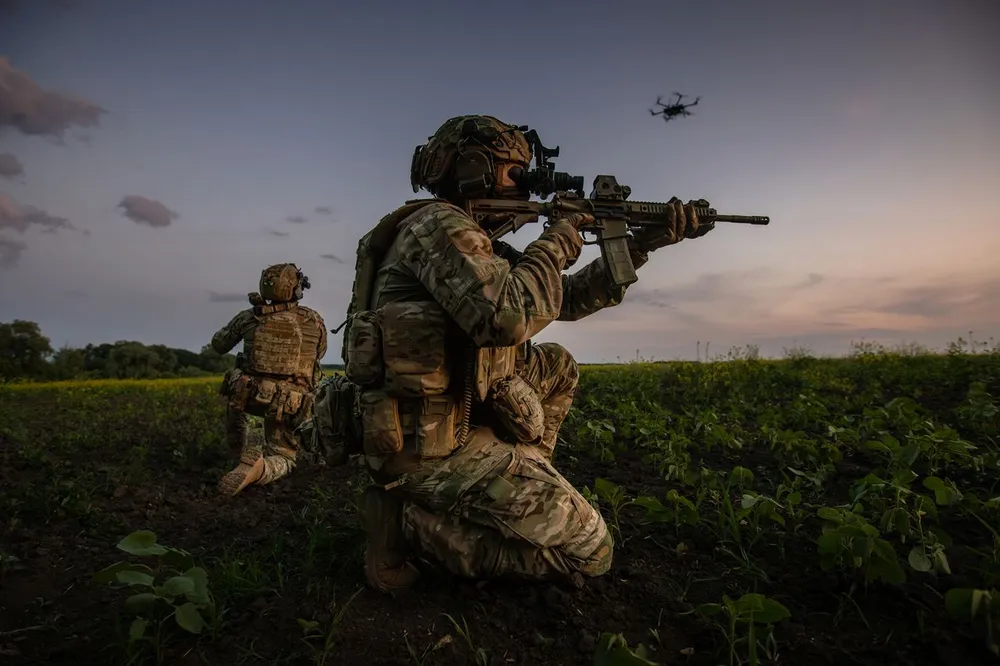
Sudan’s army announced on Tuesday that unmanned aerial vehicles launched from its air base struck multiple Rapid Support Forces (RSF) positions in Nyala, the capital of South Darfur, just hours after a cargo plane touched down at the city’s airport. The strikes, which the Sudanese Armed Forces (SAF) said targeted “paramilitary encampments and weapon depots,” were described as “precision drone attacks” that caused “significant material damage” to the RSF’s field infrastructure. No casualties were confirmed by either side, and the cargo aircraft, carrying humanitarian supplies, reportedly left the airfield without incident.
The episode comes amid a protracted civil war that erupted in April 2023 when the RSF, a powerful militia that grew out of the Janjaweed groups that fought in Darfur’s 2000s conflicts, turned against the SAF, led by General Abdel Fattah al‑Burhan. The two factions have since vied for control of Sudan’s political and economic heartland, with battles spilling into the country’s peripheral regions, including the volatile Darfur states. Nyala, a strategic hub for trade routes linking Sudan to Chad and the broader Sahel, has repeatedly changed hands, making it a focal point for both sides’ attempts to secure supply lines and demonstrate military dominance.
The SAF’s use of drones marks a notable escalation in a conflict that has traditionally relied on ground forces, artillery and conventional airpower. Drone warfare, which employs remotely piloted or autonomous aircraft to conduct surveillance, strike missions or logistical support, has become a staple of modern militaries worldwide. Nations ranging from the United States and Israel to Russia and Turkey have fielded operational combat drones, and the technology has proliferated into regional conflicts where state actors seek cost‑effective force multipliers. In Sudan, the SAF’s access to drones is believed to stem from a combination of legacy Soviet‑era platforms, limited acquisitions from abroad, and possible refurbishment of commercial UAVs fitted with improvised weaponry.
The RSF, for its part, has also experimented with unmanned systems, reportedly adapting commercial quadcopters for reconnaissance and, on occasion, attaching small explosives for “kamikaze” attacks. Both sides have accused each other of receiving external support that includes drone technology, though concrete evidence remains scarce. Observers note that the timing of the recent strikes—following the arrival of a cargo aircraft—could be intended to send a political signal: the SAF demonstrates its capability to interdict RSF positions even as international humanitarian agencies attempt to deliver aid to a population that has endured years of displacement, food insecurity and health crises.
International reactions have been muted, with the United Nations and the African Union urging restraint and the protection of civilians. Humanitarian groups, however, have expressed concern that the growing reliance on drones may increase the risk of collateral damage in densely populated urban areas like Nyala, where markets, schools and medical facilities are interwoven with military installations. The lack of transparent reporting on drone strikes complicates verification efforts, making it difficult for aid organizations to assess the safety of their operations and for the global community to hold parties accountable for potential violations of international humanitarian law.
The incident underscores broader regional implications. Darfur sits at the crossroads of several trans‑Saharan trade corridors that feed commodities such as gold, livestock and agricultural products into neighboring Chad, the Central African Republic and beyond. Disruption of these routes by intensified aerial attacks could exacerbate economic instability in an already fragile Sahel, where security vacuums are being exploited by extremist groups. Moreover, the demonstrated capability of Sudan’s regular forces to field combat drones may encourage other conflict‑prone states in the region to pursue similar arsenals, potentially accelerating an arms race in unmanned technology across East Africa. As the SAF and RSF continue to vie for supremacy, the escalation of drone warfare adds a new layer of complexity to a war that already threatens regional trade, humanitarian access and broader security dynamics.
Produced by our editorial team, with AI assistance in editing.
