
St. Kitts Prime Minister Terrance Drew Hospitalized; Deputy Takes Acting Role
Saint Kitts and Nevis Prime Minister Terrance Drew was admitted to a medical facility in Basseterre on Tuesday, officials confirmed, after experiencing a s
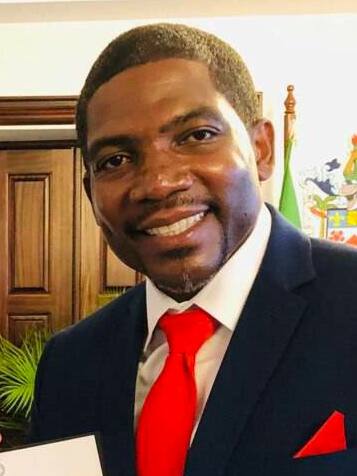
Saint Kitts and Nevis Prime Minister Terrance Drew was admitted to a medical facility in Basseterre on Tuesday, officials confirmed, after experiencing a sudden health issue that required immediate attention. The prime minister, who has led the twin‑island federation since August 2022, remains under observation, and his office has declined to disclose the nature of his condition. Deputy Prime Minister Geoffrey Hanley was named acting head of government pending further updates, while the opposition has called for transparency and a clear line of succession should Drew be unable to resume his duties.
Terrance Drew ascended to the premiership after his Saint Kitts and Nevis Labour Party (SKNLP) secured a decisive victory in the 2022 general election, ending a six‑year administration under former Prime Minister Timothy Harris. Drew’s government has pursued a platform centered on reviving the tourism sector, expanding renewable‑energy projects, and strengthening the nation’s fiscal position after the pandemic‑induced downturn. The coalition that underpins his administration includes the People's Action Movement (PAM), which holds a modest share of parliamentary seats and provides a buffer against legislative gridlock.
The current health episode arrives at a politically sensitive moment. The federation’s House of Assembly is set to debate a series of budgetary measures aimed at financing a new offshore wind farm and upgrading the island’s seaport facilities—projects that are central to Drew’s economic diversification agenda. Opposition leader Mark Brantley, who leads the Concerned Citizens’ Movement (CCM) in Nevis, has urged the government to articulate a contingency plan, emphasizing that prolonged uncertainty could hamper both legislative progress and investor confidence. In response, the prime minister’s office issued a brief statement asserting that “the administration remains fully functional” and that “the constitutional provisions for an acting prime minister are being observed.”
Saint Kitts and Nevis’s political system, modeled on the Westminster parliamentary framework, designates the deputy prime minister as the immediate stand‑in should the prime minister be incapacitated. Deputy Prime Minister Hanley, a veteran of the SKNLP and former minister of health, has previously overseen health‑related initiatives, including the rollout of COVID‑19 vaccination campaigns. Analysts note that Hanley’s temporary stewardship is unlikely to trigger a power shift, but it does place the coalition’s internal dynamics under a microscope, especially as the two parties negotiate the allocation of key ministries in upcoming policy initiatives.
International partners have expressed measured concern. The United Kingdom’s High Commissioner to Saint Kitts and Nevis, who also represents the British Crown in the federation, issued a diplomatic note wishing the prime minister a swift recovery and reaffirming the UK’s commitment to ongoing cooperation on climate resilience and maritime security. The United States, a major source of tourism and foreign investment, released a similar statement, underscoring the importance of stable governance for the region’s broader economic health.
While the prime minister’s hospitalization is primarily a domestic affair, its ripple effects could extend beyond the islands. Saint Kitts and Nevis relies heavily on tourism revenue, a sector that is highly sensitive to perceptions of political stability. Any prolonged uncertainty may influence travel advisories, affect airline route decisions, and deter prospective investors in the nation’s nascent renewable‑energy projects. For regional stakeholders, including neighboring Caribbean states and multilateral development banks, the situation serves as a reminder of the fragility of small‑economy governance structures and the need for robust contingency mechanisms. At present, the immediate priority remains the prime minister’s health, with the government assuring citizens and partners that essential functions continue unabated.
Produced by our editorial team, with AI assistance in editing.