Rare Total Solar Eclipse Stuns Spectators in Greenland, Iceland, and Spain
A Rare Astronomical Sight: Total Solar Eclipse Reappears in Europe A recent total solar eclipse was visible in Greenland, Iceland, and Spain, with a signif
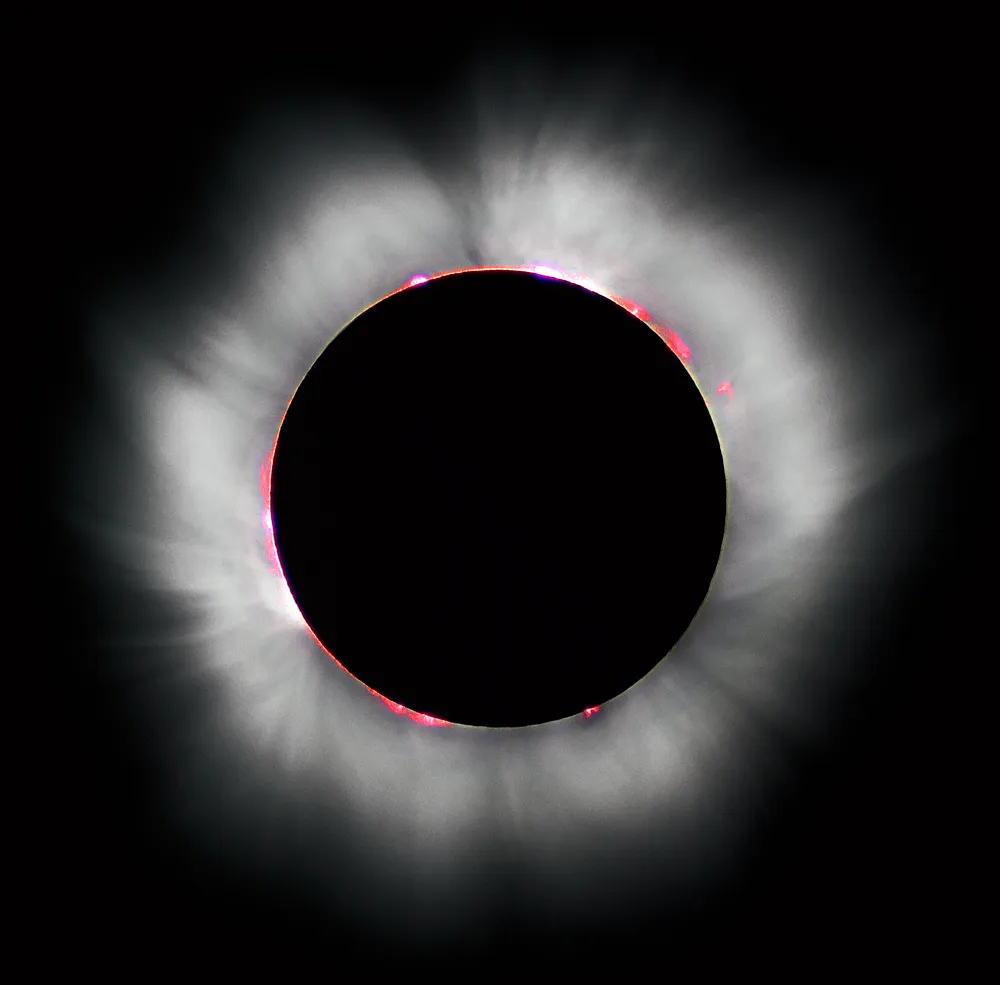
A Rare Astronomical Sight: Total Solar Eclipse Reappears in Europe
A recent total solar eclipse was visible in Greenland, Iceland, and Spain, with a significant portion of North America, most of Europe except for a large part of Ukraine, Greece, Bulgaria, and Russia, much of North Africa, and northern Asian Russia witnessing a partial solar eclipse. This is the first total solar eclipse visible on the European continent since August 1999.
The alignment of the sun and the moon's orbits is crucial for the occurrence of a total solar eclipse. Although a solar eclipse occurs once every six months when the sun and the moon align, forming a new moon phase, the moon's orbit is not perfectly parallel to the Earth's orbit, resulting in the moon's shadow usually missing the Earth. However, when the moon's orbit is at its best position relative to the Earth's orbit plane, a total solar eclipse occurs. Opportunities for total solar eclipses are rare, with an average of one every 18 months, but only once in a particular location, and the intervals between total solar eclipses can range from 360 to 410 years.
The area where a total solar eclipse is visible is influenced by the moon's orbital plane and its shadow region, typically occurring in a specific region of the Earth. The angle between the moon's orbital plane and the Earth's orbital plane is approximately five degrees, making the occurrence of total solar eclipses relatively rare. When the sun and the moon's alignment occurs in the best viewing area, a total solar eclipse occurs. According to astronomical calculations, there are approximately five solar eclipses worldwide each year, but only one or two are total solar eclipses.
Despite the rarity of total solar eclipses, many academic research teams and astronomical organizations are dedicated to studying and predicting total solar eclipses. These teams predict and accurately define the timing and location of solar eclipses through observations of the sun and moon's orbits, calculations of the moon's shadow region, and other methods.
Observing a total solar eclipse holds significant importance for scientific research and education. Observations of total solar eclipses can provide valuable scientific data, helping us better understand the relationships between the sun's and moon's orbits and their mutual interactions. These scientific knowledge are not only crucial for the development of astronomy but also contribute significantly to our understanding of the sun and the moon.
Observing a total solar eclipse also provides opportunities for education and science popularization. Total solar eclipses are a significant event in astronomy that can attract widespread attention and interest. This is an excellent opportunity for more people to understand the basic principles and scientific concepts of astronomy.
For Taiwan, this total solar eclipse has no direct impact, but it holds significant meaning for astronomical research and education. Total solar eclipses are crucial for scientific research and education, which may lead to more astronomical research and education projects.
Produced by our editorial team, with AI assistance in editing.