
Partial Lunar Eclipse Darkens Moon 95% on October 15, Visible Worldwide
A near‑total partial lunar eclipse began at 02:30 UTC on 15 October, casting a deep orange‑red hue across the Moon for observers in Africa, the Americas an
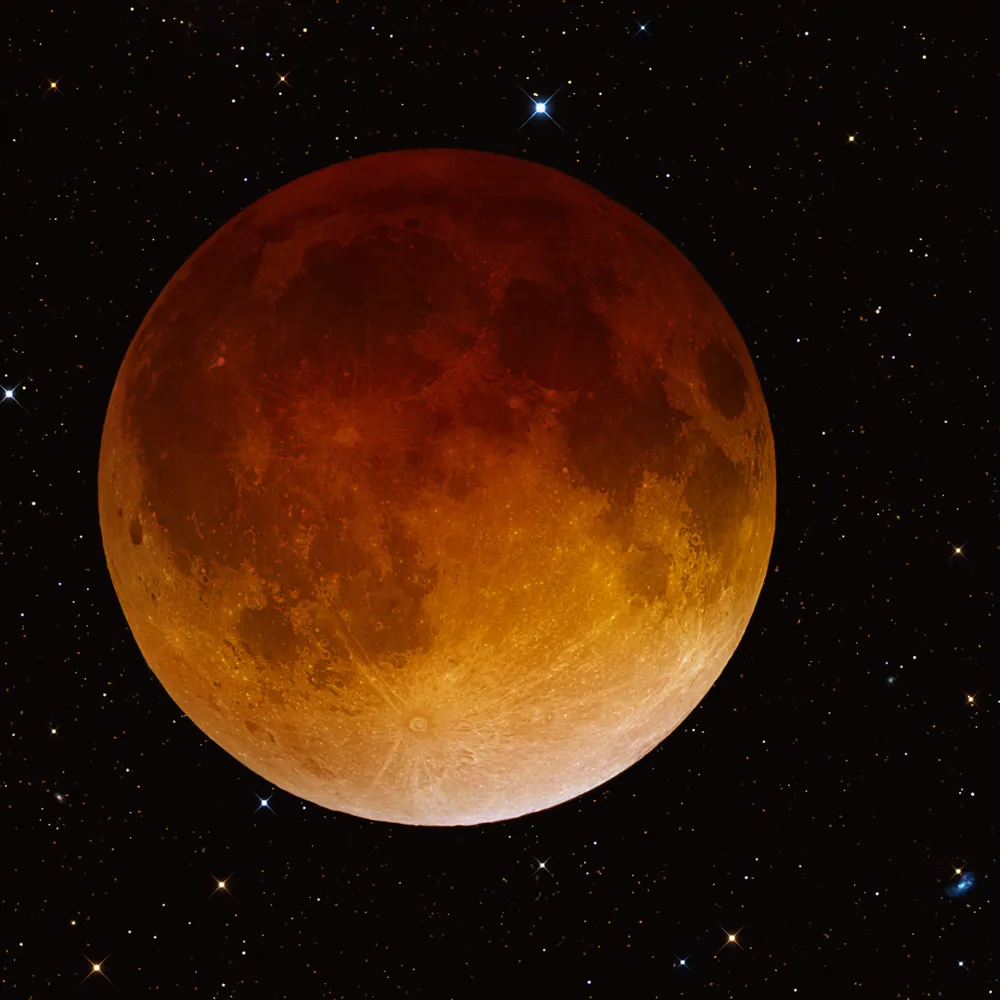
A near‑total partial lunar eclipse began at 02:30 UTC on 15 October, casting a deep orange‑red hue across the Moon for observers in Africa, the Americas and Europe. The eclipse will reach its maximum coverage at 04:15 UTC, when roughly 95 percent of the lunar disc will be immersed in Earth’s umbral shadow, before the Moon exits the shadow just after 05:40 UTC. The event is visible to the naked eye from any location experiencing night-time darkness during those hours, and live streams are being offered by several astronomical institutions worldwide.
A lunar eclipse occurs when the Moon passes through the shadow that the Earth throws into space as it orbits the Sun. The Earth’s shadow consists of two concentric parts: the penumbra, where only a portion of the Sun’s light is blocked, and the darker umbra, where direct sunlight is completely obscured. In a near‑total partial eclipse, the Moon’s trajectory skims the edge of the umbra, leaving only a thin sliver of its surface still illuminated by direct sunlight. As the Moon moves deeper into the umbra, the sunlight that does reach it is filtered through Earth’s atmosphere, stripping away shorter‑wavelength blue and violet light and leaving the longer‑wavelength reds to bathe the lunar surface, a phenomenon that gives the eclipse its characteristic “blood‑moon” colour.
Unlike solar eclipses, which are brief and require eye protection, lunar eclipses can be observed safely with the naked eye from any point on the night side of the planet. Their visibility over a broad swath of the globe makes them a shared astronomical experience, and the duration—often exceeding an hour from first penumbral contact to final exit—allows ample time for both professional and amateur observers to record the event. In this case, the eclipse’s path of visibility stretches from the western coast of South America through the Atlantic, across Europe and into central Africa, offering a rare opportunity for coordinated observations across multiple continents.
Beyond its visual appeal, the eclipse provides scientists with a natural laboratory for probing Earth’s atmospheric composition. As sunlight traverses the atmosphere before reaching the Moon, gases and particulates imprint subtle spectral signatures on the refracted light. By analysing the colour and intensity of the eclipsed Moon with spectrometers, researchers can infer the concentration of aerosols, water vapour and pollutants at various altitudes. Such data contribute to climate‑monitoring efforts and improve models of atmospheric scattering, which have downstream benefits for weather forecasting and environmental policy. Amateur astronomers, meanwhile, use the event to refine techniques in low‑light imaging and to engage the public in citizen‑science projects that complement professional research.
Although the eclipse’s ground track does not include Taiwan, the island’s scientific community is actively participating through real‑time data sharing and public outreach. The National Astronomical Research Institute of Taiwan (NARIT) is broadcasting the eclipse via its online platforms, providing commentary in Mandarin and English, and encouraging schools to incorporate the phenomenon into science curricula. By leveraging the global nature of the event, Taiwanese educators can spark interest in astronomy and related fields such as optics and atmospheric science, reinforcing the pipeline of talent that underpins the island’s high‑tech sectors, including semiconductor manufacturing. Moreover, the brief perturbations in the ionosphere that accompany lunar eclipses are monitored by satellite operators in the region, informing the management of communication and navigation systems that rely on stable ionospheric conditions.
The eclipse’s significance extends beyond the fleeting spectacle. It underscores the interconnectedness of Earth’s climate system and the value of international collaboration in observing and interpreting natural phenomena. For Taiwan, the event offers a platform to showcase its scientific expertise, promote STEM education, and contribute to global atmospheric research—all of which have tangible implications for the island’s economic resilience and its role in the broader scientific community.
Produced by our editorial team, with AI assistance in editing.