
Pakistan Military Foils Terror Plot in South Waziristan, Arrests Five Suspects
A fierce counter-terrorism operation recently took place in Wana, a town in the South Waziristan district of Khyber Pakhtunkhwa province, in northwest Paki
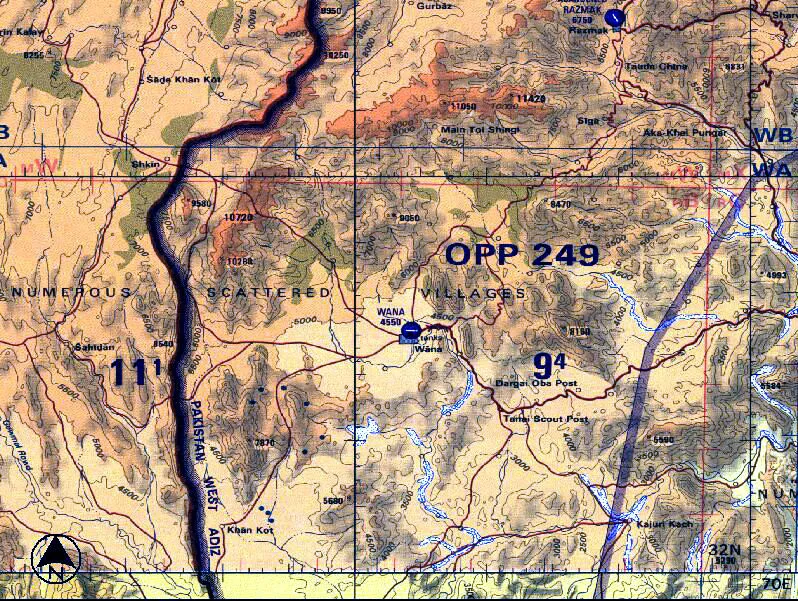
A fierce counter-terrorism operation recently took place in Wana, a town in the South Waziristan district of Khyber Pakhtunkhwa province, in northwest Pakistan. Following a tip-off, Pakistani security forces launched a raid on a local militant hideout, successfully thwarting a planned terrorist attack. According to preliminary official reports, the military operation resulted in the death of one insurgent, while five other suspects were wounded and subsequently arrested. The military has since intensified search operations and tightened border controls in the area to prevent any retaliatory attacks from remaining militant elements.
As the largest town in the South Waziristan district, Wana serves as a critical administrative and economic hub. However, due to its rugged terrain and sensitive proximity to the Afghan border, South Waziristan has long been considered a hotbed for extremist armed groups. Over the past few decades, the Pakistani government has repeatedly deployed forces to the region in an attempt to stabilize the situation and eliminate threats from various anti-government insurgents and radical organizations. Wana, which previously served as the summer headquarters for the South Waziristan administration, holds significant political and military importance; the success of this counter-terrorism operation underscores the immense pressure faced by Pakistani authorities in maintaining order in the province.
In recent years, the security situation along Pakistan’s northwestern border has deteriorated significantly following shifts in the Afghan political landscape. Armed groups, led by the Tehreek-e-Taliban Pakistan (TTP), have frequently targeted Pakistani military and police personnel, attempting to challenge the authority of the central government through violence. Analysts note that these militants often utilize border towns like Wana as transit points or hideouts, leveraging the difficult terrain to evade military pursuit. The Pakistani government is currently employing a strategy of "clearing and isolation," aiming to disrupt militant supply chains through precision strikes and to prevent the infiltration of extremist ideologies into the Pakistani interior.
Faced with escalating regional security challenges, the Pakistani military is under immense pressure regarding both counter-terrorism costs and social stability. While the government has repeatedly emphasized its commitment to defending border security through firm measures, the guerrilla tactics employed by militant forces and the region's complex tribal structures make achieving immediate results in counter-terrorism efforts difficult. While the interception in Wana has temporarily averted a potential tragedy, it highlights the deeply rooted nature of extremist forces in the area. Striking a balance between ensuring the stability of local residents' lives and conducting military clearance operations remains the most daunting governance challenge for the Pakistani authorities.
For Taiwan, although the conflict in South Waziristan is geographically distant and involves no direct economic ties, it reflects the fragility of the geopolitical landscape in South Asia. Instability in the region could not only trigger humanitarian crises and refugee flows within the area but may also impact the security of infrastructure projects under the "Belt and Road Initiative" in Pakistan, thereby affecting China's influence in South Asia. For Taiwanese readers, the value of following such news lies in understanding the evolution of the global counter-terrorism landscape and how national security can be affected by the spillover of regional conflicts. In an increasingly complex international climate, observing the stability of specific regions helps provide a more comprehensive assessment of the potential political and economic risks that may face global supply chains.
Produced by our editorial team, with AI assistance in editing.
